U.S. citizens need a visa for a normal tourist trip to mainland Vietnam, and the official Vietnam eVisa can be issued for up to 90 days with single or multiple entry. The only current nonstop route between the United States and Vietnam links San Francisco with Ho Chi Minh City. Travelers from other U.S. cities normally make at least one connection.
A Vietnam trip from the USA also requires more planning than a short regional vacation. Flight time, jet lag, different regional weather patterns, visa accuracy, 220-volt electricity and Vietnam’s driving rules can all affect the trip. This guide follows the journey in the same order most U.S. travelers plan it, from entry documents and flights to arrival, local transport and emergency help.
Last fact-checked: September 22, 2026. Visa, immigration, flight and health requirements can change. Time-sensitive information below links directly to the relevant Vietnamese or U.S. government authority.
| Question | Current information for U.S. travelers |
|---|---|
| Do U.S. citizens need a Vietnam visa? | Yes for normal tourist travel to mainland Vietnam. A separate 30-day Phu Quoc exemption can apply to eligible island-only trips. |
| Vietnam eVisa validity | Up to 90 days, single or multiple entry |
| Official eVisa fee | USD 25 single entry; USD 50 multiple entry |
| Passport | Plan for at least 6 months of validity beyond arrival and at least 2 blank pages |
| Nonstop U.S.-Vietnam flight | San Francisco (SFO) to Ho Chi Minh City (SGN) |
| Current nonstop frequency | About 4 flights per week, subject to airline schedule changes |
| Nonstop flight time | About 15 hours 40 minutes |
| Vietnam currency | Vietnamese dong (VND) |
| Electricity | 220 volts; check every device’s input rating before connecting it |
| Can a U.S. license or U.S. IDP be used to drive? | No. Current U.S. State Department guidance says U.S. driver’s licenses and International Driving Permits do not work in Vietnam. |
| U.S. travel advisory | Level 1: Exercise normal precautions |
| Vietnam time zone | ICT, UTC+7, with no daylight saving time |
U.S. passport holders should arrange their Vietnam visa before travel and check every passport, visa and arrival detail before boarding. Small errors can cause larger problems because airlines and Vietnamese immigration compare the visa approval with the traveler’s passport and intended entry point.
Yes. The U.S. Department of State states that a visa is required for U.S. tourists visiting mainland Vietnam. Routine leisure travelers should not plan to obtain a tourist visa after landing.
The simplest option for most visitors is the official Vietnam eVisa, issued directly by the Immigration Department under Vietnam’s Ministry of Public Security. The current system allows an eVisa with a maximum validity of 90 days for either a single entry or multiple entries.
| eVisa type | Maximum validity | Official fee | Best suited to |
|---|---|---|---|
| Single entry | Up to 90 days | USD 25 | Travelers entering Vietnam once and leaving at the end of the trip |
| Multiple entry | Up to 90 days | USD 50 | Travelers leaving for Cambodia, Laos, Thailand or another country and returning to Vietnam |
The Immigration Department states that the application fee is non-refundable if an eVisa is refused. Apply only through evisa.gov.vn or the other official government domain, thithucdientu.gov.vn. Similar-looking commercial websites are not the Vietnamese government’s eVisa portal.

U.S. tourists should complete their Vietnam visa before departure and make sure every approved detail matches the passport used for travel.
The most important part of the eVisa application is accuracy rather than speed. The U.S. State Department says applications are usually processed within 3 to 5 working days after a completed application and payment reach Vietnam Immigration, but processing can take longer during busy periods or holidays.
If an eVisa contains an error, do not assume airline staff or an immigration officer can correct it at the airport. The U.S. Embassy and Consulate General cannot change Vietnamese eVisa information or accelerate an application.
American travelers should arrive with a passport valid for at least six months beyond their arrival date and with sufficient blank pages for immigration stamps. Current detailed U.S. State Department guidance recommends at least two blank pages.
Vietnam also requires the same passport to be used for entry, exit and domestic travel. This matters for dual nationals and for travelers who renew or replace a passport between applying for an eVisa and flying.
A damaged passport can also create problems. Check the identification page, binding and machine-readable area before an international trip rather than relying on a passport that is significantly torn, water-damaged or otherwise compromised.
American air travelers should complete Vietnam’s official Pre-Arrival Information form within the three days before arrival while the 2026 rollout continues. Current official guidance is not completely aligned, so completing it is the safest practical approach.
Vietnam’s Immigration Department began piloting the Pre-Arrival Information system, known as PAI, at Tan Son Nhat International Airport on April 15, 2026. A May 2026 Ministry of Public Security notice described the pilot as optional rather than mandatory. The Immigration Department’s current eVisa portal now strongly recommends completing it.
The U.S. Department of State’s September 15, 2026 guidance goes further and instructs travelers using non-Vietnamese passports who enter by air to submit the form no earlier than three days before arrival.
Because these official instructions are not yet worded identically, U.S. travelers arriving by air should use only the official Pre-Arrival Information portal (https://prearrival.immigration.gov.vn/), submit the information within three days before arrival and save the generated QR code on the phone. A printed copy provides a useful backup.
The PAI form does not replace a visa.
A routine health declaration is not currently mandatory for every person entering Vietnam. Vietnam’s Ministry of Health clarified in 2026 that health declarations can be activated for specific infectious-disease situations, rather than applying automatically to all arrivals at all times.
The Ministry also stated that the old tokhaiyte.vn website is not the current health-declaration portal. Travelers should ignore websites claiming that every visitor must submit a form there. When a health declaration is activated for a specific disease situation, the Ministry of Health will issue separate instructions.
Americans of Vietnamese origin, and some immediate family members, may have another option besides applying for a new tourist eVisa for each trip. The Embassy of Vietnam in the United States currently accepts applications for a Visa Exemption Certificate (https://pop.vietnamembassy-usa.org/consular/visa-exemption).
Eligible applicants include Vietnamese people residing overseas and the spouses or children of Vietnamese citizens or overseas Vietnamese. The certificate can be valid for up to five years, but it expires at least six months before the associated passport expires. The current Embassy application also requires a passport with at least one year of validity when applying.
This certificate is particularly relevant to Vietnamese-American travelers making repeated family visits. It is a different document from the standard Vietnam eVisa.
Families should carry documents showing each adult’s legal relationship to the children traveling with them. The U.S. State Department recommends carrying a copy of each child’s birth certificate or equivalent evidence.
If one parent is absent, a notarized consent letter from that parent is considered best practice and may also be requested by the airline. Vietnamese minors, including some dual U.S.-Vietnamese citizens, can face stricter consent requirements when leaving Vietnam without a parent or guardian.
March to May offers one of the strongest overall weather windows for a multi-region Vietnam trip, but no single month is best for every destination. Vietnam stretches across several climate zones, so the right dates depend on whether the trip emphasizes Hanoi and Ha Long Bay, Central Vietnam, southern cities or beaches.
The detailed Vietnam weather guide breaks this pattern down month by month. For U.S. travelers choosing dates before buying a long-haul ticket, regional weather matters more than a generic national average.

Vietnam’s long north-south geography creates different travel seasons across the country.
| Region | Useful travel window | Main weather considerations |
|---|---|---|
| Northern Vietnam | April to May; September to November often work well for outdoor itineraries | December to March can be cool or cold and misty. June to August is generally hotter, more humid and stormier. |
| Central Vietnam | February to August is generally sunnier around Hoi An and Hue | Rain and tropical storms become more important later in the year, especially from September onward in parts of the central coast. |
| Southern Vietnam | December to April is generally the drier period | May to November is warmer and wetter, often with concentrated tropical showers rather than continuous rain all day. |
| Phu Quoc | October to June generally offers clearer conditions | July to September is typically wetter and stormier, which can affect sea conditions and island activities. |
For Northern Vietnam, Hanoi, Ninh Binh and Ha Long Bay form a practical first-trip cluster. Central Vietnam works differently, with Hoi An generally sunnier from late winter through summer than during its wetter final months of the year.
The same forecast expects average temperatures across much of Vietnam to run above the long-term average during October and November 2026 and February and March 2027. December 2026 and January 2027 are also forecast to be warmer than average in many areas.
This is a seasonal outlook rather than a day-by-day weather forecast. Travelers should still check the latest official forecast before a cruise, mountain journey, beach stay or domestic flight.
| Common U.S. travel period | Where it works particularly well | What to consider |
|---|---|---|
| March and April | Strong multi-region option | One of the easier periods to combine North, Central and South without planning around peak summer rain in many areas. |
| June to August | Central coast and selected beach itineraries | Northern and southern areas are hotter and wetter. Storms can disrupt outdoor plans and cruises. |
| Late November | Northern Vietnam and increasingly drier Southern Vietnam | Parts of Central Vietnam can still experience significant rainfall. |
| Christmas and New Year | Southern Vietnam and Phu Quoc | Northern Vietnam can be cool. Central weather varies by destination. |
Most first-time travelers coming from the United States should aim for at least 10 days on the ground, while 14 days gives a much better balance between long-haul travel and actual sightseeing. A short seven-day trip can work, but it should normally focus on one region.
| Trip length | Best approach | Example |
|---|---|---|
| 5 to 7 days | Stay within one major region | Hanoi + Ninh Binh + Ha Long, or Ho Chi Minh City + Mekong Delta |
| 8 to 10 days | Combine two strong regional clusters | Hanoi + Ha Long + Central Vietnam, or Ho Chi Minh City + Mekong + Phu Quoc |
| 11 to 14 days | Build a north-to-south or south-to-north journey | Hanoi + Ha Long/Ninh Binh + Hoi An + Ho Chi Minh City + Mekong Delta |
| 15 to 21 days | Add slower mountain, cave or island travel | Sapa, Ha Giang, Quang Binh, Da Lat, Phu Quoc or Can Tho can be added without compressing the main route |
A 10-day Vietnam itinerary works when the route is selective and directional. A 14-day Vietnam itinerary gives first-time visitors enough time to cover all three major regions with fewer rushed transfer days.

Trips of 15 to 21 days give U.S. travelers more room to add northern mountain regions without squeezing the main Vietnam route.
San Francisco to Ho Chi Minh City is currently the only nonstop commercial route between the United States and Vietnam. Vietnam Airlines lists about four nonstop flights per week, with a scheduled flight time of roughly 15 hours 40 minutes. Travelers from other American cities should plan for at least one connection.
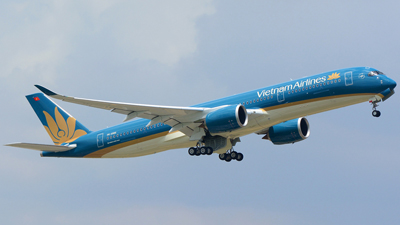
Vietnam Airlines currently operates the only nonstop U.S.-Vietnam route, linking San Francisco with Ho Chi Minh City.
| U.S. origin | Vietnam destination | Current routing | Typical total travel time shown by Vietnam Airlines |
|---|---|---|---|
| San Francisco (SFO) | Ho Chi Minh City (SGN) | Nonstop | About 15 hours 40 minutes |
| San Francisco (SFO) | Hanoi (HAN) | Connection, commonly via Ho Chi Minh City | About 20 to 25 hours depending on connection |
| San Francisco (SFO) | Da Nang (DAD) | Connection, commonly via Ho Chi Minh City | From about 19.5 hours |
| Los Angeles (LAX) | Hanoi or Ho Chi Minh City | At least one connection | Fastest current combinations start around 19 hours, with longer itineraries depending on layover |
| New York (JFK) | Ho Chi Minh City | Connection | Current Vietnam Airlines combinations start around 24.5 hours |
| New York (JFK) | Hanoi | Connection | Current Vietnam Airlines combinations start around 30 hours |
Vietnam Airlines identifies Tokyo, Taipei and Seoul among common Asian connection points for U.S. departures. Actual schedules vary by travel date, airline partnership and layover length, so check the operating airline before relying on a published frequency.
The official Vietnam Airlines U.S.-Vietnam schedule (https://www.vietnamairlines.com/en-us/flight-to-vietnam-from-us) should be checked again when booking because frequencies and departure times can change seasonally.
The best arrival airport is the one that matches the first region of the trip, not simply the cheapest ticket on the first search.
| Arrival airport | Best for | Natural onward route |
|---|---|---|
| Noi Bai International Airport (HAN) | Northern Vietnam | Hanoi, Ninh Binh, Ha Long Bay, Sapa or the northern mountains |
| Da Nang International Airport (DAD) | Central Vietnam | Da Nang, Hoi An, Hue and the central coast |
| Tan Son Nhat International Airport (SGN) | Southern Vietnam | Ho Chi Minh City, Mekong Delta, southern coast and connections to Phu Quoc |
Ho Chi Minh City is the simplest first stop for travelers taking the nonstop flight from San Francisco. Travelers beginning in Northern Vietnam should compare the total cost and time of a connecting itinerary to Hanoi rather than automatically landing in Ho Chi Minh City and immediately adding another domestic flight.
An open-jaw itinerary is usually more efficient for a 10 to 14-day cross-country trip. Instead of returning to the same city purely to catch the flight home, enter through one end of Vietnam and leave from the other when the international fare makes sense.
A common north-to-south structure is:
USA → Hanoi → Northern Vietnam → Central Vietnam → Ho Chi Minh City → USA
The reverse works equally well. This reduces unnecessary backtracking and turns domestic flights into part of the route rather than corrections to it.
| Available time | Suggested route logic | Pace |
|---|---|---|
| 7 days | Hanoi + Ninh Binh + Ha Long Bay | Moderate, one region |
| 10 days | Hanoi + Ha Long Bay + Hoi An + Ho Chi Minh City | Active, usually requires domestic flights |
| 14 days | Hanoi + Ninh Binh/Ha Long + Hue/Hoi An + Ho Chi Minh City + Mekong Delta | Balanced first-time route |
| 18 to 21 days | Classic three-region route plus a mountain, cave or beach extension | Slower, more flexible |
The main mistake is adding too many isolated destinations. A geographic cluster such as Hanoi, Ninh Binh and Ha Long usually creates a better trip than repeatedly returning to airports for unrelated stops.
There is no reliable single price for a Vietnam trip from the USA because the long-haul flight, hotel standard, route and domestic flights create most of the variation. Fixed government fees can be stated precisely, while accommodation and airfare should be treated as date-specific costs.
| Item | Current reference | Planning note |
|---|---|---|
| Single-entry Vietnam eVisa | USD 25 | Government fee, non-refundable if refused |
| Multiple-entry Vietnam eVisa | USD 50 | Useful when leaving and returning during the same trip |
| SFO-SGN international airfare | Vietnam Airlines displayed round-trip economy fares from about USD 895 for selected September-October 2026 dates when this page was fact-checked | Airfares are dynamic and can change immediately |
| Street-food meal | Vietnam Tourism uses about 45,000 VND as an indicative example | Actual prices vary by city, restaurant and dish |
| Mid-range hotel | Vietnam Tourism uses about 700,000 VND per night as an indicative example | Major cities, resorts and peak dates can cost substantially more |
| Higher-end hotel | Vietnam Tourism uses about 3,500,000 VND per night as an indicative example | Luxury properties vary widely |
| Half-day group activity | Vietnam Tourism uses about 1,000,000 VND as an indicative example | Cruises and private experiences are priced separately |
These local examples come from Vietnam’s official tourism information and should be used as reference points, not guaranteed market prices. Exchange rates, hotel inventory and holiday periods change the actual USD cost.
A more accurate U.S. travel budget separates costs rather than relying on a generic daily figure:
Book items in the order that reduces the risk of expensive changes.
Travel around Vietnam’s Tet holiday requires additional planning because official tourism guidance notes that transport hubs become extremely busy and tickets should be confirmed well in advance.
Most pre-departure problems can be prevented by completing health, insurance, payment, phone and document preparation before boarding the U.S. flight. Vietnam is straightforward to travel once these basics are organized.
No vaccination is currently listed as a universal entry requirement for U.S. tourists. That does not mean every traveler has the same health recommendations.
The U.S. Centers for Disease Control and Prevention advises travelers to check health needs at least one month before departure. Its Vietnam Traveler View recommends routine vaccinations be up to date and identifies several additional vaccines or medicines according to age, location, trip length and planned activities.
| Health issue | Current CDC guidance in practical terms |
|---|---|
| Routine vaccines | Keep routine U.S. vaccinations up to date before international travel. |
| Hepatitis A | Recommended by CDC for unvaccinated travelers aged one year or older going to Vietnam. |
| Hepatitis B | Recommended for unvaccinated travelers of all ages. |
| Japanese encephalitis | Mainly a consideration for longer stays, rural exposure or activities that increase mosquito exposure. |
| Malaria | Risk is concentrated in certain rural areas. CDC reports no malaria transmission in Hanoi, Ho Chi Minh City, Da Nang, Hai Phong, Nha Trang and Quy Nhon. |
| Dengue | A year-round mosquito-borne risk. Prevention focuses on avoiding mosquito bites. |
| Rabies | Risk depends on animal exposure and access to prompt treatment. |
Travelers with a complex medical history, pregnancy, long rural itinerary or planned adventure activities should discuss the exact route with a travel-health professional rather than treating a country-wide vaccine list as personalized advice.
The CDC also recommends considering medical evacuation insurance. The U.S. State Department notes that serious medical treatment can require travel to a major city and that providers may ask for payment before treatment.
Bring sufficient prescription medicine from the United States for the trip, preferably in the original packaging, together with the generic drug names and relevant prescription information.
Do not assume that a medicine legal in the United States is automatically legal in Vietnam. The U.S. State Department specifically warns that ingredients in some medications, including some treatments for ADHD, may be restricted. Travelers with controlled or unusual medicines should check with the Vietnamese Embassy before departure.
The Vietnamese dong, abbreviated VND, is Vietnam’s official currency. Cash remains useful for small purchases, while international cards are commonly accepted by hotels, established restaurants, tour operators, shops and larger businesses.
Vietnam Tourism recommends ATMs as a practical way for international travelers to obtain local currency. U.S.-issued bank cards are accepted by many ATMs, but the Vietnamese bank and the U.S. card issuer may each apply fees.
Carry more than one payment method. A primary card, a backup card and a reasonable amount of VND reduce the risk created by a blocked card, broken ATM or cash-only business.
Vietnam does not set a simple maximum amount of cash that a visitor may enter or leave with, but larger amounts must be declared.
| Cash carried on entry or exit | Current declaration rule |
|---|---|
| Vietnamese currency | Declare amounts over 15,000,000 VND |
| Foreign currency | Declare amounts over the equivalent of USD 5,000 |
These thresholds apply in both directions according to current U.S. State Department guidance on Vietnamese entry and exit rules.
Vietnam has three major mobile network operators commonly used by travelers: Viettel, VinaPhone and MobiFone. Vietnam Tourism states that prepaid SIM cards are available at major airports and shops, with passport registration required for physical SIM activation.
An unlocked U.S. phone can use a local physical SIM when the handset supports the network. Compatible phones can also use an eSIM and keep the U.S. line available for banking texts or other services.
The detailed Vietnam SIM card guide explains the practical differences between physical tourist SIMs and eSIMs. Download important apps, maps and translation data before leaving the United States so the first airport connection is not essential.
Vietnam’s electricity supply is 220 volts. Vietnam Tourism says two-round-prong sockets are common, although travelers may encounter more than one socket design in hotels and older buildings.
Check the input label printed on every charger or appliance:
This distinction matters more for Americans than for travelers coming from many countries that already use a supply close to 220 to 240 volts.
Vietnam uses Indochina Time, UTC+7, throughout the year and does not observe daylight saving time. The contiguous United States covers several time zones and most states change clocks seasonally, so there is no single U.S.-Vietnam time difference.
| U.S. time zone | When daylight saving time applies | During standard time |
|---|---|---|
| Eastern | Vietnam is 11 hours ahead | Vietnam is 12 hours ahead |
| Central | 12 hours ahead | 13 hours ahead |
| Mountain | 13 hours ahead | 14 hours ahead |
| Pacific | 14 hours ahead | 15 hours ahead |
Alaska and Hawaii have larger differences. Travelers arriving after a 15 to 30-hour journey should avoid building a major road trip, cruise departure or long guided sightseeing day immediately after landing. A lighter first evening also creates a buffer for flight delays.
Pack for the actual regions and season rather than for a generic tropical country.
Arrival is usually straightforward when the passport, visa and pre-arrival information are already prepared. The main process is immigration, baggage collection, customs and then onward transport.
| Transport | Best for | Planning note |
|---|---|---|
| Domestic flight | Long regional jumps | Useful between Hanoi, Da Nang and Ho Chi Minh City when time is limited. |
| Train | Travelers prioritizing scenery or avoiding some flights | Works well for selected sectors rather than treating the entire north-south journey as a quick transfer. |
| Private car with driver | Families, groups and regional road journeys | Useful for airport transfers and destinations without direct rail or air access. |
| Grab or licensed taxi | Urban transport | Confirm the vehicle and driver before getting in. |
| Walking | Compact historic centers and neighborhoods | Traffic behavior requires extra attention when crossing streets. |
Flights are not always the best answer. Northern clusters such as Hanoi, Ninh Binh and Ha Long work naturally by road, while Central Vietnam can be organized around Da Nang, Hue and Hoi An without repeatedly returning to airports.
A normal U.S. driver’s license and a U.S.-issued International Driving Permit do not authorize an American tourist to drive in Vietnam. This is one of the most important differences between Vietnam and many other international road-trip destinations.
The current U.S. State Department Vietnam guidance states explicitly that U.S. driver’s licenses and International Driving Permits do not work in Vietnam. Driving without an appropriate Vietnamese license can lead to fines, arrest and insurance problems.
Renting a motorbike does not make the ride legal. A rental shop may hand over a scooter without checking whether the customer is properly licensed, but that does not change the driver’s legal status.
For most U.S. tourists, Grab, licensed taxis, trains, flights and a car with a licensed local driver are safer practical choices.
Vietnam is currently rated Level 1, Exercise normal precautions, by the U.S. Department of State. Serious violent crime against foreign visitors is uncommon, but petty theft, road risk and unfamiliar local laws require practical precautions.
Bag grabs, pickpocketing and theft occur most often in crowded tourist areas. Keep phones and bags away from the traffic side of a sidewalk, and avoid displaying large amounts of cash.
Keep the physical passport in a secure location when it is not required for a specific official process. Carry a digital and paper copy of the identification page and entry documentation.
When using Grab, check the car, license plate and driver’s profile against the booking. Do not enter a vehicle simply because someone outside an airport or attraction claims to be the assigned driver.
Tropical storms can affect northern and central coastal areas, while heavy seasonal rain can cause flooding and landslides. Ha Long Bay cruises can be suspended when authorities consider marine conditions unsafe.
If an official warning affects a cruise, flight or mountain road, do not build the rest of the itinerary around a connection with no buffer. Weather disruption is one reason to spend the final night near the international departure city rather than returning directly from a remote destination to the airport.
A replacement U.S. passport alone does not automatically restore legal immigration status in Vietnam. The U.S. State Department states that a traveler whose passport is lost or stolen needs both a replacement passport and replacement Vietnamese immigration documentation before legally remaining in or departing Vietnam.
| Service | Contact |
|---|---|
| Police | 113 |
| Fire and rescue | 114 |
| Ambulance | 115 |
| U.S. Embassy Hanoi, Consular Annex | 170 Ngoc Khanh, Ba Dinh District, Hanoi +84 24 3850 5000 |
| U.S. Consulate General Ho Chi Minh City | 4 Le Duan, District 1, Ho Chi Minh City +84 28 3520 4200 |
The latest consular contacts and alerts are available on the U.S. Mission Vietnam website (https://vn.usembassy.gov/). U.S. citizens can also enroll in the Smart Traveler Enrollment Program (STEP) (https://mytravel.state.gov/s/step) so the Embassy or Consulate can send security information and make contact more easily during an emergency.
Foreign passport holders can qualify for a separate visa exemption for Phu Quoc stays of no more than 30 days. Vietnam’s Ministry of Foreign Affairs states that the exemption can also apply when a traveler transits through another Vietnamese international border gate before continuing to Phu Quoc. Travelers who plan to visit mainland Vietnam must separately satisfy the normal mainland entry requirements.
Not necessarily. Eligible overseas Vietnamese, and the spouses or children of Vietnamese citizens or overseas Vietnamese, can apply for a Visa Exemption Certificate. The Vietnamese Embassy in the United States currently states that the certificate can be valid for up to five years, subject to passport validity and eligibility rules.
Yes, unless you separately qualify for another valid basis of entry. A single-entry eVisa is used when you first enter Vietnam. If your itinerary leaves Vietnam for Cambodia, Laos, Thailand or another country and later returns, obtain an appropriate multiple-entry eVisa before the trip.
Do not plan a tourist itinerary around an automatic extension. Current U.S. State Department guidance says Vietnam does not allow a standard eVisa to be renewed or extended while the holder is in the country. Vietnam Immigration notes that some foreigners may be considered for a new visa when properly invited or guaranteed under Vietnamese law.
Do not assume an emergency passport will work with an existing or new eVisa. The U.S. State Department currently warns that Vietnam may not accept the 12-page U.S. emergency passport for eVisa entry. Travelers issued an emergency passport should confirm their immigration status with Vietnamese authorities before trying to enter or leave.
Carry the child’s passport plus a copy of the birth certificate or other evidence of the legal relationship. If one parent is absent, the U.S. State Department recommends a notarized consent letter as a best practice. Airlines can also apply their own documentation requirements.

