

13 Amazing National Parks in Vietnam to Explore
Vietnam has 37 national parks as of July 2026, after Ea So in Dak Lak was upgraded from a nature reserve on July 28, 2026. These protected areas range from the high-altitude forests around Fansipan to ancient limestone cave systems, Mekong wetlands, dry dipterocarp forests and marine ecosystems surrounding southern islands.
National parks in Vietnam also require very different types of trips. Ba Vi works as an easy day trip from Hanoi, while Hoang Lien, Phong Nha-Ke Bang and Nui Chua require more preparation for longer trekking or expedition routes. The 13 parks below offer the strongest combination of distinctive landscapes, established visitor experiences and practical value for travelers. A complete list of Vietnam’s 37 national parks appears later in this guide.
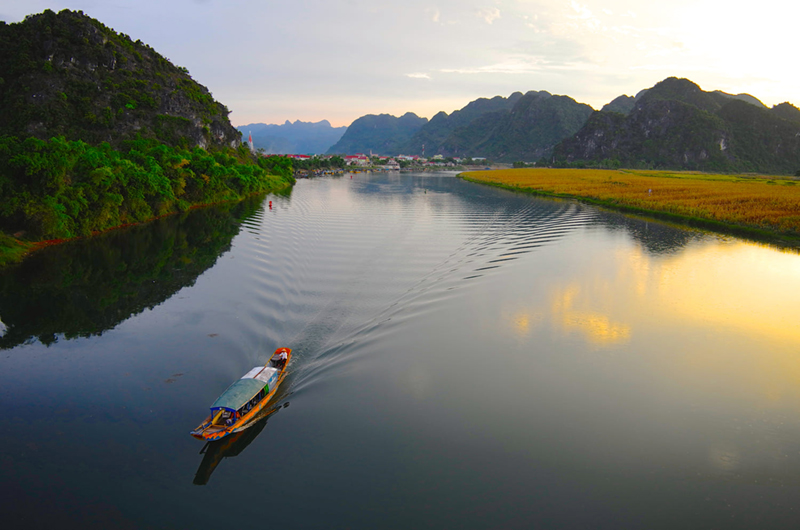
A boat journey through the limestone landscape of Phong Nha-Ke Bang National Park
Best National Parks in Vietnam at a Glance
| National Park | Best For | Best Time | Time Needed |
|---|---|---|---|
| Cuc Phuong | Ancient rainforest and conservation | December-May | 1-2 days |
| Phong Nha-Ke Bang | Caves and adventure | April-August | 2-4+ days |
| Cat Tien | Lowland rainforest and Bau Sau | December-May | 2-3 days |
| Bach Ma | Mountain trails and waterfalls | December-April | 1-2 days |
| Cat Ba | Island-karst hiking | October-April | 1-2 days |
| Hoang Lien | High-altitude trekking | March-May, September-November | 1-3 days |
| Ba Vi | Easy nature trip from Hanoi | October-April | 1 day |
| Ba Be | Lake scenery and Tay culture | September-May | 2 days |
| Yok Don | Dry forest and ethical elephant experiences | November-April | 1-2 days |
| Tram Chim | Mekong wetlands and birdlife | December-April | Half day-1 day |
| Phu Quoc | Tropical forest during an island trip | November-April | Half day-1 day |
| Con Dao | Forest and marine conservation | December-April | 2-3 days |
| Nui Chua | Semi-arid landscapes and coastal trekking | December-April | 1-2 days |
1. Cuc Phuong National Park – Best for Ancient Rainforest and Conservation
- Location: Western Ninh Binh, about 120 km south of Hanoi
- Best for: Forest walks, archaeology and conservation centers
- Best time: December-May; late April-May for butterfly season
- Time needed: 1 full day or 2 days with an overnight stay
- Important update: New core-zone vehicle rules apply from September 1, 2026
Cuc Phuong is Vietnam’s first national park and one of the country’s most complete introductions to tropical forest conservation. Established on July 7, 1962, the park protects 22,408 hectares of limestone rainforest in the Tam Diep mountain system. Surveys have recorded 2,234 species of higher plants and mosses, 135 mammal species and 336 resident bird species. Its limestone caves also preserve evidence of prehistoric human occupation dating back thousands of years.
The park combines several experiences within one protected landscape. Forest routes lead toward large old-growth trees and limestone terrain, while Cave of Early Man and Con Moong Cave add an archaeological layer. Conservation facilities such as the Endangered Primate Rescue Center show how threatened animals confiscated from illegal trade are rehabilitated. Late April and May add the best-known seasonal spectacle, when large numbers of butterflies appear along the forest roads. Cuc Phuong lies on the western edge of Ninh Binh’s classic tourism area, allowing travelers to combine the rainforest with Ninh Binh‘s limestone karst, wetlands and river landscapes around Trang An, Tam Coc and Van Long.
From September 1, 2026, vehicles with 29 seats or more cannot continue from the park gate toward Bong Center. Smaller combustion-engine vehicles are capped at 300 per day, with electric vehicles, bicycles and walking increasingly prioritized. Vehicles permitted inside the core route are limited to 40 km/h. Travelers staying overnight should also follow the park’s controlled-access rules for nighttime forest activities.

Tropical forest landscape inside Cuc Phuong National Park
2. Phong Nha-Ke Bang National Park – Best for Caves and Adventure
- Location: Phong Nha area, Quang Tri Province
- Best for: Limestone caves, underground rivers and adventure travel
- Best time: April-August for generally reliable mainstream cave access
- Time needed: 2-4 days; longer for major expeditions
- Planning note: Remote cave expeditions require advance booking and specialist operators
Phong Nha-Ke Bang protects one of the world’s most significant limestone-karst landscapes. Its karst began developing roughly 400 million years ago, making it the oldest large-scale karst system in Asia. More than 220 km of caves and subterranean waterways have been documented across the current World Heritage property. In 2025, UNESCO expanded the property across the Laos border to include Hin Nam No National Park, creating the transboundary Phong Nha-Ke Bang National Park and Hin Nam No National Park World Heritage Site covering 217,447 hectares.
The visitor experience changes dramatically according to the cave selected. Phong Nha Cave is reached by boat along the Son River, while Paradise Cave provides easier access to a huge dry-cave system. Chay River-Dark Cave combines kayaking, ziplining and cave exploration. Above ground, forest trails and the Botanical Garden add waterfalls and tropical vegetation. The park supports very different levels of adventure, from boat trips into Phong Nha Cave to kayaking, forest trekking and multi-day expeditions, so the choice of activities in Phong Nha-Ke Bang National Park should match both available time and physical ability.

Phong Nha – Ke Bang National Park
Phong Nha-Ke Bang received another major international designation in 2026, when UNESCO added the 515,830-hectare landscape to the World Network of Biosphere Reserves. Weather remains the key practical constraint. Heavy rain and rising river levels can suspend cave, kayaking or swimming services even when other parts of the national park remain accessible.
Easy-Access Caves vs. Guided Cave Expeditions
| Experience | Access | Best For |
|---|---|---|
| Phong Nha Cave | Boat-based mainstream visit | First-time visitors and families |
| Paradise Cave | Developed visitor route | Large cave formations with easier access |
| Dark Cave | Organized activity program | Kayaking, ziplining and active travelers |
| Hang En | Guided overnight expedition | Adventure travelers |
| Son Doong | Controlled multi-day expedition | Specialist cave travel |
3. Cat Tien National Park – Best for Lowland Rainforest and Bau Sau
- Location: Dong Nai; about 150 km from Ho Chi Minh City
- Best for: Rainforest walking, cycling, wetlands and guided nature programs
- Best time: December-May
- Time needed: 2-3 days
- Planning note: Visiting Bau Sau requires a substantial forest walk
Cat Tien protects one of southern Vietnam’s most important remaining lowland tropical forest landscapes. The national park covers more than 71,000 hectares of forest, grassland and wetland habitat shaped partly by the Dong Nai River. Bau Sau, or Crocodile Lake, forms one of its most distinctive ecosystems and is part of an internationally important Ramsar wetland. In 2024, Cat Tien became Vietnam’s first national park admitted to the IUCN Green List for protected-area management.
Cat Tien works particularly well for travelers who want to move through the forest rather than stop only at viewpoints. Roads around the headquarters can be explored by bicycle or on foot. Longer routes lead past large forest trees and toward Bau Sau. The common Bau Sau journey uses authorized transport or a bicycle for the first section before a roughly five-kilometer forest walk to the wetland. Bau Sau is only one part of the experience: cycling routes, ancient trees, conservation facilities and guided night activities give Nam Cat Tien National Park enough variety to justify a two- or three-day stay.
Guided night programs, birdwatching and specialist nature activities are also available, but wildlife encounters cannot be guaranteed. Travelers should also ignore old references claiming Javan rhinoceroses remain in the park. Vietnam’s last known Javan rhinoceros was found dead in Cat Tien in 2010, and the subspecies is now considered extinct in Vietnam.
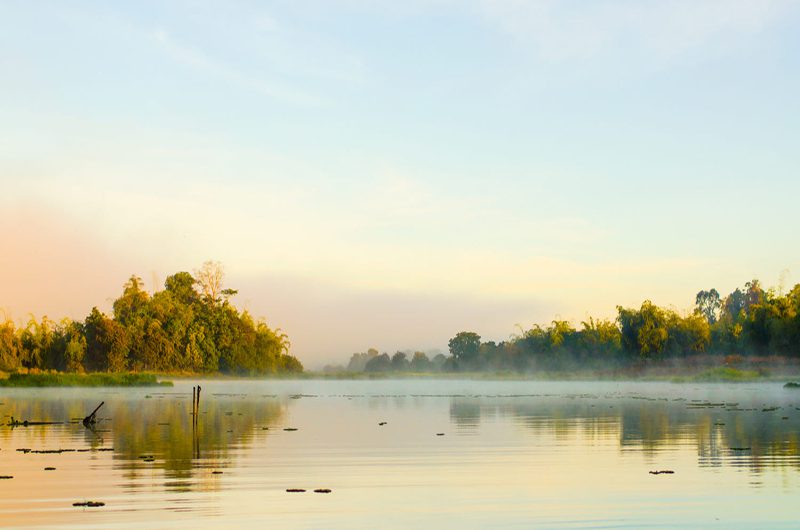
Bau Sau is the major wetland landscape inside Cat Tien National Park
4. Bach Ma National Park – Best for Mountain Trails and Waterfalls
- Location: Phu Loc area, Hue City, between Hue and Da Nang
- Best for: Mountain rainforest, waterfalls and summit viewpoints
- Best time: December-April
- Time needed: 1 full day or 2 days
- Planning note: Heavy rain can quickly change trail and road conditions
Bach Ma combines high-elevation rainforest with one of central Vietnam’s most practical mountain hiking circuits. Established in 1991 and expanded in 2008, the park manages 37,423.1 hectares of forest and mountainous terrain. Its ecosystems range from tropical evergreen forest below 1,000 meters to subtropical evergreen forest at higher elevations. Surveys record more than 2,400 plant and fungi species and more than 1,700 animal species. Bach Ma was nominated as an ASEAN Heritage Park in 2022.
The main visitor circuit connects several named landmarks. Hai Vong Dai, close to the summit at about 1,430 meters, opens views over the mountains and central coast. The Five Lakes trail follows a sequence of natural pools through forest, while the route toward Do Quyen Waterfall reaches one of the park’s most recognizable waterfalls. Remnants of the former French hill station add a historical layer to the highland landscape. Hai Vong Dai, the Five Lakes and Do Quyen Waterfall can be linked into a full-day route, making trekking in Bach Ma National Park particularly suitable for travelers staying in Hue or passing between Hue and Da Nang.

Bach Ma National Park, home to Five Lakes and Do Quyen Waterfall in southern Hue
Bach Ma receives exceptionally high rainfall, with annual totals commonly around 3,400-4,000 mm. This matters more than a simple monthly weather recommendation. Cloud and mist can remove summit views, while forest trails become slippery after heavy rain. Always check current weather and park access before setting out.
5. Cat Ba National Park – Best for Island-Karst Hiking
- Location: Cat Ba Island, Hai Phong
- Best for: Limestone-ridge hiking, forest trails and caves
- Best time: October-April for comfortable hiking
- Time needed: 1-2 days in the park
- Planning note: Cat Ba National Park and the wider World Heritage property have different boundaries
Cat Ba National Park protects the forested interior of Vietnam’s largest island within the wider Ha Long-Cat Ba karst landscape. Established in 1986, the park manages 15,200 hectares of terrestrial and marine habitat. Cat Ba Archipelago became a UNESCO Biosphere Reserve in 2004. In 2023, UNESCO expanded Ha Long Bay to create the Ha Long Bay-Cat Ba Archipelago World Heritage Site, which includes most of Cat Ba National Park along with marine protected areas and surrounding islands.
The Kim Giao-Ngu Lam route provides an accessible introduction to the park, climbing through limestone forest toward an elevated viewpoint. Longer hikers can continue across the island interior toward Ao Ech and Viet Hai, while Trung Trang Cave adds an underground karst experience. The forest trails are only one side of Cat Ba: Viet Hai Village, Lan Ha Bay, quieter island roads and kayaking routes make a longer stay on Cat Ba Island worthwhile after leaving the national park.
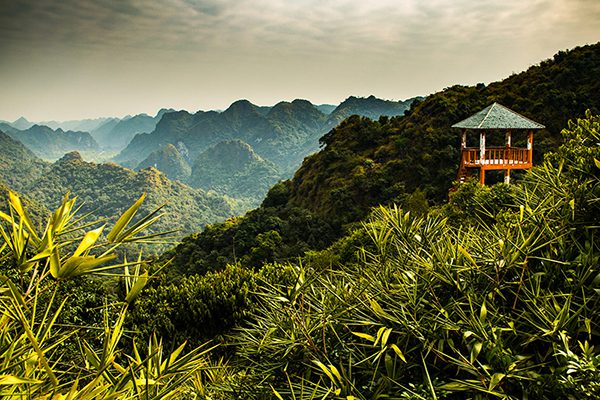
Cat Ba National Park
The endemic Cat Ba langur is one of the archipelago’s most important conservation species, but visitors should not expect a reliable sighting. Travelers with several days can combine a forest crossing with Cat Ba trekking and Lan Ha Bay kayaking, connecting the island’s terrestrial karst landscape with its sheltered marine scenery in one itinerary.
6. Hoang Lien National Park – Best for High-Altitude Trekking
- Location: Hoang Lien Son Mountains, Lao Cai and Lai Chau
- Best for: High-altitude forest, mountain trekking and Fansipan
- Best time: March-May and September-November
- Time needed: 1-3 days depending on route
- Planning note: Trekking Fansipan is different from reaching the summit by cable car
Hoang Lien is Vietnam’s defining high-mountain national park. Established in 2002, it manages 28,509 hectares across the Hoang Lien Son range in Lao Cai and Lai Chau. Its terrain contains numerous peaks above 2,000 meters and supports subtropical and temperate high-mountain vegetation rarely encountered in Vietnam’s lower national parks. More than 2,800 vascular plant species have been recorded, including many rare high-altitude species. Hoang Lien is also an ASEAN Heritage Park.
Fansipan is the park’s central geographic entity and the highest mountain in Vietnam. Trekking routes rise through changing vegetation as altitude increases, passing montane forest before reaching the exposed summit environment. Rhododendrons, orchids and high-mountain conifers add important botanical value to the landscape. Fansipan can be reached either through a demanding mountain trek or the much faster cable-car system, and the different ways to reach the Fansipan summit create very different experiences of the Hoang Lien landscape.
Travelers who only want the summit panorama can use the cable car from the Sa Pa tourism area. Those who want to experience Hoang Lien National Park itself should plan a proper trek. Mountain weather changes rapidly, so cold temperatures, cloud, rain and poor visibility can occur even outside the main rainy season.
Which Fansipan Trekking Route Should You Choose?
| Route | Typical Character | Best For |
|---|---|---|
| Tram Ton-Fansipan | Most established trekking approach | First-time Fansipan trekkers with suitable fitness |
| Sin Chai-Fansipan | Longer and more remote | Experienced trekkers with more time |
| Cat Cat-Fansipan | Steeper and more demanding | Strong hikers seeking a multi-day challenge |
7. Ba Vi National Park – Best Easy Day Trip from Hanoi
- Location: About 60 km west of central Hanoi
- Best for: Short forest walks, mountain temples and French-era ruins
- Best time: October-April
- Time needed: 1 day
- Planning note: Several attractions marketed under “Ba Vi” lie outside the national park
Ba Vi is one of the easiest national parks to add to a Hanoi itinerary. Established as a national park in 1991, the protected area covers 10,814.6 hectares around the Ba Vi mountain massif. The change in altitude from the surrounding plains creates several forest belts, including tropical low-mountain forest and cooler subtropical vegetation at higher elevations. Surveys have recorded 1,209 higher plant species and 342 vertebrate species.
The main visitor route climbs through forest toward cultural and historical landmarks. Thuong Temple forms part of the sacred landscape associated with Tan Vien Son Thanh. Higher on the massif, the Ho Chi Minh Temple and Bao Thien Tower occupy another summit cluster. Lower forest areas contain atmospheric ruins from the French colonial hill-station period. The combination of French colonial ruins, summit temples, mountain forest and short hiking routes makes Ba Vi National Park a practical nature-focused day trip from Hanoi.
Keep nearby attractions separate from the national park itself. Ao Vua, Thien Son-Suoi Nga and other commercial tourism complexes around the foothills are often included in broad lists of “Ba Vi attractions”, but they should not be presented as though they are all located within the core national park.
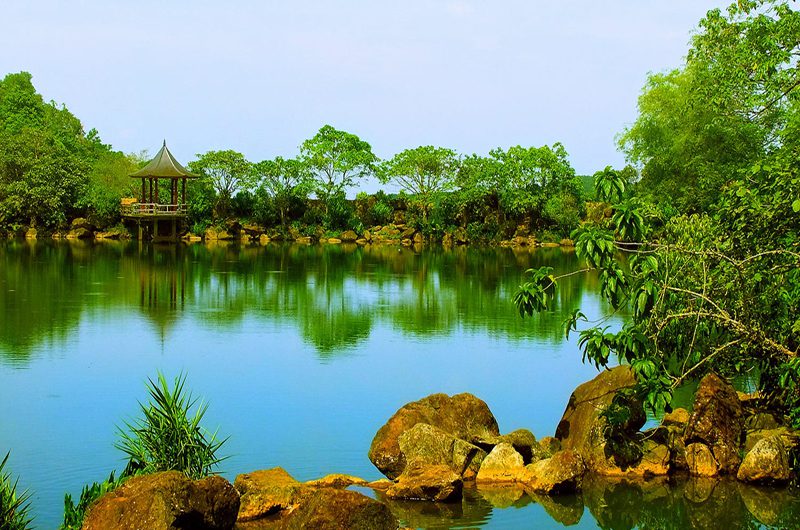
The wider Ba Vi mountain area combines forest, streams and mountain landscapes
8. Ba Be National Park – Best for Lake Scenery and Tay Culture
- Location: Thai Nguyen Province; formerly part of Bac Kan Province
- Best for: Freshwater lake scenery, boats, caves and Tay villages
- Best time: September-May
- Time needed: About 2 days
- Planning note: Boat travel is central to the main park experience
Ba Be differs from most national parks in Vietnam because a large natural freshwater lake forms the center of the protected landscape. Established in 1992, the park covers 10,048 hectares and combines freshwater, limestone karst and lowland evergreen forest. Ba Be became an ASEAN Heritage Park in 2003 and Ba Be was designated a Ramsar Wetland of International Importance in 2011.
Ba Be Lake consists of three connected basins known as Pe Leng, Pe Lu and Pe Lam. Boat routes move across the lake and into the Nang River system, connecting natural entities such as Puong Cave and Dau Dang Waterfall. Tay communities around villages such as Pac Ngoi add stilt-house architecture, farming landscapes and local food. Boat journeys across the lake can be combined with Puong Cave, Dau Dang Waterfall, forest trekking and stays in Tay villages, giving Ba Be National Park enough variety for a two- or three-day nature-and-culture trip.

Ba Be Lake is the highlight of the Ba Be National Park complex.
Ba Be works better as an overnight destination than as a rushed Hanoi day trip. Several hours are needed for the lake and river journey alone. Heavy rainfall can also affect river levels, boat services and forest trails, so check local weather and operating notices shortly before traveling.
9. Yok Don National Park – Best for Dry Forest and Ethical Elephant Experiences
- Location: Central Highlands, west of Buon Ma Thuot
- Best for: Dry dipterocarp forest, trekking, cycling and elephant welfare
- Best time: November-April
- Time needed: 1-2 days
- Planning note: Elephant programs have limited capacity and should be booked ahead
Yok Don protects the most distinctive large dry-forest landscape among Vietnam’s major national parks. The park was upgraded to national-park status in 1992 and covers 115,545 hectares. Its defining ecosystem is dry deciduous dipterocarp forest, known in Vietnam as rung khop. Unlike the humid evergreen forests of Cuc Phuong or Cat Tien, many trees here shed their leaves during the dry season, creating a more open woodland landscape.
Official visitor programs include guided trekking, cycling, birdwatching and activities around the Srepok River. Yok Don is also important for the evolution of elephant tourism in Vietnam. Elephants formerly used for rides can now move and forage in forest habitat while guests observe their natural behavior with guides. The official elephant program limits group sizes and availability depends on the elephants participating. Yok Don can also be combined with Buon Ma Thuot, coffee-growing landscapes, waterfalls and Ede or M’Nong cultural experiences, which together define a broader journey through Vietnam’s Central Highlands.

Yok Don National Park
The elephant experience is not a wild-elephant safari. Visitors observe former working elephants within a welfare-focused program rather than searching for the park’s wild elephant population. Travelers should reserve the program ahead of arrival, especially when visiting on a fixed itinerary.
10. Tram Chim National Park – Best for Mekong Wetlands and Birdlife
- Location: Dong Thap Province, in the Plain of Reeds
- Best for: Wetland scenery, boat trips and waterbirds
- Best time: December-April for generally easier access
- Time needed: Half day to 1 day
- Planning note: Sarus Crane sightings are not guaranteed
Tram Chim protects one of the most representative surviving wetland landscapes of the Mekong Delta’s Plain of Reeds. The park covers 7,313 hectares of seasonal wetlands, grasslands, waterways and melaleuca habitat. In 2012, Tram Chim became Vietnam’s fourth Ramsar site and the 2,000th Ramsar site in the world. Its seasonal wetland system supports a particularly important community of waterbirds.
Boat travel is the clearest way to understand the park. Channels pass through areas of melaleuca, grassland and aquatic vegetation, while seasonal changes in water level transform the landscape during the year. Early morning generally offers quieter conditions and stronger bird activity. Tram Chim’s seasonal floodplain is part of a much larger delta landscape shaped by rivers, canals, wetlands and agricultural communities, making the park a natural extension of a Mekong Delta journey rather than an isolated nature stop.
Older travel guides often present the endangered Eastern Sarus Crane as a predictable dry-season attraction. Current conditions are more complex. Dong Thap is implementing a long-term habitat restoration and crane reintroduction program after the wild population declined sharply. Travelers should therefore treat the Sarus Crane as an important conservation story rather than a guaranteed seasonal sighting.
11. Phu Quoc National Park – Best Forest Add-On to an Island Holiday
- Location: Northern Phu Quoc, An Giang Province
- Best for: Tropical forest and light trekking during an island trip
- Best time: November-April
- Time needed: Half day to 1 day
- Planning note: Do not confuse the terrestrial park with wider island and marine attractions
Phu Quoc National Park protects more than 31,422 hectares of tropical island forest. Established in 2001, the park is divided into strict-protection, ecological-restoration and administrative-service zones. It forms a core part of the Kien Giang Coastal and Marine Biosphere Reserve, which was recognized in 2006. Following Vietnam’s administrative reorganization, Phu Quoc is now part of An Giang Province.
The national park is most useful as the forest component of a wider island itinerary. Evergreen forest grows across low mountain terrain, with walking areas and less-developed landscapes concentrated particularly in the north. Evergreen forest, low mountain terrain and designated walking areas make Phu Quoc National Park the main terrestrial nature experience on an island otherwise best known for beaches and coastal tourism.

Phu Quoc National Park
Keep the boundaries clear when planning. Suoi Tranh, Da Ban Stream, southern snorkeling sites and the An Thoi archipelago are often grouped into general lists of Phu Quoc nature attractions, but they should not automatically be described as sites inside the national park. The forest can be paired with beaches, fishing villages, southern islands and coastal attractions during a longer stay in Phu Quoc, without treating those separate sites as part of the protected forest.
12. Con Dao National Park – Best for Forest and Marine Conservation
- Location: Con Dao Special Zone, Ho Chi Minh City
- Best for: Forest hiking, coral ecosystems and regulated turtle experiences
- Best time: December-April for hiking; turtles follow a separate nesting cycle
- Time needed: 2-3 days
- Planning note: Several nature and turtle programs require controlled access
Con Dao is one of Vietnam’s clearest examples of a national park linking terrestrial forest with a large marine conservation area. Established in 1993, the park covers about 198 km², including nearly 6,000 hectares of forest and roughly 14,000 hectares of marine protected area. Its ecosystems include evergreen rainforest, mangroves, coral reefs and seagrass beds. Con Dao National Park entered the IUCN Green List in 2025, and following the 2025 administrative reorganization it is now managed within the Con Dao Special Zone of Ho Chi Minh City.
Official routes include forest hikes toward So Ray, longer routes around Dam Tre Bay and protected coastal areas, while marine programs extend the experience to offshore islands and coral habitats. Sea turtles are especially important because Con Dao protects numerous nesting beaches used primarily by green turtles. Forest trails and protected marine areas can be combined with beaches, historical sites and quieter island roads, so the things to do in Con Dao extend well beyond the national park’s conservation programs.
Turtle tourism is regulated rather than unrestricted. Visitors register through approved park programs and follow ranger instructions at nesting beaches. The rules reduce disturbance to nesting females and hatchlings while allowing visitors to observe the conservation process.
How Do Sea-Turtle Experiences Work?
- Nesting observation: Controlled from 6:00 PM to 6:00 AM at approved locations
- Hatchling release: Conducted on mornings when hatchlings emerge, generally between 5:30 AM and 7:30 AM
- Access: Registration through the national park or authorized program
- Capacity: Night observation locations accept limited numbers and divide guests into small groups
- Rule: Follow ranger instructions and never independently approach nesting turtles
13. Nui Chua National Park – Best for Semi-Arid Landscapes and Coastal Trekking
- Location: South-central coast, Khanh Hoa Province
- Best for: Dry forest, rugged mountains and mountain-to-sea landscapes
- Best time: December-April
- Time needed: 1-2 days
- Planning note: Longer forest routes require preparation and controlled access
Nui Chua protects one of Vietnam’s most unusual national-park ecosystems. Established in 2003, it covers 29,865 hectares, including 22,513 hectares of terrestrial habitat and 7,352 hectares of marine area. The protected landscape contains Vietnam’s most distinctive dry and semi-arid forest ecosystem immediately beside the sea, creating a sharp transition between rocky mountains, dry woodland and coastal habitat.
The wider Nui Chua Biosphere Reserve, recognized by UNESCO in 2021, extends well beyond the national park and connects semi-arid forest with coastal communities, coral reefs and seagrass habitat. Natural landmarks in the wider area include Hang Rai and Vinh Hy Bay, while deeper hiking routes enter hotter and more exposed mountain terrain. Raglai and Cham communities also contribute an important cultural layer to the biosphere landscape. Nui Chua’s exposed dry-forest terrain offers a very different challenge from Vietnam’s humid jungle routes, adding a semi-arid mountain landscape to the country’s wider range of trekking destinations in Vietnam.
Nui Chua should not be approached like a shaded northern rainforest. Strong sun, dry ground and limited shade can make moderate distances physically demanding. Visitors planning longer mountain or forest routes should confirm current access conditions and use approved local guidance where required.
Vietnam’s Newest National Parks
Vietnam’s national-park network has expanded rapidly since 2025. The three parks below are important additions to the country’s protected-area system, although their visitor infrastructure remains less established than at long-running tourism destinations such as Cuc Phuong or Cat Tien.
Xuan Lien National Park
Xuan Lien was upgraded from a nature reserve to a national park in 2025. Located in Thanh Hoa, the protected area manages more than 25,600 hectares, including 23,816.23 hectares of special-use forest and land around the Cua Dat reservoir. Its main functions include protecting natural forest, rare and endemic species, watershed resources and ecological restoration while creating a framework for sustainable ecotourism.
Bat Xat National Park
Bat Xat became Vietnam’s 36th national park in March 2026. It covers 18,510.07 hectares across Muong Hum, Den Sang and Y Ty in Lao Cai. More than 14,600 hectares belong to the strict-protection zone, preserving high-mountain forests and important headwaters close to Vietnam’s northern border.
Ea So National Park
Ea So became Vietnam’s 37th national park on July 28, 2026. Located in Ea Knop Commune, Dak Lak, the park covers approximately 26,959 hectares after being upgraded from Ea So Nature Reserve. Its immediate importance lies primarily in forest and biodiversity conservation, so travelers should currently treat Ea So as an emerging ecotourism area rather than a mainstream park with the established visitor infrastructure found at Yok Don or Cat Tien.
All 37 National Parks in Vietnam
The 13 parks above are the most useful for a traveler-focused guide, but Vietnam’s full national-park network now covers 37 protected areas. Together they represent high mountains, limestone forest, tropical lowlands, wetlands, dry forest, mangroves, offshore islands and marine ecosystems.
| National Park | Current Province / City | Defining Landscape |
|---|---|---|
| Ba Be | Thai Nguyen | Freshwater lake and limestone forest |
| Ba Vi | Hanoi – Phu Tho | Mountain forest and cultural sites |
| Bach Ma | Hue City | Mountain rainforest and waterfalls |
| Bai Tu Long | Quang Ninh | Islands, forest and marine ecosystems |
| Bat Xat | Lao Cai | High-mountain forest |
| Ben En | Thanh Hoa | Evergreen forest and lake system |
| Bidoup-Nui Ba | Lam Dong | Montane evergreen and pine forest |
| Bu Gia Map | Dong Nai | Tropical forest |
| Cat Ba | Hai Phong | Island karst, forest and marine habitat |
| Cat Tien | Dong Nai | Lowland tropical forest and wetlands |
| Chu Mom Ray | Quang Ngai | Central Highlands forest |
| Chu Yang Sin | Dak Lak | High-mountain forest |
| Con Dao | Ho Chi Minh City | Island forest and marine ecosystems |
| Cuc Phuong | Ninh Binh – Thanh Hoa – Phu Tho | Limestone rainforest |
| Du Gia-Dong Van Karst Plateau | Tuyen Quang | Karst mountains and highland forest |
| Ea So | Dak Lak | Central Highlands natural forest |
| Hoang Lien | Lao Cai – Lai Chau | High mountains and Fansipan |
| Kon Ka Kinh | Gia Lai | Montane evergreen forest |
| Lo Go-Xa Mat | Tay Ninh | Lowland forest and seasonal wetlands |
| Mui Ca Mau | Ca Mau | Mangrove and coastal wetland |
| Nui Chua | Khanh Hoa | Semi-arid forest and marine habitat |
| Phia Oac-Phia Den | Cao Bang | High mountains and cloud forest |
| Phong Nha-Ke Bang | Quang Tri | Karst, caves and tropical forest |
| Phu Quoc | An Giang | Tropical island forest |
| Phuoc Binh | Khanh Hoa | Mountain forest and river valleys |
| Pu Mat | Nghe An | Annamite forest |
| Song Thanh | Da Nang | Annamite forest |
| Ta Dung | Lam Dong | Mountain forest and reservoir landscape |
| Tam Dao | Phu Tho – Thai Nguyen – Tuyen Quang | Mountain and cloud forest |
| Tram Chim | Dong Thap | Seasonal floodplain wetland |
| U Minh Ha | Ca Mau | Melaleuca and peat ecosystem |
| U Minh Thuong | An Giang | Peat-swamp and melaleuca forest |
| Vu Quang | Ha Tinh | Annamite mountain forest |
| Xuan Lien | Thanh Hoa | Mountain forest and reservoir watershed |
| Xuan Son | Phu Tho | Limestone forest and caves |
| Xuan Thuy | Ninh Binh | Coastal and estuarine wetland |
| Yok Don | Dak Lak – Lam Dong | Dry dipterocarp forest |
Best Time to Visit Vietnam’s National Parks
Vietnam’s national parks do not share one nationwide best season. Use the table below for quick planning and check current park or weather notices before traveling.
| National Park | Best Window | Useful Seasonal Note |
|---|---|---|
| Cuc Phuong | December-May | Late April-May is associated with butterfly season |
| Phong Nha-Ke Bang | April-August | High water can suspend caves and river activities |
| Cat Tien | December-May | Drier trails make forest travel easier |
| Bach Ma | December-April | Heavy rain can make trails slippery or unsafe |
| Cat Ba | October-April | Cooler conditions suit forest hiking |
| Hoang Lien | March-May, September-November | Better trekking temperatures; mountain weather remains changeable |
| Ba Vi | October-April | Cooler conditions for summit walking |
| Ba Be | September-May | Heavy rain can affect boating and trails |
| Yok Don | November-April | Dry forest conditions suit walking and cycling |
| Tram Chim | December-April | Good general wetland access; bird conditions vary |
| Phu Quoc | November-April | Drier conditions for forest routes |
| Con Dao | December-April | Good hiking conditions; turtle nesting follows a separate cycle |
| Nui Chua | December-April | Cooler conditions reduce heat exposure on longer hikes |
Practical Tips for Visiting National Parks in Vietnam
- Check current park notices before departure. Flooding, landslides, storms, fire risk or maintenance can close an individual trail, cave or boat route without closing the entire park.
- Do not assume every route is self-guided. Remote treks, cave expeditions, Yok Don elephant programs and several Con Dao experiences require controlled access, guides or advance registration.
- Plan for the actual activity. A Tram Chim boat trip requires very different footwear, fitness and preparation from a Fansipan trek or a multi-day Phong Nha cave expedition.
- Treat wildlife sightings as a possibility, not a promise. National parks protect natural habitat; they are not zoos and cannot guarantee encounters with rare species.
- Check what is actually inside the park. Beaches, resorts, waterfalls and marine attractions marketed under the same destination name may lie outside the official national-park boundary.
Plan Your Eco Tours with Paradise Travel
Paradise Travel is a licensed international tour operator and destination management company. We are headquartered in Hanoi. The company has operated tours across Vietnam, Laos, Cambodia, Myanmar, and Thailand since 2005. It proudly holds the TripAdvisor Travelers’ Choice Award for 2018, 2019, and 2024.
Vietnam’s national parks range from the high mountains of Hoang Lien to the caves of Phong Nha-Ke Bang, the wetlands of Tram Chim and the tropical forests of Cat Tien. Our Vietnam eco tours connect travelers with forests, wildlife habitats, trekking routes and protected landscapes while allowing enough time to experience each destination responsibly.
Travelers who want to combine national parks with Vietnam’s cities, heritage sites and regional cultures can choose our Vietnam discovery tours. Our local experts can build an itinerary around your preferred parks, trekking difficulty, travel dates and available time. Get in touch with our team to start planning your journey.

Address: 81 Alley 12 Dao Tan Street, Giang Vo Ward, Hanoi, Vietnam
Hotline: 0989391076
Email: sales@vietnamparadisetravel.com

Start planning your tailor-made Vietnam tour by contacting one of our specialists…


Hi can you suggest a resort and hikes in Ba Vi? I have done the hime to the french prison and to the top of the mountain. Is there anything else to explore? And is there. Nice play to stay? We live in hanoi and would like to go for one overnight trip.