

Kampong Cham Travel Guide
Kampong Cham Overview

Kampong Cham is a compact Mekong River city best suited to travelers interested in Khmer temples, cycling, rural villages and slower local life. The provincial capital lies about 124 kilometers northeast of Phnom Penh. The wider province covers about 4,549 square kilometers across Cambodia’s central lowlands.
Cambodia’s 2019 census recorded about 899,791 residents in Kampong Cham Province. The Mekong shapes much of the province’s agriculture and settlement pattern, with fertile lowlands supporting rice, fruit, tobacco and other crops. The river also explains the city’s long role as a trading and transport center.
The name Kampong Cham is commonly interpreted as “Port of the Chams”, reflecting the historical presence of Cham communities along this part of the Mekong. The modern city later developed as an important river town during the French protectorate. Its center still mixes Khmer buildings, Chinese-style shophouses and colonial-era architecture around the market and riverfront.
Kampong Cham’s administrative geography changed on December 31, 2013, when territory east of the Mekong was separated to form Tboung Khmum Province. This matters for travelers because several places described as “Kampong Cham attractions” in older guidebooks, including the French Watchtower across the river, are now technically in Tboung Khmum.
One night is enough to see Wat Nokor, the riverfront and Koh Paen at a relaxed pace. Two full days are better for Wat Hanchey, Phnom Pros and Phnom Srei, village experiences or one of the more distant temple sites.
Kampong Cham Weather and Best Time for Temples, Cycling and the Bamboo Bridge
November to February offers the most comfortable overall weather in Kampong Cham, while the later dry season gives travelers the best chance of seeing the seasonal Koh Paen bamboo bridge. Historical climate data place December’s mean temperature near 27°C and April’s near 30°C.
| Travel period | Typical temperature | Best for | What to expect |
|---|---|---|---|
| November-February | About 26-27°C | Temples, walking and cycling | Drier weather, cooler mornings and the easiest overall conditions |
| March-April | About 29-30°C | Koh Paen and dry-season travel | Very hot afternoons; seasonal bamboo crossing may still be present |
| May-June | About 28-29°C | Green countryside | Monsoon begins and Mekong levels start rising |
| July-September | About 27-28°C | River scenery and green landscapes | Wettest period; September historically receives around 282 mm of rain |
| October | About 27°C | Seasonal transition | Rain begins easing, but Mekong water levels can remain high |
The Cambodia dry season is easier for long cycling trips and temple visits. Recent 2026 travel information reports that the Koh Paen bamboo bridge continues to be reconstructed during low-water months, but its exact appearance depends on Mekong levels and local decisions.
The Cambodia rainy season changes the landscape rather than making Kampong Cham inaccessible. The countryside becomes greener, the Mekong broadens and exposed dry-season sandbanks disappear.
How to Get to Kampong Cham
Road transport is the normal way to reach Kampong Cham because the city has no commercial airport and no passenger railway station. Most international travelers enter Cambodia through Phnom Penh before continuing northeast by bus, minivan or private vehicle.
| From | Mode | Current travel time | Current fare reference |
|---|---|---|---|
| Phnom Penh | Bus / minivan | About 2-3 hours | About USD 7-13 |
| Siem Reap | Minivan | About 4-6 hours | About USD 8-13 |
| Kratie | Bus / minivan | About 2.25-3 hours | About USD 9-11 |
Transport examples above were checked against September 2026 schedules. Operators, departure points and fares can change.
Travel from Phnom Penh became smoother after a 45.489-kilometer section of National Road 7 between Skun and the Kizuna Bridge was upgraded to a four-lane asphalt road. The rebuilt section officially opened in July 2026.
Techo International Airport (KTI), about 20 kilometers south of Phnom Penh, has been Cambodia’s main capital-area airport since September 2025. Travelers arriving by air should arrange an onward road transfer rather than searching for flights to Kampong Cham.
Cambodia’s Royal Railway currently operates passenger services on the Phnom Penh-Battambang and Phnom Penh-Takeo-Kampot-Kep-Sihanoukville corridors. Kampong Cham is not on either passenger route.
Getting Around Kampong Cham
Walking, bicycles and tuk-tuks cover most visitor needs in central Kampong Cham, while a car or motorbike is more useful for temples outside the city.
- Walking: practical for the central market, Mekong riverfront, restaurants and the core town streets.
- Bicycle: particularly useful for Koh Paen, quiet village roads and short trips outside the center.
- Tuk-tuk: the easiest option for Wat Nokor, Phnom Pros, Phnom Srei and travelers who do not ride motorbikes.
- Motorbike: useful for experienced riders visiting Hanchey or rural areas independently.
- Private car: best for families or multi-stop days covering temples 20-40 kilometers outside the city.
A car with driver in Cambodia becomes particularly useful for combining Wat Hanchey, Wat Moha Leap or Preah Theat Teuk Chha without depending on local transport between rural sites.
Wat Nokor, Wat Hanchey and Kampong Cham’s Sacred Heritage
Kampong Cham’s strongest heritage sites trace Khmer religious architecture from the seventh-century Chenla period to the reign of Jayavarman VII and later living Buddhist monasteries. Wat Hanchey and Wat Nokor are the two sites to prioritize if time is limited.
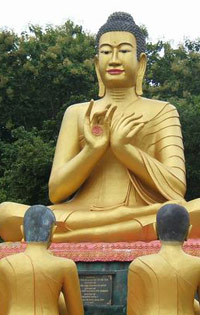
Wat Nokor Bachey stands about 2.2 kilometers from Kampong Cham city. Archaeological research dates the Bayon-style complex to the late twelfth or early thirteenth century under King Jayavarman VII. Laterite forms most walls and galleries, while pale-brown siliceous sandstone appears in the central sanctuary, doorways and architectural details.
A modern Buddhist pagoda occupies part of the historical complex, so Wat Nokor is more than an archaeological ruin. Incense, contemporary religious paintings and working monastery spaces sit inside the older Angkorian enclosure. Allow about 45-60 minutes and cover shoulders and knees.
Wat Hanchey, officially associated with Phnom Chey Kiri, stands about 20 kilometers north of the city on a 63-meter hill above the Mekong. Kouk Preah Theat, one of the ancient brick structures in the complex, dates to the seventh-century reign of King Isanavarman I during the Chenla period.
The ceremonial route to Wat Hanchey has about 295 steps, but road access also reaches the hilltop. This makes the Mekong viewpoint accessible to travelers who cannot manage the full stair climb. Early morning works well for cooler temperatures, while late afternoon gives softer river views.

Wat Hanchey sits on a 63-meter hill above the Mekong, with Chenla-era brick remains dating to the seventh century.
Phnom Pros and Phnom Srei are twin religious hills about 7 kilometers northwest of Kampong Cham. Local folklore connects the two hills with a contest between men and women over marriage traditions. Phnom Pros is easier to approach by road, while the climb to Phnom Srei involves about 308 steps.
The site also carries a more difficult twentieth-century layer. A small ossuary near Phnom Pros preserves the memory of people killed during the Khmer Rouge period. This part of the complex should be treated as a place of remembrance rather than a conventional sightseeing stop.
| Site | Distance from Kampong Cham | Main distinction | Physical effort |
|---|---|---|---|
| Wat Nokor Bachey | About 2.2 km | Jayavarman VII, Bayon-style laterite and sandstone complex | Easy walking |
| Phnom Pros and Phnom Srei | About 7 km | Twin sacred hills, local legend and Khmer Rouge memory site | Easy at Phnom Pros; 308 steps for Phnom Srei |
| Wat Hanchey | About 20 km | Seventh-century Chenla remains and Mekong panorama | 295 steps or road access to the hilltop |
Mekong Riverfront, Kizuna Bridge and Koh Paen Island
The Mekong is Kampong Cham’s defining landscape, linking the city’s riverfront with the Kizuna Bridge, Koh Paen and a network of farming villages and river islands. The river changes substantially between low-water and monsoon months.
Kizuna Bridge is a 1,500-meter concrete bridge connecting Kampong Cham City with Tboung Khmum District on the opposite bank. Construction began in 1998 and the bridge opened in 2001. It was Cambodia’s first bridge built across the Mekong River, funded through a Japanese government grant.

Kizuna Bridge, opened in 2001, was Cambodia’s first bridge built across the Mekong River.
The city-facing riverfront is most active around sunrise and late afternoon, when residents exercise, eat outside and gather near the Mekong. Kampong Cham is quieter after dark than Phnom Penh, so evening activity centers more on restaurants, food stalls and the promenade than on nightlife.
Across Kizuna Bridge stands the French Watchtower, an ochre-colored colonial-era river lookout. It is now in Tboung Khmum Province following the 2013 administrative split. The interior staircase is extremely steep, so travelers uncomfortable with heights should enjoy the exterior and river view from ground level.
Koh Paen, also written Koh Pen or Koh Paen Island, offers one of the easiest rural experiences from the city. Flat roads pass farms, wooden houses, pagodas and seasonal fields, making the island particularly suitable for cycling.

Flat roads and farmland make Koh Paen Island a popular cycling route from Kampong Cham city.
A permanent concrete crossing has changed everyday access to the island area. Koh Pen Bridge opened in 2018, measures 779 meters and provides modern year-round connectivity for surrounding communities.
The older bamboo crossing remains the more unusual travel experience. A May 2026 update reported that local builders still reconstruct the nearly one-kilometer bridge during the dry season. It is dismantled or disappears when Mekong levels rise.
Do not assume the bamboo bridge will be present on a specific date. River levels determine construction and dismantling, so travelers visiting specifically for the bridge should check with accommodation or a local driver shortly before arrival. Koh Paen itself remains visitable when the bamboo structure is absent.
Low river levels also expose sandy banks around Koh Paen that function as seasonal river beaches and recreation areas. These disappear when the Mekong rises during the wet season.
Kampong Cham also remains an active stop on several Mekong cruises, with Wat Hanchey, Wat Nokor, Phnom Pros and Cheung Kok appearing in current river itineraries.
2026 riverfront update: nearly 100 meters of riverbank collapsed in Kampong Cham City on January 30, damaging part of a public park and about 70 meters of asphalt road. Emergency stabilization and restoration followed. Separate ADB-funded wastewater, sewer and storm-drainage works were 88% complete as of June 30, 2026. Short sections of the riverfront may therefore still have changed access or construction activity.
Markets, Villages and Rural Life around Kampong Cham
Kampong Cham’s most rewarding local experiences are found in its market streets, Mekong villages and community-based tourism projects rather than purpose-built entertainment attractions.
The central market area provides the easiest introduction to everyday city life. Produce, freshwater fish, household goods and prepared food fill the market and nearby streets, while older Chinese-style shophouses remain visible around the commercial center.
Cheung Kok Ecotourism Village lies about 8 kilometers from the Kampong Cham riverfront. The community developed tourism around farming, scarf weaving, handicrafts and home-based experiences rather than large attractions. Current accommodation listings also show village homestays operating in 2026.

Cheung Kok Ecotourism Village builds its tourism around farming, scarf weaving and home-based experiences.
Cheung Kok works best for travelers who want conversation and observation rather than a fixed sightseeing checklist. A visit may include family farms, cooking, weaving or village walks, depending on what residents are doing that day.
Koh Paen offers a similar rural contrast without requiring a formal village program. Cycling from the city into the island landscape allows travelers to move gradually from urban streets to fields and riverside houses.
Markets start early in rural Kampong Cham. The province also preserves small Psar Kramoun, or “wax market”, traditions where vendors spread goods on mats during the cool early morning and finish trading as temperatures rise.
Day Trips and Lesser-Known Places around Kampong Cham
Wat Moha Leap, Preah Theat Teuk Chha and Chhrouy Chek add worthwhile depth for travelers spending a second day in Kampong Cham. They are more dispersed than the main city attractions, so private transport is the practical choice.
| Place | Approx. distance | Why it matters | Suggested time |
|---|---|---|---|
| Wat Moha Leap | About 20 km south | Historic wooden Buddhist pagoda begun in 1894 and consecrated in 1906 | 2-3 hours |
| Chhrouy Chek | About 15 km | Irrigation reservoir with Khmer Rouge-era historical associations | 1-2 hours |
| Preah Theat Teuk Chha | About 39 km | Early eleventh-century temple complex associated with Suryavarman I | Half day |
Wat Moha Leap is one of Cambodia’s best-known surviving traditional wooden pagodas. Construction began in 1894, and foundation stones were consecrated in 1906. The building stands on a raised platform designed for a flood-prone landscape and preserves painted wooden columns, roof structures and ceiling decoration. Cambodia’s Ministry of Culture and Fine Arts restored the site and designated it a cultural heritage site in 2016.

Wat Moha Leap, begun in 1894, is one of Cambodia’s best-known surviving traditional wooden pagodas.
Preah Theat Teuk Chha lies roughly 39 kilometers from the provincial capital. Tourism Cambodia dates the temple group to the reign of Suryavarman I in the early eleventh century. The site also sits within an older water-management landscape of canals and reservoirs, giving it both archaeological and agricultural context.
Chhrouy Chek is an irrigation reservoir about 15 kilometers from the city. Local families use the water and surrounding greenery for recreation, but the landscape also has a serious historical layer. The dam was constructed between 1975 and 1978 during the Khmer Rouge period, and deaths associated with forced labor and killings are remembered in the area.
For a first visit, do not try to combine every outlying site. Wat Nokor, Phnom Pros and Phnom Srei fit naturally into one short heritage circuit. Wat Hanchey works better as a separate half-day, while Wat Moha Leap and Teuk Chha reward travelers with a genuine second day.
Where to Stay in Kampong Cham
The central riverfront is the most practical base for a first visit, while Hanchey and Cheung Kok suit travelers who want a rural or community-focused stay. Kampong Cham has a smaller accommodation inventory than Phnom Penh or Siem Reap, so advance booking matters during major Cambodian holidays.
| Accommodation | Location | Best for |
|---|---|---|
| LBN Asian Hotel | 11 Preah Sihanouk Boulevard, Kampong Cham City | Central riverfront, families and travelers wanting a full-service hotel |
| Phalla Riverside | Tmorkol, Mekong River, Kampong Cham | Quiet riverside stay and good-value independent travel |
| SunRise Villa | Boengkok, Kampong Cham | Budget travelers and guests wanting bicycle rental |
| Hanchey Bamboo Resort | Preaek Preah Angk Village, Preaek Bak Commune, Stueng Trang District | Couples, families and slow countryside stays |
| Cheung Kok Ecotourism Village Homestay | Cheung Kok village area | Community experience and homestay travel |
LBN Asian Hotel sits about 450 meters from Kizuna Bridge and remains one of the larger accommodation choices in the city. Hanchey Bamboo Resort is approximately 23 kilometers outside Kampong Cham and works better as a countryside destination than as a base for walking around the city.
What to Eat in Kampong Cham
Kampong Cham shares the rice, freshwater fish and herb-based cooking of broader Cambodian cuisine, but several snacks and market foods have stronger local associations.
- Freshwater and dried fish: snakehead, catfish and pangasius are processed by businesses across the province.
- Jek chap: crispy banana chips particularly associated with the market town of Skun.
- Num kon trom: Kampong Cham rice cakes made with brown sugar, mung bean or dried coconut fillings.
- A-ping: fried tarantulas sold at Skun’s roadside insect market alongside crickets and other insects.
| Local food | Where to look | Traveler context |
|---|---|---|
| Fresh and dried Mekong fish | Kampong Cham central market area | Everyday regional food rather than a tourist specialty |
| Jek chap banana chips | Skun | Portable local snack associated strongly with the district |
| Num kon trom | Local markets and snack sellers | Traditional sweet rice snack from Kampong Cham Province |
| A-ping and fried insects | Skun market at the Routes 6 and 7 junction | Roadside market experience, not essential for every traveler |
Skun is about 49 kilometers west of Kampong Cham city and sits at the junction of National Roads 6 and 7. Travelers arriving from Phnom Penh often pass through it. The market is famous internationally for fried tarantulas, but Skun also sells fruit, banana products, dried fish and other roadside snacks.
Khmer New Year and Festival Travel in Kampong Cham
Khmer New Year can transform Kampong Cham from a quiet river city into one of Cambodia’s busiest provincial celebration centers. Travelers visiting in mid-April should plan for crowds, slower traffic and higher accommodation demand.
The 2026 Sankranta Kampong Cham celebrations ran from April 14 to 16. Provincial authorities reported 4,178,623 visitor visits over the three days, including about 300 international travelers. This figure represents recorded visits and event movements rather than unique overnight tourists.
The extraordinary domestic turnout shows why the Cambodian New Year changes practical travel conditions here. Visitors seeking public celebrations, food events and busy pagodas may deliberately choose these dates. Travelers wanting empty temples and quiet cycling should avoid the three peak days.
Pchum Ben is another important period at Buddhist sites including Wat Hanchey. Families visit pagodas to make offerings and remember deceased relatives. Cambodia’s official 2026 public holidays for Pchum Ben fall on October 10-12, although the wider religious observance extends beyond the public-holiday period.
Practical Kampong Cham Travel Tips
- Allow at least one night: a day trip from Phnom Penh is possible, but an overnight stay leaves time for Koh Paen and the riverfront.
- Check the bamboo bridge locally: the crossing is seasonal and its construction depends on Mekong water levels.
- Carry Cambodian riel and small US-dollar notes: cash remains useful at rural food stalls, temples and village stops.
- Cover shoulders and knees at temples: Wat Nokor, Wat Hanchey and Wat Moha Leap remain active Buddhist religious sites.
- Plan outdoor visits early: March and April are particularly hot, with average temperatures near 30°C before daytime peaks are considered.
- Check physical access: Phnom Srei requires about 308 steps, while Wat Hanchey can also be approached by road.
- Ask about riverfront conditions in 2026: restoration and drainage work may affect short sections after the January riverbank collapse.
- Keep country-level rules separate: current visa, e-Arrival, currency and national entry information is maintained in the Cambodia Travel Guide.
Kampong Cham Travel FAQ
Is Kampong Cham worth staying overnight?
Yes. One night gives enough time for Wat Nokor, the Mekong riverfront and Koh Paen without rushing. Two nights are more useful if you also want Wat Hanchey, village experiences or temples farther into the province.
Is the Koh Paen bamboo bridge open all year?
No. The bamboo bridge is a dry-season structure whose timing depends on Mekong water levels. Recent 2026 information reports that it is still rebuilt seasonally, but travelers should confirm locally. Koh Paen remains accessible when the bamboo bridge is absent.
Can I explore Kampong Cham without renting a motorbike?
Yes. The city center is walkable, bicycles work well for Koh Paen and tuk-tuks can reach Wat Nokor and Phnom Pros. A private car or arranged driver is more convenient for Wat Hanchey and longer rural excursions.
Can Kampong Cham be visited as a day trip from Phnom Penh?
Yes. Current buses and minivans commonly take about two to three hours each way. A day trip is possible, but six hours of road travel leaves much less time for Koh Paen, Hanchey and the riverfront.
Is Kampong Cham a good stop between Phnom Penh, Kratie and Siem Reap?
Yes. Direct road services connect Kampong Cham with Phnom Penh and Kratie, while current minivans also continue to Siem Reap. This makes the city a practical overnight stop rather than a detour.