

11 Best Hanoi Photo Spots, from Old Quarter Streets to Craft Villages
Hanoi offers very different photographic settings within one destination, from early-morning street life around Hoan Kiem Lake to imperial architecture, working flower markets, incense-making villages and forested mountains. The best location depends less on which place is most famous and more on the subject, light and amount of travel time you want.
Most urban photo spots can be combined on foot or with short taxi rides. Quang Phu Cau, Duong Lam and Ba Vi require separate half-day or day trips. Photographers should also remember that markets, temples, churches and craft villages are working or religious spaces, not staged sets. Asking before close portraits or entering private courtyards makes a significant difference.
For generally comfortable outdoor photography, Hanoi’s drier months offer clearer skies and easier walking conditions. Summer brings greener landscapes and lotus flowers but also stronger heat, humidity and sudden rain. Winter haze can reduce distant visibility, although it often creates softer atmospheric images around the city’s lakes.
Hanoi Photo Spots at a Glance
| Photo spot | Best photographic subject | Best time | Suggested time | Approximate cost |
|---|---|---|---|---|
| Hoan Kiem Lake | Hanoi icons, reflections, morning life | Around sunrise | 45-90 minutes | Lake free; Ngoc Son Temple about 50,000 VND |
| Hanoi Old Quarter | Street life, vendors, shophouses | Early morning or late afternoon | 1.5-3 hours | Free |
| West Lake | Sunset, open water, lotus, pagoda views | Late afternoon to sunset | 1-2 hours | Public lakeside areas free |
| Long Bien Bridge | Steel structure, Red River, commuters | Sunrise or late afternoon | 45-60 minutes | Free |
| Temple of Literature | Traditional architecture, symmetry, cultural portraits | Near opening time | 60-90 minutes | 70,000 VND/adult |
| Thang Long Imperial Citadel | Imperial gates, archaeology, architectural details | Morning | 1.5-2 hours | 100,000 VND/adult |
| St. Joseph’s Cathedral | Gothic architecture, urban portraits | Early morning or blue hour | 20-45 minutes for exterior | Exterior free |
| Quang Ba Flower Market | Night market, flowers, documentary photography | Midnight-3:00 AM | 45-90 minutes | Free |
| Quang Phu Cau Incense Village | Incense drying, craft production, color | 8:00-11:30 AM on a dry day | 1.5-2.5 hours on site | Village free; private photo yards about 50,000-100,000 VND |
| Duong Lam Ancient Village | Laterite lanes, old houses, village life | Morning or late afternoon | 3-4 hours on site | About 20,000 VND |
| Ba Vi National Park | Forest, mist, French ruins, seasonal flowers | Morning | Half day to full day | About 60,000 VND/adult |
Entrance fees and operating hours can change. Confirm time-sensitive information shortly before visiting, particularly for heritage sites and private photography areas.
1. Hoan Kiem Lake, Best for Hanoi Icons and Morning Life
- Location: Hoan Kiem Ward, central Hanoi
- Best for: First-time visitors, reflections, Hanoi landmarks and everyday life
- Best time: Around sunrise for softer light and morning exercise
- Main subjects: Turtle Tower, The Huc Bridge, Ngoc Son Temple and lakeside activity
- Time needed: 45-90 minutes
- Cost: Walking around the lake is free; Ngoc Son Temple costs about 50,000 VND
Hoan Kiem Lake is the easiest starting point for first-time photographers because one compact circuit combines Hanoi’s most recognizable landmarks with everyday city life. The freshwater lake covers about 12 hectares. Turtle Tower stands on a small island near its center, while the red The Huc Bridge connects the northern shore with Ngoc Son Temple.
Morning changes the character of the lake. Before sightseeing traffic builds, residents walk, jog, stretch and practice group exercise along the shoreline. The combination of stiller water, large trees and local activity creates more varied images than photographing Turtle Tower alone. A telephoto lens can isolate the tower across the water, while a wider focal length works better around The Huc Bridge and the northern shoreline.
Weekends create a different photographic opportunity. Parts of the Hoan Kiem area become pedestrian-oriented public space, bringing families, performers and community activities into the streets. The trade-off is a much busier background. Photographers seeking architectural compositions should arrive early, while those interested in people and public life may prefer the evening walking-street atmosphere.
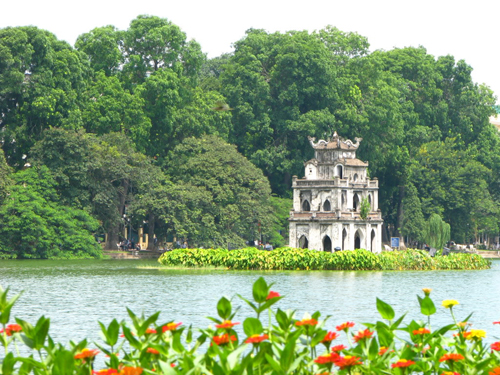
Hoan Kiem Lake combines landmark photography with reflections and everyday life in the historic center.
2. Hanoi Old Quarter, Best for Street Photography
- Location: North of Hoan Kiem Lake, mainly within Hoan Kiem Ward
- Best for: Street scenes, vendors, shopfronts and daily commerce
- Best time: Early morning for deliveries; late afternoon and evening for denser street activity
- Key streets: Hang Bac, Hang Ma, Hang Gai and Lan Ong
- Time needed: 1.5-3 hours
- Cost: Free to explore
Hanoi Old Quarter suits photographers who care more about human activity and layered streetscapes than clean monument photography. The traditional idea of Hanoi’s 36 guild streets survives in street names and continuing trades. Hang Bac remains associated with jewellery, Hang Ma with religious and festival goods, Hang Gai with textiles, and Lan Ong with traditional herbal medicine.
Early morning reveals a working district before tourism becomes dominant. Shops open their shutters, food sellers arrange low stools, delivery motorbikes stop along narrow facades and residents eat breakfast on the pavement. Later in the day, the visual emphasis shifts toward dense traffic, cafés, signs, shoppers and illuminated shopfronts. Rather than trying to cover the entire quarter randomly, choose two or three streets with different commercial identities.
The Old Quarter is difficult territory for tripods. Pavements are narrow and often occupied by parked motorbikes, merchandise and diners. Handheld photography is more practical and less disruptive. For recognizable portraits of individual vendors or residents, ask permission before moving close with a camera. Wide documentary scenes generally feel less intrusive than photographing a stranger’s face from a short distance.
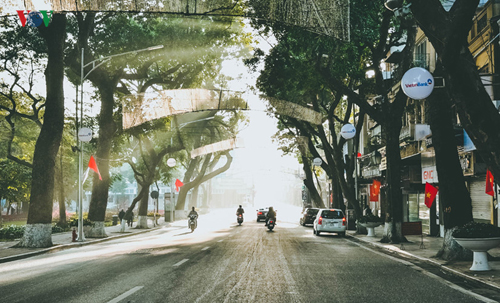
The Old Quarter is strongest for street photography because commerce and daily life still occupy its narrow historic streets.
3. West Lake, Best for Sunset and Open-Water Photography
- Location: Northwest of Hanoi’s historic center
- Best for: Sunset, open water, pagoda silhouettes and seasonal lotus photography
- Best time: Late afternoon through sunset
- Key areas: Thanh Nien Road, Tran Quoc Pagoda, Quang An and nearby Truc Bach Lake
- Time needed: 1-2 hours for one photography zone
- Cost: Public lakeside areas are free
West Lake is the strongest urban choice for photographers who want open horizons and sunset rather than the tightly packed streets around Hoan Kiem. The lake is too large to treat as one single shooting point. Thanh Nien Road is one of the easiest areas for first-time visitors because the roughly one-kilometer road separates West Lake from Truc Bach Lake and passes close to Tran Quoc Pagoda.
Late afternoon gives the widest range of compositions. Backlight creates silhouettes of trees, cyclists and waterside buildings, while changing cloud cover can reflect across the large water surface. Tran Quoc Pagoda adds a vertical architectural subject beside the lake. The pagoda traces its history to the reign of Ly Nam De in the sixth century, making the area valuable for both landscape and Buddhist architectural photography.
Lotus is a separate seasonal subject rather than a reason to call summer the only good time for West Lake. Early summer brings lotus-growing areas and Hanoi’s lotus-tea tradition into focus, while cooler months often provide more comfortable sunset sessions. Lotus gardens may be commercial or cultivated spaces, so photographers should ask before entering fields or arranging portrait sessions among the plants.
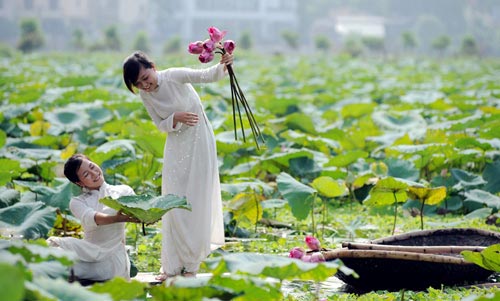
Lotus adds a seasonal foreground to West Lake, while the lake remains useful for landscape photography throughout the year.
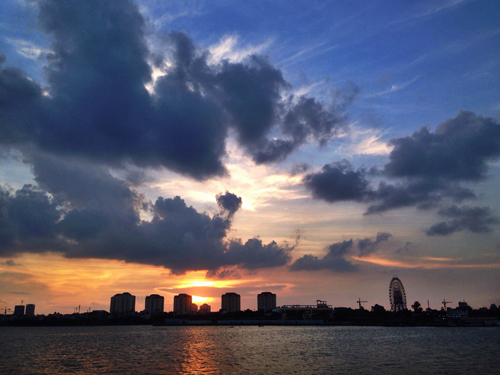
West Lake’s open western views make late afternoon one of the strongest windows for city sunset photography.
4. Long Bien Bridge, Best for Industrial Heritage and the Red River
- Location: Across the Red River between central Hanoi and Bo De Ward
- Best for: Steel geometry, river landscapes, commuters and historical infrastructure
- Best time: Sunrise or late afternoon
- Built: Completed in 1902
- Time needed: 45-60 minutes
- Practical note: The bridge remains active transport infrastructure with a working railway
Long Bien Bridge is the most distinctive location in Hanoi for photographers who prefer steel structure, railway heritage and river life to temples and colonial facades. The bridge was completed in 1902 to a design by the French engineering firm Daydé & Pillé. Its repeated steel trusses create strong leading lines that work particularly well with pedestrians, cyclists and the Red River below.
Sunrise adds activity as Hanoi begins its working day, while low-angle late-afternoon light can emphasize the weathered steel structure. The bridge also offers a larger geographic story than a close architectural frame. Depending on river level and season, compositions can include the Red River, riverbank cultivation, islands and the expanding city beyond the bridge.
Long Bien underwent substantial repair work before reopening to pedestrians and road traffic after a temporary closure. The bridge is nevertheless not an observation deck. Trains still use the railway, and motorbikes and bicycles occupy the road lanes. Photograph only from areas intended for pedestrian access, keep equipment out of traffic lanes and never step onto the railway for a photograph.
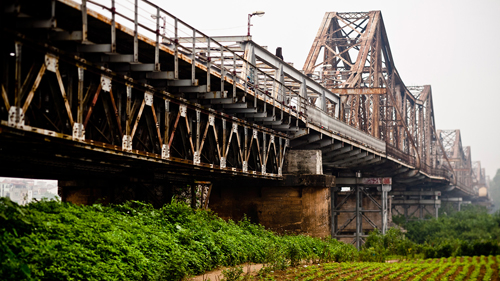
Repeating steel trusses give Long Bien Bridge a visual geometry that differs from Hanoi’s temple and colonial architecture.
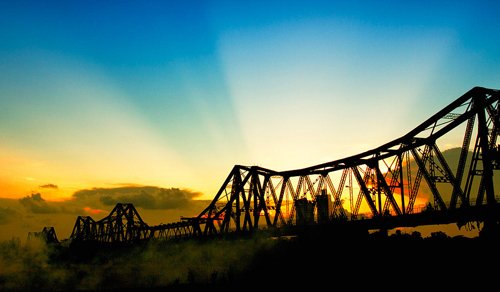
Early light combines the bridge’s industrial structure with broader views across the Red River.
5. Temple of Literature, Best for Traditional Architecture and Symmetry
- Address: 58 Quoc Tu Giam Street, Van Mieu – Quoc Tu Giam Ward
- Best for: Traditional architecture, symmetry, courtyards and cultural portraits
- Opening hours: 8:00 AM-5:00 PM daily
- Entrance fee: 70,000 VND/adult
- Time needed: 60-90 minutes
- Key subjects: Khue Van Cac, Thien Quang Well, courtyards and 82 doctoral stelae
Temple of Literature is the strongest central Hanoi photo spot for traditional architectural symmetry and the visual history of Vietnamese education. Emperor Ly Thanh Tong founded Van Mieu in 1070, and Quoc Tu Giam was established in 1076. The compound develops through a sequence of gates, gardens and courtyards rather than a single dominant building.
Khue Van Cac is the most recognizable photographic subject, with a red upper pavilion, circular windows and a formal approach through the courtyard. Thien Quang Well offers reflection and symmetry, while 82 surviving doctoral stelae record scholars from historical examinations. Graduation photography is also part of the contemporary visual culture of the site, so visitors may encounter Vietnamese students posing in formal dress or áo dài.
Arriving close to the 8:00 AM opening gives more room for architectural compositions before tour groups build. Temple of Literature is an active cultural and commemorative site, so photographers should avoid blocking incense areas or ceremonies. A standard visit of 60-90 minutes is sufficient for the main courtyards, but photographers working carefully with architectural details can spend longer.
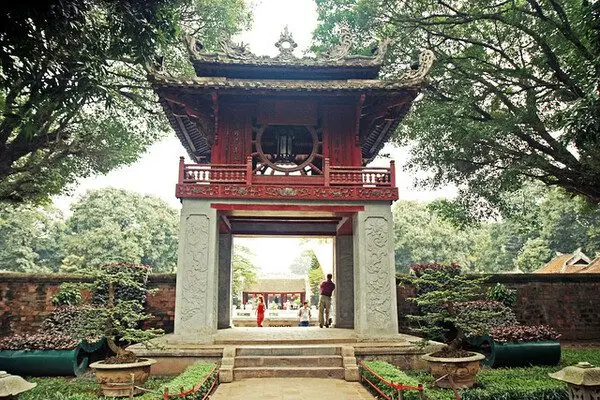
Khue Van Cac provides one of Hanoi’s clearest combinations of architectural symmetry, color and educational heritage.
6. Thang Long Imperial Citadel, Best for Imperial and Archaeological Photography
- Address: Hoang Dieu Street, Ba Dinh Ward, Hanoi
- Best for: Imperial gates, archaeology, historical layers and formal architecture
- Opening hours: 8:00 AM-5:00 PM daily
- Entrance fee: 100,000 VND/person
- Time needed: 1.5-2 hours
- Heritage status: UNESCO World Heritage Site since 2010
Thang Long Imperial Citadel gives photographers a larger historical landscape than the Temple of Literature, with monumental gates, archaeological remains and structures from several periods of Hanoi’s political history. The central sector served as a seat of power for successive Vietnamese dynasties and was inscribed on the UNESCO World Heritage List in 2010.
Doan Mon Gate offers the strongest frontal architectural composition, while the foundations and dragon steps of Kinh Thien Palace provide closer detail. Other subjects include Hau Lau, Hanoi Flag Tower, the D67 military command structures and the archaeological area at 18 Hoang Dieu. The variety makes the citadel particularly useful for photographers who want several historical periods within one visit.
A major city-approved restoration project for Kinh Thien Palace runs from 2026 to 2030 across an area of about 10,700 square meters. Restoration activity may therefore change access or sightlines around the Kinh Thien zone. The wider complex remains much larger than that one area, but photographers with a specific composition in mind should check current site notices before visiting.

The Imperial Citadel combines monumental architecture with archaeological and military layers from Hanoi’s long political history.
7. St. Joseph’s Cathedral, Best for Gothic Architecture
- Address: 40 Nha Chung Street, Hoan Kiem Ward
- Best for: Gothic architecture, urban portraits and evening street scenes
- Completed: 1887
- Architecture: Facade about 21 meters wide with twin towers nearly 32 meters high
- Time needed: 20-45 minutes for exterior photography
- Cost: Exterior photography from public areas is free
St. Joseph’s Cathedral is the clearest central-Hanoi contrast to the city’s Vietnamese temples and imperial architecture. Construction began during the French colonial period and the cathedral was inaugurated at Christmas in 1887. Its weathered Gothic facade is approximately 21 meters wide and 65 meters long, with two bell towers rising to nearly 32 meters.
The front elevation is strongest when photographed symmetrically from Nha Chung and Nha Tho streets. Early morning provides a cleaner architectural view, while blue hour adds street lighting, cafés and pedestrian activity around the forecourt. The narrow surrounding streets also allow environmental portraits that place the cathedral within modern central Hanoi rather than isolating it as a standalone monument.
St. Joseph’s remains an active Catholic cathedral. Interior access follows religious use and Mass schedules rather than functioning like a conventional museum. Dress respectfully, lower your voice and do not use flash or move around worshippers during services. If interior photography is important to your visit, check the cathedral’s current schedule instead of relying on generic tourism opening hours.

St. Joseph’s Cathedral adds a late nineteenth-century Gothic layer to Hanoi’s architectural photography.
8. Quang Ba Flower Market, Best for Night and Documentary Photography
- Location: Au Co area beside West Lake
- Best for: Documentary photography, flowers, vendors and nighttime market activity
- Best time: Midnight-3:00 AM for major wholesale activity
- Time needed: 45-90 minutes
- Cost: No standard sightseeing ticket
- Practical note: This is a working wholesale market, not a staged visitor attraction
Quang Ba Flower Market is the strongest choice for photographers who want to document Hanoi working while most of the city is asleep. Vietnam Tourism notes that large quantities of cut flowers are unloaded between midnight and 3:00 AM. Vans, motorbikes, traders and bundles of flowers create a completely different visual environment from Hanoi’s daytime tourist sites.
Low light is part of the experience. Artificial bulbs illuminate flowers and faces unevenly, while vehicles constantly enter and leave the market. A fast prime lens or a camera with good high-ISO performance is more practical than a tripod. Wider frames can show the scale of the wholesale trade, while closer compositions work well with bundles of roses, lilies and seasonal flowers.
Quang Ba is first and foremost a workplace. Do not block loading paths, place a tripod where vendors move carts, or rearrange flowers for photographs. Ask before making close portraits of individual sellers. Visitors arriving during the main wholesale period should also arrange transport in advance because the market operates long before normal sightseeing hours.

Quang Ba Flower Market is most active before dawn, when wholesale flowers arrive for distribution across Hanoi.
9. Quang Phu Cau Incense Village, Best for Craft and Color Photography
- Location: Ung Thien Commune, about 35 km south of central Hanoi
- Best for: Incense drying, graphic color, workshops and craft-process photography
- Best time: About 8:00-11:30 AM on a dry, sunny day
- Travel time: Roughly 45-75 minutes each way by car, depending on traffic
- Time needed: About 1.5-2.5 hours on site
- Cost: Public village access is generally free; private photography yards may charge about 50,000-100,000 VND
Quang Phu Cau Incense Village is the most visually graphic option outside central Hanoi because traditional incense production creates repeated fields of red, yellow and magenta bamboo sticks. The village’s incense-making tradition has developed for more than a century and remains part of everyday local production rather than existing only for tourism.
The famous circular arrangements are part of the drying process. Bamboo sticks are split, dyed, coated with aromatic mixtures and then opened into bundles so sunlight can reach them. Dry weather is therefore critical. On rainy or highly humid days, artisans may keep the incense under cover, which means the scene can look completely different from promotional photographs. Production becomes especially active before Tet as households prepare larger orders.
Some of the highly symmetrical photographs seen online are made in private drying courtyards that have designated photo areas and elevated viewpoints. These are not automatically public spaces. Pay the household’s stated photography fee, ask before photographing artisans closely and do not move incense bundles for your own composition. Because Quang Phu Cau requires a substantial transfer from central Hanoi, plan it as a dedicated half-day rather than an extra city stop.

Quang Phu Cau Village, a centuries-old craft village near Hanoi famous for incense making.
10. Duong Lam Ancient Village, Best for Rural Heritage Photography
- Location: Son Tay Ward, about 45 km west of central Hanoi
- Best for: Laterite lanes, traditional houses, village gates and everyday rural life
- Best time: Morning or late afternoon
- Entrance fee: About 20,000 VND
- Time needed: 3-4 hours on site, plus travel
- Key subjects: Mong Phu Gate, communal house, wells, laterite walls, Mia Pagoda and old homes
Duong Lam Ancient Village suits photographers who want a lived-in northern Vietnamese village rather than a reconstructed heritage attraction. Current local-government records count 50 relics in the village complex, including seven national-level sites. Nearly 100 houses are more than a century old, while almost 1,000 traditional Red River Delta houses remain across the wider heritage area.
The distinctive material is laterite, a reddish-brown stone used in walls, gates and older structures. Narrow lanes, tiled roofs, wells and courtyards create intimate compositions that differ completely from central Hanoi’s dense shophouses. Mong Phu Gate and the communal house provide identifiable architectural anchors, while lanes between homes work better for environmental photographs of village form and daily life.
Duong Lam is not an open-air museum. Families still live behind many of the historic walls and some old houses accept visitors only during specific daytime periods. Ask before entering a courtyard or photographing people at close range. The village lies closer to central Hanoi than the old article’s 60 km estimate suggests, but the road trip still makes it a half-day excursion once photography time is included.
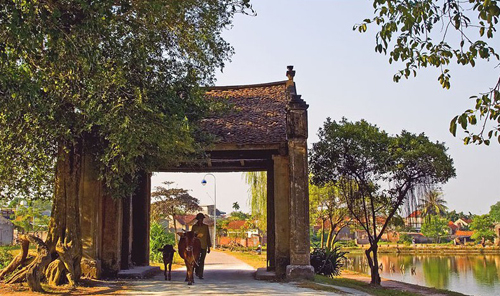
Duong Lam preserves laterite walls, historic houses and the spatial structure of a lived-in northern Vietnamese village.
11. Ba Vi National Park, Best for Forest and Seasonal Nature Photography
- Location: Western Hanoi, around 1.5-2 hours from the city center by road
- Best for: Forest, mountain mist, French ruins and seasonal wildflowers
- Opening hours: Commonly listed around 7:00 AM-5:30 PM
- Entrance fee: Approximately 60,000 VND/adult
- Time needed: Half day to full day
- Seasonal subject: Wild sunflowers usually bloom around late October into November, depending on weather
Ba Vi National Park is the best option in this list for travelers who want forest, mountain atmosphere and weather-dependent nature photography rather than Hanoi’s urban environment. The road climbs through dense vegetation toward higher sections of the park, creating opportunities for layered forest, fog and changing light conditions.
The French-era ruins give Ba Vi a second photographic identity. Stone walls and the remains of buildings sit among thick vegetation, producing a darker architectural mood than Hanoi’s restored colonial landmarks. The ruined church is one of the most recognizable subjects. Higher areas also contain temples and viewpoints, although cloud and mist can either improve the atmosphere or completely obscure distant scenery.
Wild sunflowers, known locally as dã quỳ, create Ba Vi’s strongest seasonal color. The bloom usually appears around late October into November, but exact timing changes with rainfall and temperature. Check the park’s seasonal announcements before planning a trip primarily around flowers. Mountain roads are steep and winding, so avoid treating the drive time as fixed, especially in heavy rain or fog.
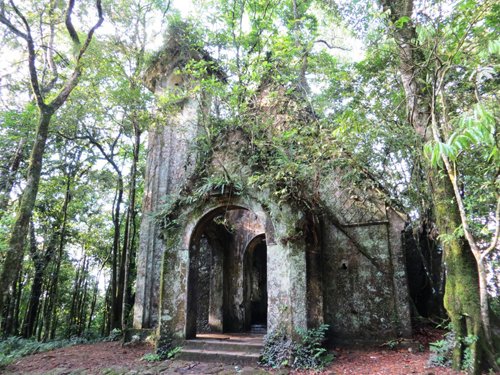
French-era ruins provide Ba Vi with an architectural subject that changes character with forest mist and seasonal weather.
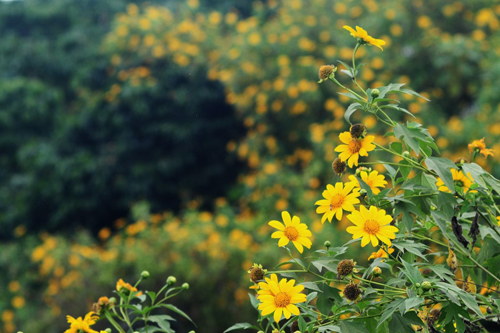
Ba Vi’s wild sunflower season is short and weather-dependent, so check local bloom conditions before traveling specifically for flowers.
Why Hanoi Train Street Is Not on This List
Hanoi Train Street appears on many photography lists, but it is not included here because the railway remains an active safety corridor rather than a conventional photo attraction. Hanoi’s Department of Tourism instructed travel agencies in 2025 not to organize tours to the railway café streets because of traffic and railway-safety risks.
Enforcement and access can change, but the underlying risk does not. Recent incidents have involved visitors positioning themselves dangerously close to passing trains. Travelers should not stand, sit, pose or place camera equipment on the tracks. Long Bien Bridge, the Old Quarter and Quang Ba Market offer stronger documentary photography opportunities without making an active railway corridor the subject of the visit.
Practical Photography Tips for Hanoi
- Plan by light, not only by attraction: Hoan Kiem and Long Bien work well around sunrise, while West Lake is more useful near sunset.
- Use a compact setup for street photography: Hanoi’s Old Quarter and markets have narrow, busy spaces where large tripods can obstruct pedestrians and vendors.
- Ask before close portraits: A wide street scene is different from pointing a camera directly at a vendor, artisan, child or worshipper from close range.
- Respect religious spaces: Dress modestly at temples, pagodas and churches. Avoid flash and do not interrupt ceremonies or prayer.
- Protect gear from sudden rain: A light rain cover, dry bag and lens cloth are useful even when the morning begins clear.
- Carry some Vietnamese dong: Small heritage tickets, rural photography yards and local services may be easier to pay in cash.
- Do not rely on viral images alone: Lotus flowers, incense drying, wild sunflowers and mountain visibility all depend on season and weather.
- Separate urban and rural days: Quang Phu Cau, Duong Lam and Ba Vi require enough transfer time that they should not be inserted casually between central Hanoi attractions.
If photography is only one part of your visit, a one-day Hanoi itinerary can combine Hoan Kiem Lake, the Old Quarter, Temple of Literature and nearby heritage sites without excessive transfers. Travelers with more time can use a three-day Hanoi itinerary to separate central street photography from West Lake and an outlying village or nature trip.
Plan Your Hanoi Trip with Paradise Travel
Paradise Travel is a licensed international tour operator and destination management company headquartered in Hanoi. The company has operated tours across Vietnam, Laos, Cambodia, Myanmar, and Thailand since the early 2000s. Paradise Travel holds the TripAdvisor Travelers’ Choice Award for 2018, 2019, and 2024. Our local consultants support international travelers with itinerary planning, private transportation, accommodation, and destination arrangements throughout Vietnam.
A photography-focused Hanoi city tour may combine sunrise around Hoan Kiem Lake or Long Bien Bridge with the Old Quarter, Temple of Literature, West Lake, and other heritage areas. Travelers who want to photograph Quang Phu Cau Incense Village, Duong Lam Ancient Village, or Ba Vi National Park can also build these longer transfers into a private itinerary without sacrificing the main cultural sights in central Hanoi.
Need help arranging Hanoi’s photo spots around the best times of day, travel distances, and the rest of your Vietnam itinerary? Get in touch with our team for personalized trip planning.

Address: 81 Alley 12 Dao Tan Street, Giang Vo Ward, Hanoi, Vietnam
Hotline: 0989391076
Email: sales@vietnamparadisetravel.com
Frequently Asked Questions

Start planning your tailor-made Southeast Asia tour by contacting one of our specialists…


