


Summer in Vietnam runs from June to August, and this year it opens with a specific marker: Con Dao’s sea turtle nesting season shifts from its tentative May start into full swing, with green sea turtles coming ashore most nights and hatchling releases becoming a near-daily event on islands like Bay Canh. Beyond that shift, the season brings the year’s driest, clearest stretch to the central coast, when Phong Nha’s cave systems are easiest to reach before autumn flooding closes many of them, while quieter islands like Ly Son and Phu Quy see their calmest crossings of the year.
Summer also flips the weather logic most visitors expect: the north and south sit deep in their own rainy months, short, heavy afternoon downpours rather than all-day rain, while the central coast enjoys its best weather of the year. That contrast is exactly why this season rewards travelers who match the region to the month, rather than assuming one part of the country will disappoint just because it’s technically the rainy season somewhere else.

Summer in Vietnam, best experienced away from the north’s rainy season
Vietnam Weather in Summer
Summer’s weather splits by region in a way that’s easy to get backwards. For a full month-by-month breakdown, see our Vietnam travel guide.
Hot and humid, 30-36°C (86-97°F), with short, heavy afternoon showers most days rather than all-day rain. The upside: this rain turns rice terraces and highland valleys a vivid green, and mountain routes like the Ha Giang Loop stay passable, just muddier than in the dry months.
This is the central coast’s dry season, and its best weather of the year: sunny, stable days with only occasional brief downpours. Phong Nha-Ke Bang’s caves are at their most accessible now, before the flooding that closes many of them from September onward.
The south is in its wet season, 28-33°C (82-91°F), with intense but short afternoon downpours. Mornings and evenings usually stay clear, and this is also when Con Dao’s turtle nesting season reaches its real peak.
Festivals and Events in Summer
Falling on the 5th day of the 5th lunar month, usually landing in June, this festival is centered on driving out illness and bad luck at the height of summer heat. Families eat rice wine, sour fruit, and sticky rice dumplings believed to “kill off” intestinal parasites, a much smaller, more domestic occasion than Tet or Mid-Autumn, observed mainly at home rather than with public events.
Held in fishing communities along the central and southern coast, including around Vung Tau and parts of the Mekong Delta, this festival honors whales as guardian spirits of fishermen, with boat processions and offerings at seaside temples. Exact dates vary by village and are set locally, so check with a coastal town directly if this is something you want to time a visit around.
Best Places to Visit in Vietnam in Summer
1. Phong Nha-Ke Bang National Park
Phong Nha-Ke Bang suits travelers who want serious natural spectacle over beach time, and summer is genuinely the best window to see it: this is the dry season for the park’s cave systems, before autumn flooding closes many routes entirely. Paradise Cave and Phong Nha Cave itself are open year-round and accessible to most visitors, while Son Doong, the world’s largest cave by volume, requires a multi-day expedition booked months in advance through the single licensed operator, and sells out well ahead of summer.
Beyond the marquee caves, Dark Cave (Hang Toi) combines a zipline entry with mud-bath swimming, a popular half-day option for travelers who want adventure without a multi-day trek. The Chay River running through the park stays swimmable and clear through summer, and kayaking trips combine well with a cave visit in the same day. Dong Hoi, the nearest city with an airport, is about 45-60 minutes from the park entrance, making this an easy add-on to a central Vietnam itinerary rather than a remote expedition.

Phong Nha-Ke Bang, at its most accessible before autumn flooding
2. Con Dao
Con Dao’s sea turtle nesting season reaches its genuine peak in summer, June through September, a step up from the season’s tentative May opening. This is when the highest numbers of green sea turtles come ashore at night to nest, and hatchling releases become a near-daily occurrence on islands like Bay Canh, rather than the occasional event of earlier months. Registering through Con Dao National Park in advance remains necessary for either a nesting or hatchling tour.
Outside the turtle season, Con Dao’s remoteness, about an hour’s flight from Ho Chi Minh City, keeps its beaches and snorkeling sites far less crowded than Phu Quoc or Nha Trang. The former prison complex and Con Dao Museum add a somber historical layer, and summer’s dry season across the south makes this one of the more reliable months for calm boat crossings between the archipelago’s islands.

Con Dao’s beaches, quiet even at the height of turtle season
3. Cu Lao Cham (Cham Islands)
Cu Lao Cham, a small marine protected archipelago about a 20-30 minute boat ride from Cua Dai Beach near Hoi An, suits travelers who want a genuine snorkeling or diving day trip rather than another walk through the Ancient Town. Summer’s calm seas and good visibility make this the best window of the year for the coral reefs around the islands, and day-trip boats run regularly from Hoi An’s Cua Dai pier.
Bai Xep and Bai Ong are the main swimming beaches, both considerably quieter than anything on the mainland nearby, and the local fishing village on the main island still runs on its own rhythm, with seafood restaurants serving the day’s catch rather than a tourist-oriented menu. A visitor cap is in place to protect the marine reserve, so booking a licensed tour operator ahead of a summer weekend is worth doing rather than showing up and hoping for a boat slot.

Cu Lao Cham, best visited for its summer visibility and calm seas
4. Ly Son Island
Ly Son, a volcanic island off the coast of Quang Ngai province, suits travelers looking for a beach destination that hasn’t yet caught up to Vietnam’s bigger island resorts. The island is known nationally for its garlic farms, grown in volcanic soil along the coast, and for the black basalt rock formations left behind by extinct volcanic craters, a genuinely different landscape from the white-sand beaches found elsewhere on this list.
Summer is the easiest season to reach it: a roughly 30-minute high-speed boat crosses from Sa Ky port near Quang Ngai city, a route that can be suspended in rougher weather during other months. Snorkeling around Ganh Da Dia-style rock formations and cycling the island’s flat, quiet roads are the main activities, and with only a modest number of guesthouses so far, this remains a place where the visit still feels like a discovery rather than a well-trodden circuit.

Ly Son Island, easiest to reach in summer’s calm seas
5. Phu Quy Island
Phu Quy, off the coast of Binh Thuan near Mui Ne, suits travelers who want an island escape without a domestic flight: a roughly 2.5 to 3-hour high-speed boat runs from Phan Thiet. Summer’s calmer seas make this crossing considerably more comfortable than during the windier months that make Mui Ne itself famous for kitesurfing.
The island is small enough to circle by motorbike in a day, past fishing villages, a lighthouse at Cau Cape, and clear-water coves good for snorkeling, all without the resort infrastructure found on Phu Quoc. Fresh seafood, straight off the boats each morning, is the main draw at meal times, and because the island still runs largely on local fishing rather than tourism, prices for food and basic guesthouses remain noticeably lower than on Vietnam’s more developed islands.
6. Pu Luong Nature Reserve
Pu Luong suits travelers who want Sapa’s terraced-valley scenery without Sapa’s crowds, tucked into Thanh Hoa province about 3.5-4 hours from Hanoi. Summer’s rains keep the rice terraces a deep, saturated green, and the reserve’s wooden water wheels, used to funnel water up to the paddies, are one of the area’s more distinctive sights, rarely photographed elsewhere in the north.
Homestays run by local Thai ethnic families are the standard way to stay here, usually including meals cooked with vegetables grown on-site, and trekking routes range from an easy half-day valley walk to a full-day climb up Pu Luong peak itself. Because the reserve sits at a lower, warmer elevation than Sapa, evenings stay comfortable rather than genuinely cold, making it a gentler introduction to Vietnam’s northern highlands for travelers not ready for a multi-day trek.

Pu Luong’s terraces, shown here in harvest gold rather than summer green
7. Ha Giang Loop
The Ha Giang Loop suits a different traveler in summer than it does during its famous October buckwheat-flower season: this is when the province’s terraced fields turn green rather than gold, and the roads, while occasionally muddier after rain, see far fewer motorbike convoys than during peak flower season. The core loop through Dong Van, Meo Vac, and the Ma Pi Leng Pass remains the same dramatic karst scenery regardless of season.
Riding self-drive or with a local driver (known as an “easy rider”) on the back are both common approaches, and most visitors take 3-4 days to complete the loop at a comfortable pace with stops at ethnic minority markets and viewpoints along the way. Summer’s occasional afternoon showers are worth building buffer time around, since the mountain roads can turn genuinely slick, but mornings are typically clear and are when most riders choose to cover the more exposed sections of the route.
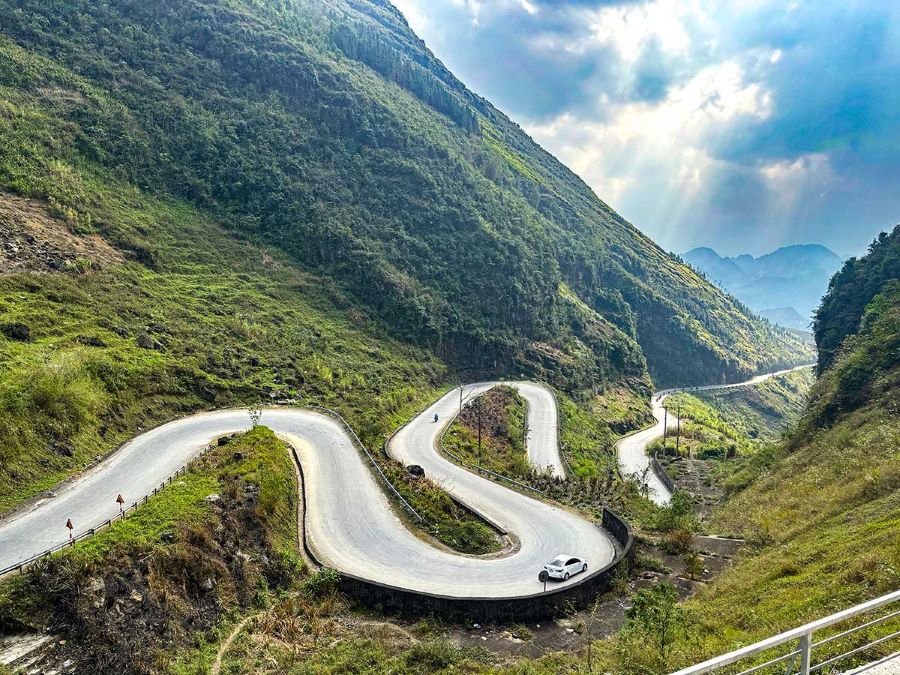
The Ha Giang Loop, quieter in summer than during peak flower season
Essential Travel Tips for Summer
- Pack smart: Lightweight, moisture-wicking fabrics, a light waterproof jacket, high-SPF sunscreen, and insect repellent.
- Plan around the rain: Schedule outdoor activities for mornings, and save indoor stops or cafes for the afternoon showers.
- Book island crossings with buffer days: Ferries to Ly Son, Phu Quy, and Cu Lao Cham can be suspended in rough weather, so avoid scheduling a tight connection immediately after an island stay.
- Take advantage of off-peak pricing: With fewer Western visitors than the December-February high season, expect shorter lines and better rates on accommodation and domestic flights.
Choosing Your Summer Destination
Summer only looks like a rainy-season write-off if you ignore where the rain actually falls. Phong Nha and the Ha Giang Loop still work fine around a few afternoon showers, Con Dao hits its best turtle-watching month of the year, and crossings to Ly Son, Cu Lao Cham, and Phu Quy get their calmest seas. The trick is matching the destination to its own season rather than judging the whole country by whichever region happens to be wet that week.
Read more seasons in our country (click to the images):
Plan Your Vietnam Trip with Paradise Travel
Paradise Travel is a licensed international tour operator, headquartered in Hanoi and running tours since the early 2000s. The company holds the TripAdvisor Travelers’ Choice Award for 2018, 2019, and 2024. Our local consultants can help you time a summer trip around Phong Nha’s dry-season caves, Con Dao’s peak turtle nesting, or a quieter island crossing to Ly Son or Phu Quy that most itineraries skip entirely.
Whether you’re arranging a North Vietnam tour through Ha Giang or Pu Luong’s green summer terraces, a Central Vietnam tour built around Phong Nha’s cave systems, or a South Vietnam tour covering Con Dao’s turtle season, Paradise Travel’s team can build the trip around your schedule and budget.
Trying to time a trip around Son Doong’s booking window, Con Dao’s turtle season, or a quieter island escape? Get in touch with our team for personalized trip planning.

Address: 81 Alley 12 Dao Tan Street, Giang Vo Ward, Hanoi, Vietnam
Hotline: 0989391076
Email: sales@vietnamparadisetravel.com
FAQs: Summer in Vietnam


