9 Best Beaches in Hoi An: Hidden Gems & Islands
Hoi An’s best beaches range from lively mainland shores with restaurants and water sports to quiet stretches of sand and small island bays where fishing villages, coral reefs and forested hills shape the experience. An Bang is the easiest all-round choice for most visitors, while Ha My and Hidden Beach offer more space and quiet. Travelers willing to take a boat from Cua Dai can reach the beaches of Cu Lao Cham, where Bai Ong, Bai Chong, Bai Xep, Bai Huong and Bai Bim each offer a different balance of swimming, snorkeling, local life and solitude.
The beaches also make a natural contrast to the lantern streets and historic houses covered in the Hoi An travel guide. Instead of treating every beach as the same combination of sand and sea, this guide focuses on what actually distinguishes each place, including sunrise, swimming conditions, beach facilities, photography, snorkeling, local fishing life and the amount of privacy you can expect.
When Is the Best Time to Visit Hoi An Beaches?
March to August is generally the easiest period for a beach-focused stay in Hoi An. The central coast usually has more sunshine, warmer sea temperatures and calmer water during this period. Early morning is particularly rewarding on the mainland because the coast faces east, making An Bang, Ha My and Cua Dai strong sunrise locations. Midday can become intensely hot, so many visitors return to the beach again in the late afternoon.
Trips to Cu Lao Cham depend more heavily on sea conditions. Calm weather makes speedboat crossings, snorkeling and moving between island beaches much easier. During the wetter and windier months, rough seas can interrupt boat departures even when conditions in Hoi An Ancient Town seem manageable. Travelers planning a dedicated Vietnam beach holiday should therefore leave some flexibility around an island day.
1. An Bang Beach
- Location: About 4 km east of Hoi An Ancient Town
- Best for: First-time visitors, families, couples and travelers who want beach facilities without a large resort strip
- Beach character: Long sandy shoreline with warm water, local fishing activity and a relaxed low-rise beach community
- Top experiences: Sunrise swimming, beach walks, sunbathing, SUP, water sports, seafood and drinks by the shore
- Facilities: Restaurants, cafes, beach bars, sun loungers, umbrellas, homestays, villas and water-sport services
- Best time of day: Sunrise for quiet swimming and photography; late afternoon for dining and the social beach atmosphere
- Practical note: The central entrances become busier later in the day, while sections farther along the shoreline are usually quieter
An Bang is the best all-round beach for travelers who want to combine swimming with restaurants, beach bars and easy access from Hoi An. The coast lies only a short bicycle or taxi ride from the Ancient Town, yet the shoreline feels very different from the historic center. The beach is broad enough for walking and sunbathing, while its low-rise development preserves a more relaxed atmosphere than a coastline dominated by large hotels. Recent travelers consistently mention warm water, soft sand, sea breezes and the convenience of moving directly from a lounger to a seafood restaurant or cafe.
Sunrise is the signature experience. The beach faces east, so the sun appears over the sea while local swimmers and fishermen begin their day. Arriving early also means cooler temperatures and far fewer visitors. Later in the morning, restaurants place out loungers and umbrellas, while SUP boards and other recreational activities become easier to arrange. Families often prefer the convenience of these facilities, while couples can stay through late afternoon for food, drinks and softer light.
An Bang is not a deserted beach, and that is part of its appeal. The main entrances can attract vendors and larger crowds, particularly later in the day. Walk north or south from the busiest section if you want more space. Also remember that the sun sets inland rather than into the sea, so come at dawn if ocean sunrise photography is a priority.
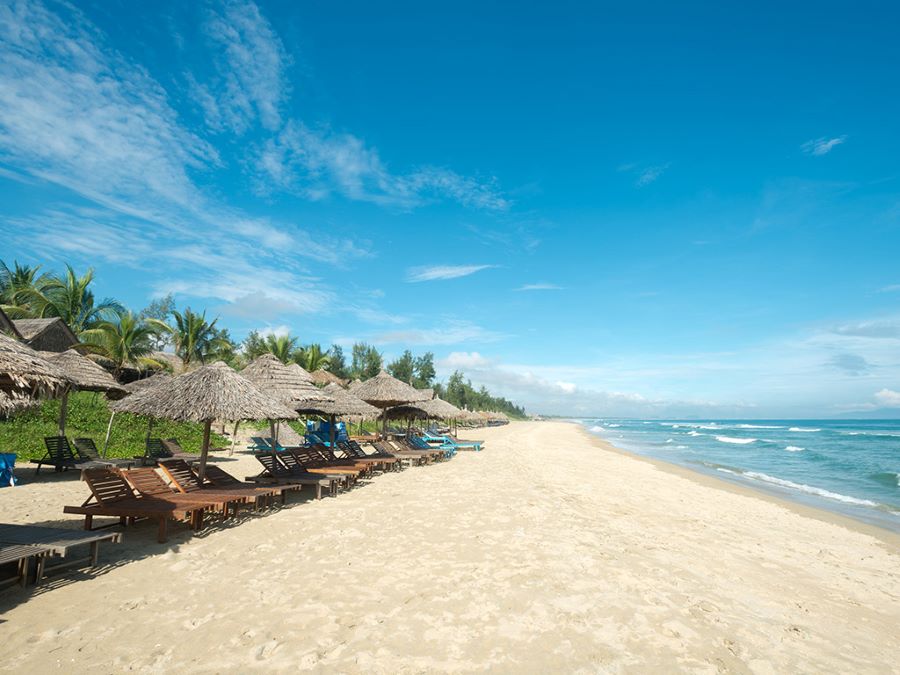
An Bang Beach combines easy swimming, sunrise views and one of the most developed beach dining scenes near Hoi An.
2. Cua Dai Beach
- Location: About 5 km east of Hoi An Ancient Town, near the Thu Bon River mouth
- Best for: Travelers seeking a quieter mainland beach with resorts, restaurants and local fishing activity nearby
- Beach character: Palm-lined coast with a mixture of restored sandy sections, resort frontage and fishing activity
- Top experiences: Early beach walks, swimming where conditions permit, relaxing under palms, seafood meals and watching basket boats
- Facilities: Resorts, local restaurants, sun loungers, showers and food services along accessible sections
- Best time of day: Early morning for walking and swimming; late afternoon for cooler temperatures and fishing activity
- Practical note: Cua Dai has experienced long-term erosion and periodic restoration, so beach width and access can differ between sections
Cua Dai suits travelers who want a quieter mainland atmosphere than central An Bang while keeping restaurants and resort facilities close at hand. The beach sits near the point where the Thu Bon river system reaches the sea, giving this part of the coast a stronger connection to local fishing activity. Palm trees, basket boats and small seafood businesses remain part of the visual character. Travelers often describe the accessible sandy sections as relaxed, with loungers available through nearby restaurants and considerably less foot traffic than An Bang’s busiest entrances.
Early morning is the most dependable time for a beach walk because temperatures remain comfortable and the shoreline is quieter. Late afternoon brings another side of Cua Dai as fishing boats and coracles become more noticeable. Restaurants along the beach make it easy to stay for seafood rather than returning immediately to the Ancient Town. Cua Dai can also work well for travelers staying at coastal resorts who want the beach to be part of their accommodation experience rather than a separate excursion.
The important difference is shoreline stability. Cua Dai has experienced serious erosion over many years, followed by repeated coastal protection and sand-restoration projects. Some stretches can look broad and inviting while another section may contain barriers, construction or a much narrower beach. Check the condition of the specific access point locally before planning a full swimming day. This variability is part of the modern Cua Dai experience and should not be hidden behind older descriptions of one continuous white-sand beach.

Cua Dai offers a quieter resort-and-fishing-village atmosphere, although individual sections of the shoreline can change with erosion and restoration.
3. Ha My Beach
- Location: About 7 km north of Hoi An Ancient Town on the coastal road toward Da Nang
- Best for: Couples, photographers, quiet beach walks and travelers who value space over nightlife
- Beach character: Long open shoreline with fewer commercial businesses, casuarina trees, coconut palms and low visitor density
- Top experiences: Sunrise photography, long beach walks, quiet swimming in suitable conditions, picnics and watching fishing coracles
- Facilities: Several resorts and smaller local stays, but far fewer public beach services than An Bang
- Best time of day: Sunrise, when the beach is coolest, quietest and most photogenic
- Practical note: Public stretches can have limited lifeguard coverage and little shade, so avoid swimming when surf conditions look rough
Ha My is the strongest mainland option for travelers who want long stretches of sand without An Bang’s beach-bar scene. The shoreline extends for several kilometres along the Hoi An-Da Nang coast and remains noticeably less commercial outside resort sections. Travelers who have visited often describe the beach as spacious and secluded, with views north toward the wider Da Nang coastline and Marble Mountains. It works especially well for couples, photographers or anyone whose ideal beach morning means walking rather than moving between restaurants and activities.
Sunrise is Ha My’s defining experience. Because the beach faces east, low morning light reaches across the sea before the midday heat develops. Local fishermen may be bringing round basket boats toward the shore at roughly the same time, giving photographers a much more distinctive scene than an empty midday beach. Low tide can also leave firm wet sand that is comfortable for long walks. By late morning, shade becomes limited on undeveloped sections, so bring water, a hat and good sun protection.
The same lack of development that creates privacy also means fewer safety and convenience services. Public sections do not always have the lifeguard presence, flags, showers or closely spaced restaurants found at more developed beaches. Swim only when the sea is visibly calm and follow local warnings. If you mainly want restaurants and water sports, An Bang is easier. If the goal is sunrise, silence and room to walk, Ha My is the better fit.

Ha My Beach is known for long open sand, quieter mornings and a less commercial atmosphere than central An Bang.
4. Hidden Beach in Cu Lao Cham
- Location: Between An Bang and Cua Dai, reached from the Lac Long Quan coastal road
- Best for: Couples, solo travelers, reading, sunbathing and a quiet half-day close to Hoi An
- Beach character: Small and understated coastal section with fewer visitors than the main entrances at An Bang
- Top experiences: Quiet swimming when the sea is calm, reading on the sand, sunbathing, picnics and simple seaside meals
- Facilities: Limited and variable, with a small number of local food, lounger or wellness services operating around the area
- Best time of day: Morning for the quietest atmosphere and cooler sand
- Practical note: Facilities and beach width can change, so treat Hidden Beach as a low-service quiet stop rather than a full beach-club destination
Hidden Beach is for travelers who like the location of An Bang but would rather trade entertainment and choice for a smaller, quieter shoreline. The beach lies between An Bang and Cua Dai and can be reached from the coastal road, with access commonly associated with the lanes off Lac Long Quan. It is close enough to reach by bicycle, scooter or taxi from the Ancient Town, making it suitable for a few relaxed hours rather than an entire day built around organized beach activities.
The appeal is simple. Bring a book, swim when the water is calm, stretch out on the sand or stop for a basic lunch if a nearby local business is operating. Traveler accounts frequently emphasize the lower foot traffic and the pleasure of sitting near the waves without the busier atmosphere found around central An Bang. Small rocky sections and coastal vegetation can also add more texture to photos than a completely open resort beach. Sunrise light works well here for the same reason it does along the rest of the mainland coast.
Hidden Beach should not be oversold as untouched wilderness. It sits between two developed beach zones, and its facilities have changed over time. Coastal erosion and storms can also alter the amount of usable sand. Come because you want fewer people and do not need guaranteed showers, water sports or a row of restaurants. Travelers looking for a genuinely remote beach experience will find stronger options after crossing to Cu Lao Cham.
The next five beaches are on Cu Lao Cham, the island group offshore from Hoi An and part of a UNESCO World Biosphere Reserve. A Cu Lao Cham day trip typically combines the speedboat crossing, island culture, snorkeling and beach time. Independent travelers who stay overnight gain a major advantage: they can experience the beaches before or after most day-trip groups have returned to the mainland.

Cu Lao Cham combines forested hills, fishing settlements, sheltered bays and coral-rich coastal waters offshore from Hoi An.
5. Bai Ong, Cu Lao Cham
- Location: Northwestern side of Hon Lao, the main inhabited island of Cu Lao Cham
- Best for: First-time island visitors, families and travelers who want the most convenient beach facilities
- Beach character: Broad sandy shore with clear water, coconut palms and more tourism services than most beaches on the island
- Top experiences: Swimming, sunbathing under palms, relaxing on loungers, snorkeling and photographing the small wooden pier
- Facilities: Restaurants, accommodation, loungers, freshwater showers and other visitor services
- Best time of day: Morning for swimming, or later in the afternoon after many day-trip groups have left
- Practical note: Bai Ong is one of the busier island beaches, so stay later or overnight if you want a quieter experience
Bai Ong is the easiest Cu Lao Cham beach for first-time visitors because it combines a large swimming area with the island’s most complete beach facilities. The sandy shore sits on the northwestern side of Hon Lao and is backed by coconut palms, restaurants and local accommodation. The water close to the beach generally shelves gradually, making it more approachable for casual swimmers than remote rocky coves. Families also benefit from access to food, loungers and freshwater showers without having to carry everything from Bai Lang.
The best low-effort experience is simply to find shade beneath the palms, alternate between swimming and sunbathing, then have lunch near the beach. A small wooden structure extending toward the water has also become a common photography spot. Snorkeling can be arranged when conditions are suitable, although dedicated marine sites elsewhere around the archipelago can offer a stronger underwater experience. For travelers interested in the wider range of reef destinations, the site’s guide to diving in Vietnam provides useful context.
The main limitation is timing. Bai Ong is frequently included in island programs, so several groups can arrive within the same part of the day. If you are staying overnight, revisit after the day boats begin returning to the mainland. The difference can be substantial: what feels like a busy excursion beach around midday can become a much calmer place for an afternoon swim and a slow seafood meal.
6. Bai Chong, Cu Lao Cham
- Location: On Hon Lao, commonly reached by island boat services and Cu Lao Cham day tours
- Best for: Families, couples, photographers and travelers who want scenery plus basic visitor services
- Beach character: Pale sand, clear water, thick vegetation and distinctive natural rock formations
- Top experiences: Swimming, photographing the coastal rocks, sunbathing, resting in the shade and enjoying a seafood lunch
- Facilities: Restaurants, resting areas, hammocks and services used by organized island tours
- Best time of day: Late morning for swimming, then early afternoon for lunch and resting in the shade
- Practical note: Tour groups often use Bai Chong as a lunch and relaxation stop, so crowd levels can rise sharply around midday
Bai Chong is a good middle ground for travelers who want a photogenic island beach without giving up all facilities. Its most recognizable feature is the collection of naturally weathered rocks around the shoreline, which gives the beach a stronger visual identity than a simple strip of sand. Green vegetation rises behind the beach, and freshwater streams descend from the surrounding slopes. The combination of forest, stone and sea makes Bai Chong particularly useful for photography as well as swimming.
The beach is also designed around slowing down after other island activities. Paradise Travel’s own Cu Lao Cham itinerary uses Bai Chong for beach time and lunch after visiting the marine protected area. Travelers can swim, walk along the shore, lie in a hammock or simply stay under the trees during the hottest part of the day. That relaxed rhythm is often more enjoyable than trying to turn every island stop into another organized activity.
Bai Chong can become busy when several tours arrive for lunch at similar times. Independent visitors who can arrive earlier or remain after the main groups move on will experience a noticeably quieter shore. It is also useful to distinguish Bai Chong from Bai Xep: choose Bai Chong for scenery plus lunch and resting facilities, while Bai Xep is more suitable when snorkeling and a minimally developed setting are higher priorities.
7. Bai Xep, Cu Lao Cham
- Location: Southern Hon Lao, roughly 3 km from the Bai Lang settlement
- Best for: Snorkelers, couples, independent travelers and visitors looking for a quieter island beach
- Beach character: Approximately 500 m of curving sand, rocky edges, shallow clear water and nearshore coral habitat
- Top experiences: Snorkeling, quiet swimming, sunbathing, coastal photography and late-afternoon sunset views
- Facilities: Minimal, with no comparable restaurant or accommodation cluster directly on the beach
- Best time of day: Late morning when underwater visibility is favorable; late afternoon for softer light and sunset
- Practical note: Snorkeling quality depends on wind, waves, tide and recent weather, so clear water should never be treated as guaranteed
Bai Xep is one of the strongest choices for travelers who want snorkeling and a quieter beach in the same stop. The beach lies south of Bai Lang and extends for roughly 500 metres, with a gently curving sandy shore and natural rocks around the edges. Unlike Bai Ong, development remains limited, which keeps the beach visually simple and gives independent visitors more room when tour boats are not present.
The nearshore marine environment is the main attraction. Coral occurs close enough to the surface in parts of the area for snorkeling to be possible without scuba equipment when conditions are suitable. Late morning can provide good overhead light into the water, while late afternoon changes the experience completely as warmer colors reach the bay. Local guides also highlight Bai Xep for sunset, giving it a rare combination of underwater and above-water photography. Swimming is generally most enjoyable when the sea is calm and visibility is good.
Do not expect a restaurant, shop or full beach service setup. Bring drinking water, sun protection and any basic supplies you need. Underwater conditions can also change rapidly, and traveler reports vary from excellent visibility to relatively limited marine viewing after rough weather. Never stand on coral, break it or collect marine life. Cu Lao Cham is a protected environment, and snorkeling should be treated as observation rather than interaction.

Snorkeling is one of Cu Lao Cham’s signature experiences, but visibility and reef conditions vary with weather, waves and the chosen site.
8. Bai Huong, Cu Lao Cham
- Location: Southwestern Hon Lao, centered on the Bai Huong fishing community
- Best for: Slow travelers, seafood lovers, cultural travelers and visitors considering an overnight island stay
- Beach character: Sheltered fishing-village waterfront with forested slopes, small sandy sections, rocks and active boats
- Top experiences: Watching fishing boats return, eating fresh seafood, basket-boat rides, kayaking, fishing and night squid fishing
- Facilities: Homestays, family-run restaurants and community-based services rather than resort facilities
- Best time of day: Early morning for fishing-village life; evening for seafood and fishing or squid-fishing trips
- Practical note: The active jetty and fishing boats mean Bai Huong is better for local-life experiences than for an uninterrupted full day of swimming
Bai Huong is the best choice in this list for travelers who care as much about island life as they do about the beach itself. Nearly 100 households live around the southwestern settlement, with fishing and marine livelihoods remaining central to daily life. There are no large resort compounds or entertainment strips. Instead, visitors find homestays, family kitchens, fishing gear, boats and a village whose rhythm changes with the sea.
Early morning is especially rewarding. Boats return toward the settlement, catches are unloaded and fishing equipment is prepared or repaired. Travelers can arrange community experiences such as basket-boat rides, kayaking, fishing or evening squid fishing through local operators. Seafood is another reason to stay longer than a quick beach stop, with local restaurants serving the day’s catch alongside island specialties. Staying overnight also lets visitors experience a quieter Cu Lao Cham after the mainland day tours have gone.
Bai Huong still offers swimming and access to marine activities, and coral has been documented in the nearshore area. However, this is an active fishing waterfront, so boat traffic and the jetty affect where and when swimming feels comfortable. Travelers whose only goal is lying on sand should choose Bai Ong or Bai Chong. Choose Bai Huong if you want the beach to lead into fishing culture, seafood and a more personal view of island life.
9. Bai Bim, Cu Lao Cham
- Location: Southern Hon Lao, a few hundred metres north of Bai Huong and about 3.5 km south of Bai Lang
- Best for: Independent travelers, nature lovers and visitors seeking the most secluded beach experience on this list
- Beach character: Undeveloped shore surrounded by forest, clear water, sand, rocks and very limited infrastructure
- Top experiences: Quiet swimming, snorkeling, nature photography, sunbathing and simply spending time away from organized tour groups
- Facilities: Very limited, so visitors should bring drinking water and basic beach supplies
- Best time of day: Early morning or late afternoon for cooler temperatures, softer light and maximum quiet
- Practical note: Submerged rocks occur around parts of the beach, so use footwear where appropriate and enter the water carefully
Bai Bim is the closest this list comes to a true hidden beach for travelers willing to sacrifice convenience for solitude. The shore sits on southern Hon Lao away from the island’s main concentration of services. Forest surrounds much of the area, and reaching the beach generally requires more planning than visiting Bai Ong or Bai Chong. Visitors can approach overland from the populated parts of the island or arrange local boat transport depending on conditions.
The main reason to come is the absence of a conventional tourism setup. There is space to swim, sit quietly, photograph the forested shoreline and explore the water without a line of restaurants immediately behind you. Bai Bim is also mentioned among Cu Lao Cham’s snorkeling areas, with coral habitat occurring offshore. As with Bai Xep, visibility depends on sea conditions, so the best experience may simply be swimming and enjoying the landscape rather than expecting a guaranteed underwater spectacle.
Bring more than you would for the other beaches. Drinking water, a hat, reef-conscious sun protection, a dry bag and suitable footwear all make sense when services are scarce. Some underwater rocks require care when entering the sea. Bai Bim works best for experienced independent travelers who are comfortable managing those limitations. If you need showers, lunch and easy transport coordination, Bai Ong is the better choice. If you want quiet to be the main attraction, Bai Bim earns its place.
Practical Tips for Beach Hopping in Hoi An
- Mainland beaches are easy to combine with Hoi An Ancient Town by bicycle, taxi or motorbike, but avoid cycling long coastal distances in the strongest midday heat.
- For An Bang, Ha My and Cua Dai, sunrise gives better temperatures and ocean-facing light than sunset.
- Do not assume calm-looking sand means safe swimming. Follow local flags, lifeguards and weather advice, especially during periods of stronger surf.
- Carry cash for small beach restaurants, parking, local boats and island services where card payment may not be available.
- Bring drinking water and sun protection to Ha My, Hidden Beach, Bai Xep and Bai Bim because services can be limited.
- Boat crossings to Cu Lao Cham depend on wind and sea conditions. Avoid scheduling an important flight or train immediately after an island stay.
- Never touch, stand on or remove coral. Use established snorkeling operators and follow the rules of the Cu Lao Cham protected area.
Which Hoi An Beach Should You Choose?
An Bang remains the easiest beach recommendation for most first-time visitors, but it is not automatically the best choice for every traveler. Choose Ha My if sunrise, photography and space matter more than restaurants. Hidden Beach works for a quiet half-day close to town, while Cua Dai combines resort facilities and fishing activity with a coastline whose condition varies by section.
Cu Lao Cham adds a different level of variety. Bai Ong is the easiest island beach, Bai Chong combines scenery with lunch and relaxation, and Bai Xep works particularly well for snorkeling and a quieter shore. Bai Huong is strongest for fishing-village culture and overnight stays, while Bai Bim rewards visitors prepared for minimal services. Travelers building a longer coastal itinerary can connect these beaches with Da Nang and Hue through broader Central Vietnam tours.
Plan Your Vietnam Trip with Paradise Travel
Paradise Travel is a licensed international tour operator and destination management company headquartered in Hanoi. The company has operated tours across Vietnam, Laos, Cambodia, Myanmar and Thailand since the early 2000s. It proudly holds the TripAdvisor Travelers’ Choice Award for 2018, 2019 and 2024.
A Hoi An beach stay can be combined with the Ancient Town, Da Nang, Hue and a Cu Lao Cham island tour. Our local consultants can coordinate accommodation, private transfers, boat trips and a flexible Central Vietnam itinerary around your preferred balance of beach time and sightseeing. Get in touch with our team for personalized trip planning.

Address: 81 Alley 12 Dao Tan Street, Giang Vo Ward, Hanoi, Vietnam
Hotline: 0989391076
Email: sales@vietnamparadisetravel.com
Frequently Asked Questions
Yes. Public mainland beaches such as An Bang and Cua Dai do not charge an entrance fee. You may still pay separately for parking, sun loungers, food, drinks or water sports. Visiting the beaches of Cu Lao Cham also involves boat transportation and, depending on how you travel, tour or island service costs.
Yes. An Bang has the widest choice of beachfront restaurants and bars offering sun loungers and umbrellas to outside visitors. Some venues rent them separately, while others provide a lounger when you order food or drinks. Ha My, Hidden Beach and the quieter Cu Lao Cham beaches have fewer facilities, so bringing a towel or beach mat is useful.
Stay near An Bang if swimming, sunrise walks and relaxed beach mornings are a major part of your trip. Choose the Ancient Town if historic sites, restaurants, lantern evenings and walking access to central Hoi An matter more. Because the coast is only a short ride from the historic center, most travelers can stay in one area and visit the other without changing hotels.
An Bang has the strongest evening scene, with beach bars, restaurants, cocktails and occasional live music continuing after the daytime beach crowd begins to leave. The atmosphere is generally more relaxed than the larger nightlife areas in Da Nang. Ha My, Cua Dai, Hidden Beach and most Cu Lao Cham beaches are better suited to quiet evenings than late-night entertainment.

Start planning your tailor-made Southeast Asia tour by contacting one of our specialists…