

Vietnamese Food Guide for Travelers: What to Eat by Region & Tips
After working with thousands of international travelers over the years, one thing we’ve learned at Vietnam Paradise Travel is this: people often judge Vietnamese food too quickly, simply because they try the right dish in the wrong place. Pho in the Mekong Delta, for example, tells you almost nothing about what pho really is. When locals talk about pho, they are talking about pho in Hanoi.
This guide is built from real travel experiences, not just food lists. It’s based on what our guests consistently enjoy (or regret missing), and it’s designed to help you understand what to eat by region and destination — so you experience Vietnamese food in the places where it truly belongs, not just wherever it’s easiest to find.
Why Vietnamese Food Is So Diverse (From North to South)
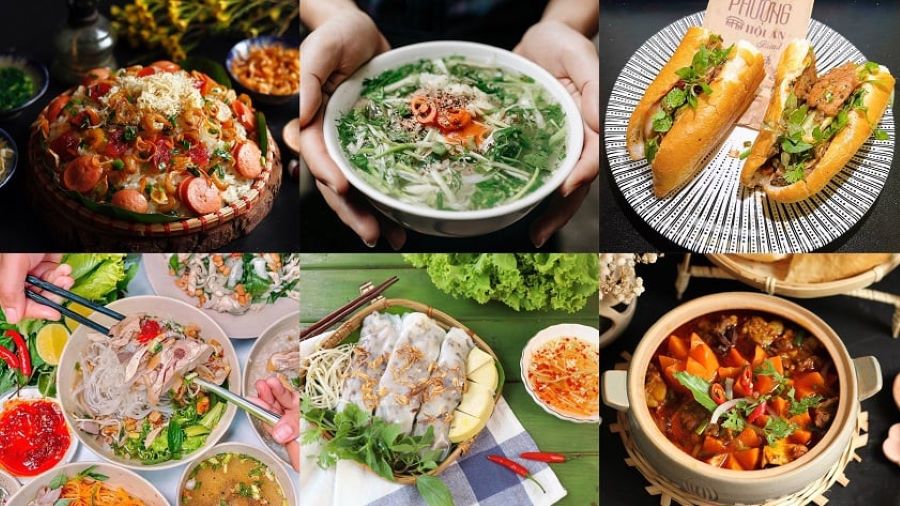
Vietnam’s food diversity starts with geography. The country stretches over 1,600 kilometers from north to south, and that distance brings real changes in climate, ingredients, and daily habits. What people cook in the cooler north is not the same as what makes sense in the tropical south.
- In the north, cooler winters and older trade routes shaped lighter broths and simpler seasoning.
- Central Vietnam, with its harsher weather and royal history, developed bolder flavors and smaller, more intense dishes.
- In the south, fertile land and year-round warmth led to sweeter tastes, generous portions, and heavy use of fresh herbs.
Vietnamese food is also shaped by everyday life rather than strict recipes. Meals are flexible. Dishes are adjusted at the table with fish sauce, chili, lime, and herbs. Texture matters as much as flavor — soft noodles, crisp vegetables, grilled meats, and fresh greens often come together in one bowl.
This balance is usually what travelers notice first. Food feels fresh, not greasy. Flavorful, but not overwhelming. Even unfamiliar dishes often feel approachable once you understand where they come from.
What to Eat in Vietnam: Must-Try Dishes by Region and Destination
You can find the same dish in many different cities across Vietnam. However, that doesn’t always mean it represents the dish well. In this section, we focus on where each dish truly belongs — the place locals naturally think of when they talk about it. This approach helps you experience Vietnamese food in the right context, rather than trying the same dish everywhere and walking away with a misleading impression.
Northern Vietnam: lighter flavors and subtle broths
Northern Vietnamese food is known for its balance and restraint. Broths are clear, seasoning is subtle, and dishes focus on natural flavor rather than sweetness or heat.
Hanoi – the heart of traditional Northern cuisine
- Pho (beef or chicken noodle soup)

In Hanoi, pho is a morning ritual rather than an all-day comfort food. A proper bowl is built on a long-simmered broth made from beef bones or free-range chicken, gently flavored with charred onion, ginger, and warm spices such as star anise and cinnamon. Herbs are added sparingly so the broth remains clean and balanced. Locals usually eat pho early in the day, often at the same neighborhood shop for years. Well-known places like Pho Thin Lo Duc or Pho Bat Dan are popular because they are consistent, not because they cater to tourists. - Bun cha (grilled pork with noodles)
Bun cha is Hanoi’s classic lunchtime dish. Pork patties and slices of pork belly are grilled over charcoal until smoky, then served in a bowl of warm fish sauce that is lightly sweetened and slightly tangy. Rice noodles and fresh herbs are eaten alongside. The key to good bun cha is balance — smoky meat, fresh herbs, and dipping sauce working together without overpowering one another. While bun cha exists elsewhere in Vietnam, its flavor profile is most authentic in Hanoi. - Banh mi (Vietnamese baguette sandwich)

Banh mi is one of those foods you notice almost immediately in Vietnam. It’s everywhere — on street corners, near schools, outside office buildings, and along busy sidewalks. It’s quick, filling, and easy to eat on the go. While you can find banh mi in proper shops and cafés, many travelers find that the best flavors come from small street-side stalls. These simple setups often serve warm, freshly baked bread with generous fillings at very low prices, creating a casual, everyday eating experience that feels both local and memorable.
Local note: in northern Vietnam, banh mi is often eaten with a small glass of iced tea or another cold drink. Locals find that this helps balance the dryness of the bread, especially when eaten quickly in the morning.


Ha Long Bay – seafood built around freshness, not recipes
- Fresh seafood, simply prepared

In Ha Long Bay, seafood is valued first for its freshness rather than how it is seasoned. Fish, squid, shrimp, and shellfish are often cooked with very little intervention — commonly steamed with just a few slices of ginger or lightly grilled.
Locals prefer this approach because it allows the natural sweetness and texture of the seafood to stand out, without being masked by sauces or heavy spices. - Signature squid products
Beyond fresh meals, Ha Long is especially known for processed squid specialties that locals recognize immediately. Cha muc (hand-pounded squid cakes) are a well-known regional product, valued for their springy texture and deep squid flavor. Sun-dried squid is another local staple, often grilled briefly over charcoal and torn by hand before eating.


Ninh Binh – local dishes shaped by the countryside
- Goat meat specialties (de nui)

Goat meat is the dish most closely associated with Ninh Binh, largely because goats are traditionally raised on the region’s rocky limestone hills. Locals believe this terrain gives the meat a firmer texture and cleaner taste.
For locals, tuong Ban (fermented soybean sauce) is an essential dipping sauce for goat dishes and is rarely left out. - Com chay with simple toppings
Com chay started as a way to use leftover rice, but it has become a recognizable local specialty. Rice is pressed, dried, and fried until crisp, then topped with light sauces or shredded meat. Locals often eat it as a snack or casual meal rather than a main dish, and it’s also commonly taken along as an easy, no-mess food during short trips between destinations. This guide to com chay (burned rice) explains it in more detail.
- Goat meat specialties (de nui)


Is there a place in northern Vietnam you’re curious about but don’t see mentioned here? Leave a comment, and we’ll share what dishes are genuinely popular with locals there — not just what appears on tourist menus.
Central Vietnam: bolder flavors shaped by history and climate
Central Vietnamese food reflects a harsher climate and a long imperial past. Dishes are typically saltier, spicier, and served in smaller portions. Meals often consist of several small plates rather than one large dish, allowing diners to experience different textures and flavors in a single sitting.
Hue – refined dishes with royal roots
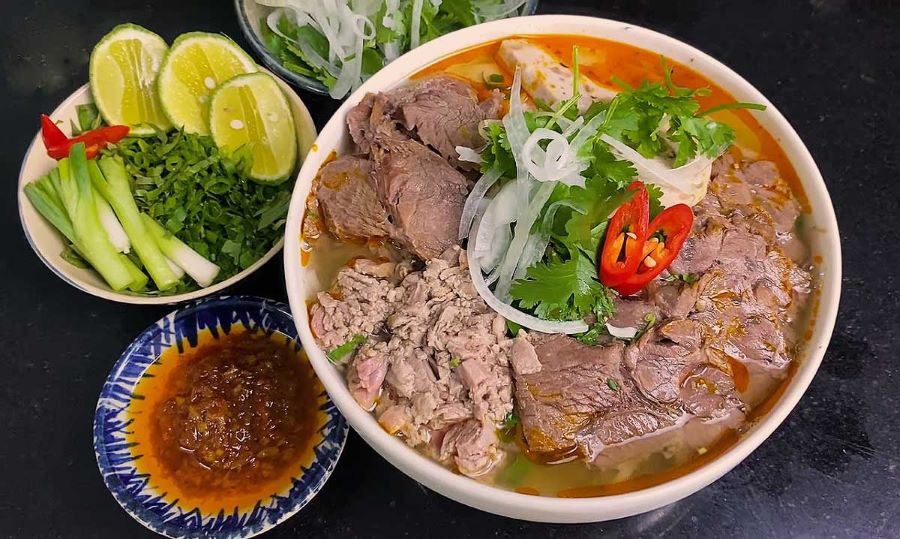
- Bun bo Hue (spicy beef noodle soup)

Bun bo Hue is central Vietnam’s most recognizable noodle soup, but it is very different from pho. The broth is richer and spicier, flavored with lemongrass, fermented shrimp paste, and chili oil. Thick noodles, beef, and sometimes pork are added, creating a bold, savory bowl.
The dish is now popular across both northern and southern Vietnam, often adapted to local tastes. Still, the name itself says it all — bun bo Hue is, at its core, a specialty rooted in Hue.
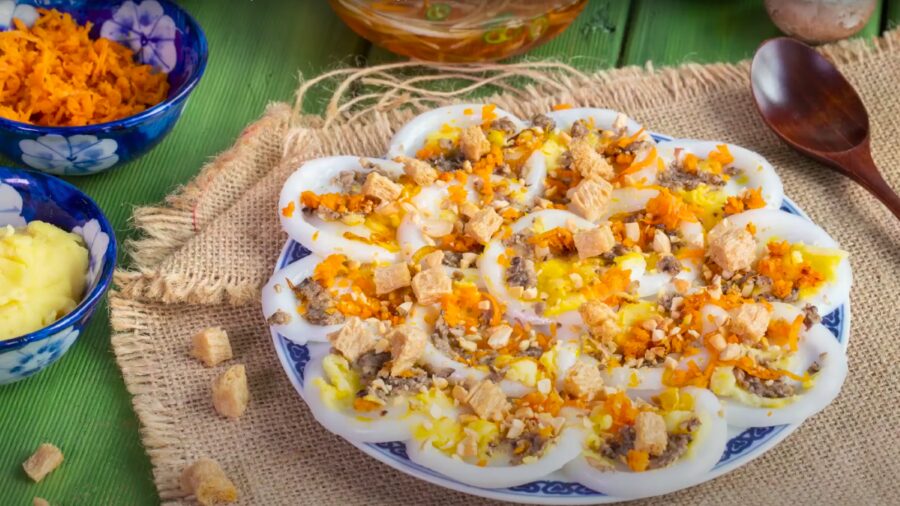
- Small rice cakes (banh beo, banh nam, banh loc)

Hue is known for its variety of small rice-based cakes, traditionally served in multiple plates at once. These dishes are lightly topped with shrimp, pork, or scallion oil and eaten with fish sauce. The portions are intentionally small, reflecting a dining style where balance and presentation matter as much as flavor.
Da Nang – simple central flavors, everyday food
- Mi Quang (turmeric noodles with herbs and pork)
Mi Quang is a well-known noodle dish originating from Quang Nam Province. Although Quang Nam and Da Nang are now often grouped together in travel routes and regional discussions, locals still clearly associate this dish with Quang Nam rather than the city itself. It’s a regional noodle dish eaten more like a mixed bowl than a soup. A small amount of concentrated broth is added to turmeric-colored noodles, along with pork, shrimp, herbs, and roasted peanuts.
Locals often eat mi Quang for breakfast or lunch, appreciating how filling it is without being heavy. - Banh xeo (central-style crispy pancake)
In central Vietnam, banh xeo pancakes are smaller and crispier than their southern counterparts. They are eaten by wrapping pieces of pancake in rice paper with herbs, then dipping into a savory sauce. This hands-on style reflects how locals approach food — interactive, shared, and informal.


Hoi An – a few dishes tied closely to place
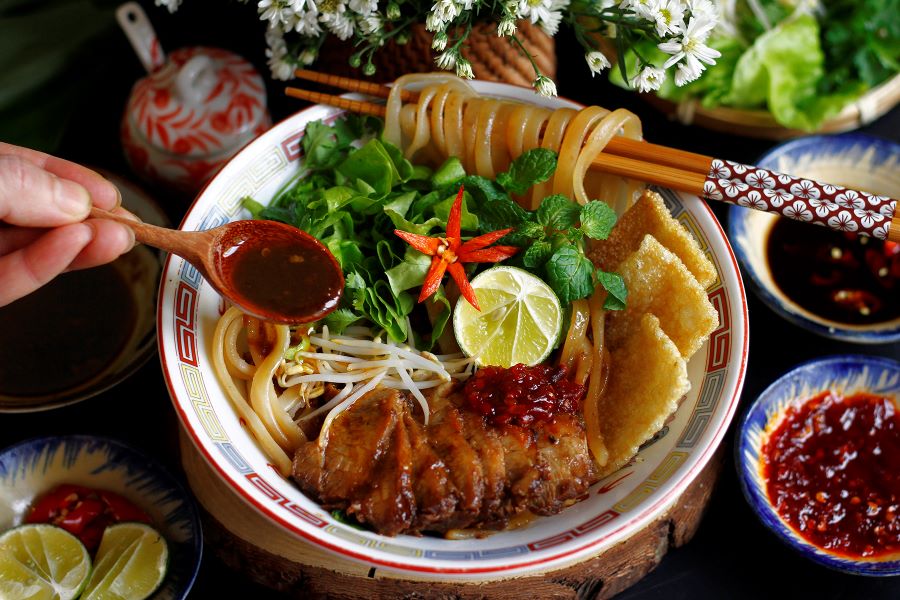
- Cao lau
Cao lau is a noodle dish found almost exclusively in Hoi An. The noodles are thick and chewy, topped with slices of pork, fresh greens, and crispy crackers, with little to no broth. Locals consider it a dish tied to the town itself, shaped by local water sources and long-standing cooking methods rather than by modern adaptation. - Hoi An banh mi (local-style Vietnamese baguette)
 Banh mi in Hoi An is treated as a standalone local specialty rather than just a quick street snack. Compared to other regions, the fillings are often more balanced and carefully assembled, with a focus on roasted meats, house-made sauces, fresh herbs, and pickled vegetables. Places like Banh Mi Phuong have become well known for this style, drawing long lines of visitors while still serving locals who return for the same familiar flavors year after year.
- Cao lau
 Banh mi in Hoi An is treated as a standalone local specialty rather than just a quick street snack. Compared to other regions, the fillings are often more balanced and carefully assembled, with a focus on roasted meats, house-made sauces, fresh herbs, and pickled vegetables. Places like Banh Mi Phuong have become well known for this style, drawing long lines of visitors while still serving locals who return for the same familiar flavors year after year.
Local perspective: Central Vietnamese meals are rarely about eating one large dish. Locals expect variety — several small plates, different textures, and flavors that range from mild to spicy in the same meal.
Southern Vietnam: sweeter, generous, and vibrant
Southern Vietnamese food reflects an open, river-based lifestyle. Dishes are generally sweeter, portions are more generous, and coconut milk appears more often. Fresh herbs, raw vegetables, and customizable condiments are common, allowing each person to adjust flavors to taste.
Ho Chi Minh City – everyday food, endless variations
- Com tam (broken rice with grilled pork)
Com tam is one of the most everyday meals in Ho Chi Minh City. What started as a humble dish made from broken rice grains is now eaten across all social levels. A typical plate includes grilled pork, a fried egg, pickled vegetables, and fish sauce on the side. Locals eat com tam at any time of day, and many have their regular neighborhood spot rather than chasing variety. - Banh trang tron (mixed rice paper snack)
 Banh trang tron is a street snack closely associated with southern Vietnam, especially Ho Chi Minh City. Made from shredded rice paper mixed with quail eggs, dried shrimp, herbs, peanuts, and tangy sauces, it’s bold, messy, and meant to be eaten casually. It’s a casual snack you see almost everywhere, widely loved by locals — especially younger people.
- Com tam (broken rice with grilled pork)
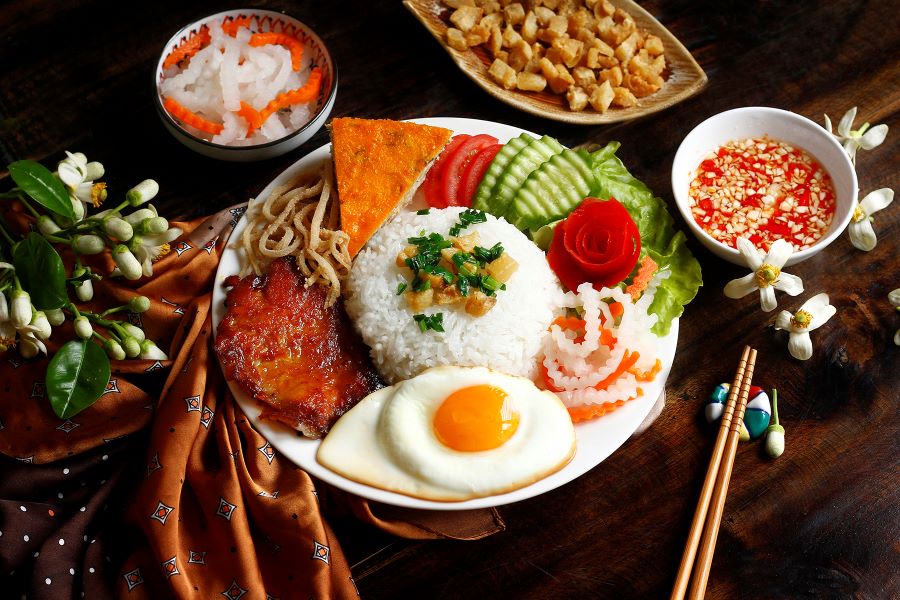 Com tam is one of the most everyday meals in Ho Chi Minh City. What started as a humble dish made from broken rice grains is now eaten across all social levels. A typical plate includes grilled pork, a fried egg, pickled vegetables, and fish sauce on the side. Locals eat com tam at any time of day, and many have their regular neighborhood spot rather than chasing variety.
 Banh trang tron is a street snack closely associated with southern Vietnam, especially Ho Chi Minh City. Made from shredded rice paper mixed with quail eggs, dried shrimp, herbs, peanuts, and tangy sauces, it’s bold, messy, and meant to be eaten casually. It’s a casual snack you see almost everywhere, widely loved by locals — especially younger people.
Mekong Delta – food shaped by rivers and seasons
- Freshwater fish and hotpot dishes
In the Mekong Delta, meals are closely tied to river life. Freshwater fish such as snakehead or catfish are common, often cooked in sour soups or simple hotpots with vegetables. Locals value freshness over presentation, and meals are typically shared family-style rather than served as individual portions. - Seasonal fruit and coconut-based sweets
The delta is also known for its fruit orchards and coconut products. Desserts and snacks often feature coconut milk, palm sugar, and seasonal fruits. These are usually eaten casually throughout the day rather than saved for the end of a meal.

 The delta is also known for its fruit orchards and coconut products. Desserts and snacks often feature coconut milk, palm sugar, and seasonal fruits. These are usually eaten casually throughout the day rather than saved for the end of a meal.
Local perspective: Southern meals are rarely fixed. Dishes are meant to be adjusted at the table, shared with others, and eaten at a relaxed pace — often accompanied by conversation rather than strict dining rules.
Food Safety and Eating Tips for Travelers in Vietnam
Vietnamese food is generally safe, and millions of visitors eat street food every year without issues. A simple rule many travelers follow is to choose places that are busy. High turnover usually means ingredients are fresh and food does not sit around for long.
When first arriving, some travelers prefer starting with fully cooked dishes before trying raw or fermented items. This is not a strict rule, but a way to ease into unfamiliar flavors. In cities and tourist areas, ice is typically safe and widely used. In very rural areas, sensitive travelers may choose bottled drinks or skip ice as a precaution.
If you have food allergies or follow a vegetarian or halal diet, larger cities are easier to navigate. Smaller towns may require patience and simple communication, but options are often available once you explain clearly. Many Vietnamese dishes can be adjusted, even if that flexibility is not always written on the menu.
Street food and local restaurants are not separate worlds. Many dishes are cooked fresh right in front of you, menus are short or sometimes not written at all, and ordering is straightforward. Sharing dishes is common, especially when eating with others. While dining feels casual, there are still small cultural habits worth noticing — this guide to Vietnamese table manners helps travelers understand what locals naturally do at the table.
Another point travelers often ask about is pricing. In most restaurants and food stalls, prices are clearly listed, and Vietnamese consumer protection laws are taken seriously, especially in tourist areas. Deliberate overcharging is not common and is treated as a violation.
That said, a simple and very normal habit in Vietnam is to ask the price first if there is no menu or visible price list. Locals do this all the time. A quick “How much is this?” before ordering helps avoid unnecessary misunderstandings and keeps the experience stress-free, especially at small street stalls or informal eateries.
For travelers who want to explore Vietnamese food in the right places — without guesswork — many of these regional dishes naturally fit into a well-planned itinerary, like those found in our Vietnam tours.
Common Questions Travelers Have About Vietnamese Food

Start planning your tailor-made Southeast Asia tour by contacting one of our specialists…


