

15 Must-Do Activities in Vietnam for Travelers
Vietnam’s most rewarding activities go far beyond visiting famous landmarks. Travelers can eat breakfast on a Hanoi sidewalk, sleep among the limestone islands of Ha Long Bay, cross the mountains of Ha Giang with a local rider, row beneath the karsts of Ninh Binh, explore giant caves in Phong Nha and wake before dawn for the floating markets of the Mekong Delta. The country’s long geography creates very different experiences from north to south.
This list focuses on 15 experiences that show those differences clearly. Some are easy half-day activities, while others deserve several days. The aim is not to fit every activity into one rushed itinerary, but to help you understand which experiences match your interests, available time and travel style. Travelers still building their overall route can use the Vietnam travel guide to connect these activities into a practical north-to-south journey.
1. Walk Through Hanoi Old Quarter
- Where: Around Hoan Kiem Lake and the historic commercial streets of central Hanoi
- Best for: First-time visitors, photographers, food lovers and travelers interested in everyday city life
- Time needed: Half a day, with extra time in the evening if you want street food and nightlife
- Experience highlights: Historic guild streets, traditional shophouses, hidden temples, cafes, markets and sidewalk food
- Best time: Early morning for local routines; late afternoon and evening for food, markets and street atmosphere
- Practical note: Explore mainly on foot and treat the Old Quarter as a living neighborhood rather than a checklist of monuments
Walking Hanoi Old Quarter is one of the easiest ways for a first-time visitor to experience Vietnamese urban life at street level. The historic district developed around commercial streets traditionally associated with particular guilds and products. Some trades have changed, but the dense pattern of narrow streets, tube houses, temples, cafes, markets and sidewalk businesses still creates a distinct cityscape. Streets such as Hang Bac, Hang Ma and Hang Gai retain commercial identities, while Dong Xuan Market remains one of the area’s major trading centers.
The experience changes with the time of day. Early in the morning, residents exercise around Hoan Kiem Lake, food sellers prepare breakfast and delivery traffic moves through the streets. Later, the smell of grilled meat, noodles and coffee becomes part of the walk. Rather than trying to move constantly, stop at a cafe and watch flower vendors, scooters and pedestrians negotiate the same narrow space. Traditional egg coffee, bun cha and small street stalls make food part of the urban experience rather than a separate attraction.
Give yourself permission to wander. A useful route can combine Hoan Kiem Lake, the commercial lanes, Dong Xuan Market and one or two historic houses or temples, but the memorable details often appear in alleys and unplanned stops. The broader Hanoi travel guide explains how the Old Quarter connects with the French Quarter, West Lake and the city’s major historical sites.

Walking Hanoi Old Quarter is one of the easiest ways for a first-time visitor to experience Vietnamese urban life at street level
2. Eat Your Way Through Vietnamese Street Food
- Where: Nationwide, with particularly strong street-food cultures in Hanoi, Hue, Hoi An and Ho Chi Minh City
- Best for: Food travelers, first-time visitors and anyone interested in regional culture
- Time needed: About 2-4 hours for a guided food walk, or throughout a multi-city trip
- Experience highlights: Pho, bun cha, bun bo Hue, cao lau, banh mi, banh xeo, com tam and regional snacks
- Best time: Breakfast and evening are especially rewarding, although different dishes have their own local eating times
- Practical note: Look for busy stalls with high food turnover and tell a guide about allergies or dietary restrictions before ordering
Vietnamese street food makes more sense when you eat regional dishes where they developed instead of chasing the same menu across the country. Northern cooking tends to use lighter broths and restrained seasoning, central dishes are often stronger and spicier, and southern food commonly uses sweeter flavors, fresh herbs and generous portions. Hanoi is the natural place for pho, bun cha and banh cuon. Hue gives bun bo Hue and small rice cakes a stronger cultural context, while Ho Chi Minh City is closely associated with com tam, southern banh xeo and informal evening eating.
Street-food culture is also about how a meal happens. You may sit on a small stool beside a short menu while a cook assembles noodles or grills meat a few steps away. Breakfast has a different rhythm from evening dining. In Hanoi, pho and banh cuon work naturally early in the day, while an evening food walk can move between grilled dishes, desserts and drinks. Ho Chi Minh City’s residential streets become particularly lively after dark as tables spread onto sidewalks.
Choose places where ingredients are moving quickly and dishes are cooked fresh. You do not need to eat everything from one vendor or turn every meal into a food tour. The most useful approach is to try several regional specialties as your route changes. The Vietnamese food guide explains which dishes are most closely associated with each destination.

Street food is most rewarding when travelers try regional dishes in the cities and communities where they form part of everyday life.
3. Spend a Night Cruising Ha Long Bay
- Where: Ha Long Bay and neighboring limestone seascapes in northern Vietnam
- Best for: First-time visitors, couples, families and landscape photographers
- Time needed: 2 days and 1 night for a useful overnight experience; longer cruises explore farther from the main harbor
- Experience highlights: Limestone islands, kayaking, caves, deck sunsets, quiet evenings and sunrise on the water
- Best time: Choose a period with a favorable marine forecast; cruise operations remain dependent on weather and safety conditions
- Practical note: Compare the actual route and included activities rather than choosing a boat only by cabin category
An overnight cruise reveals a quieter side of Ha Long Bay that day visitors rarely experience. UNESCO’s Ha Long Bay – Cat Ba Archipelago World Heritage property contains 1,133 islands and islets across an exceptional marine karst landscape. During the busiest daytime hours, sightseeing vessels share popular caves and waterways. As day cruises return toward the harbor, the atmosphere changes and the limestone towers become much quieter.
A typical overnight itinerary combines scenic cruising with one or two active stops. Depending on the route, these may include kayaking through sheltered water, visiting a limestone cave, swimming or taking a small boat into a lagoon. Late afternoon is ideal for spending time on deck as the light changes across the karsts. The next morning often starts early, with sunrise, quiet water and sometimes Tai Chi before breakfast. That early period can be more memorable than trying to visit as many named attractions as possible.
Ha Long, Lan Ha and more distant cruise routes are not interchangeable, and specific cave or kayaking stops vary between operators. Check whether the itinerary spends most of its time cruising or moving between crowded attractions. Weather can also alter the schedule at short notice. Travelers comparing 1-night, 2-night and different bay routes can use current Ha Long Bay cruises to understand the practical differences.

Ha long Bay, a destination travelers should not miss in their trip to Vietnam
4. Travel the Ha Giang Loop With a Local Easy Rider
- Where: The Ha Giang mountain region of far northern Vietnam, including Quan Ba, Dong Van, Ma Pi Leng and Meo Vac
- Best for: Adventure travelers, mountain photographers and visitors interested in ethnic communities
- Time needed: 3 days is a practical minimum; 4 days provides a slower and more flexible experience
- Experience highlights: Mountain passes, Dong Van Karst Plateau, Ma Pi Leng, Nho Que River, village homestays and local markets
- Best time: Cooler, clearer periods are popular, but daily road and weather conditions matter more than a fixed calendar date
- Practical note: Travelers without strong motorcycle experience should ride as passengers with an experienced local driver rather than learning on mountain roads
The Ha Giang Loop is less about reaching one attraction and more about spending several days moving through one of Vietnam’s most dramatic mountain landscapes. The classic road passes limestone peaks, deep valleys, cornfields and settlements associated with Hmong, Tay, Dao and other communities. Dong Van Karst Plateau is a UNESCO Global Geopark, while Ma Pi Leng Pass provides the route’s most famous viewpoint over the Nho Que River and Tu San Canyon.
The experience comes from repeated short stops rather than long daily distances. A road section that looks short on a map can consume hours once you include viewpoints, village walks, meals and changing weather. Dong Van and Meo Vac also hold periodic markets where residents from surrounding communities gather to trade. Homestays create a slower evening rhythm after the road, especially when the route includes smaller villages rather than only the main towns.
Safety needs to shape the itinerary. The steep gradients, blind corners, fog and changing road surfaces demand real motorcycle skills. Vietnam Tourism specifically recommends a local driver for visitors unfamiliar with these roads. Foreign travelers who want to self-drive should confirm that their license and International Driving Permit are valid for the motorcycle class being used in Vietnam. A three-day route is possible, but the Ha Giang itinerary shows why adding another day can reduce rushing.
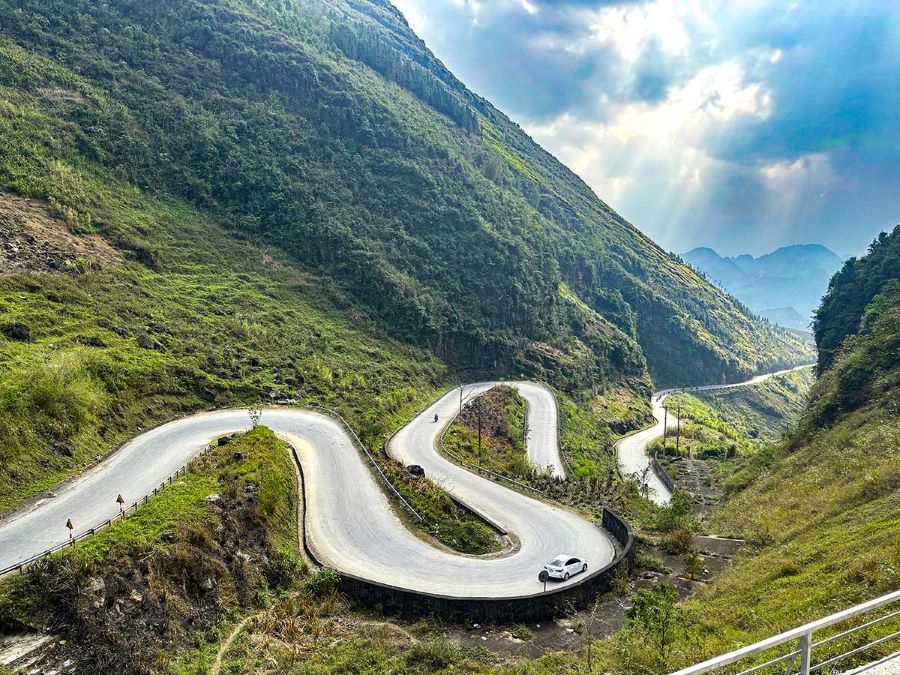
Conquer Ha Giang Loop
5. Take a Sampan Through Trang An or Tam Coc
- Where: The classic Ninh Binh karst region south of Hanoi
- Best for: Couples, families, photographers and travelers looking for a slower nature experience
- Time needed: Around 2 hours for Tam Coc; roughly 2-4 hours for Trang An depending on the route
- Experience highlights: Foot-rowed sampans, limestone cliffs, caves, temples, rice fields and rural cycling
- Best time: Morning for softer light and fewer visitors; Tam Coc’s rice landscape is especially striking around its harvest period
- Practical note: Choose Tam Coc for a shorter rice-field journey and Trang An for longer cave-and-temple routes
A Ninh Binh sampan trip places you at water level beneath limestone towers instead of asking you to admire the karst landscape from a roadside viewpoint. The two best-known choices are Tam Coc and Trang An. Both are part of the wider limestone landscape, but the experiences are different. Tam Coc follows the Ngo Dong River through fields and three caves, while Trang An offers several longer circuits connecting caves, valleys and religious sites within the UNESCO-listed Trang An Landscape Complex.
One distinctive detail is the rowing technique. Many local boat operators row with their feet, a method developed to reduce strain on the arms and back during long hours on the water. Tam Coc becomes particularly photogenic when rice grows along the riverbanks and turns gold before harvest. Trang An has less emphasis on open rice fields but provides a stronger sequence of long caves, enclosed valleys and temple stops. If you have enough time, cycling between rural villages after the boat ride adds another perspective on the same landscape.
Do not treat Trang An and Tam Coc as identical attractions that need to be completed back to back. Choose according to your time and interests. Tam Coc is easier to combine with Bich Dong and surrounding cycling lanes, while Trang An suits travelers who prioritize the protected karst system and a longer boat journey. The Ninh Binh travel guide compares the wider Hoa Lu, Trang An and Tam Coc area.

Tam Coc in Ninh Binh
6. See Mu Cang Chai Rice Terraces Change With the Seasons
- Where: Mu Cang Chai in Vietnam’s northwestern mountains, about 300 km by road from Hanoi
- Best for: Photographers, landscape travelers, hikers and visitors interested in mountain agriculture
- Time needed: 2-3 days rather than a rushed return trip from Hanoi
- Experience highlights: Mam Xoi Hill, La Pan Tan, Khau Pha Pass, water-filled terraces, golden rice and village landscapes
- Best time: Late spring to early summer for water-filled paddies; early autumn for golden rice before harvest
- Practical note: The terraces are working farmland, and their appearance depends on rainfall and local planting schedules
Mu Cang Chai rewards travelers who understand that its rice terraces have more than one visually important season. More than 2,000 hectares of terraced fields curve around the mountains, shaped through generations of cultivation by local communities, particularly Hmong farmers. The two most distinctive periods are the water-pouring season, when newly flooded terraces reflect clouds and sunlight, and the weeks before harvest, when the hills turn yellow and gold.
Mam Xoi Hill and La Pan Tan provide some of the most recognizable terrace views, while Khau Pha Pass gives the journey a wider mountain scale. Early morning can bring mist into the valleys, while lower-angle late-afternoon light creates stronger texture across the stepped fields. Photography should not be the only purpose of the trip. Village paths, seasonal farm work and the relationship between water management and steep terrain explain why this landscape exists in the first place.
The road journey requires patience. Mountain weather can reduce visibility quickly, and wet roads demand more caution than their distance on a map suggests. Avoid entering planted fields without permission or positioning people working in the terraces as photo props. Mu Cang Chai is an agricultural landscape first. Travelers planning around the different rice stages can use the detailed Mu Cang Chai travel guide.
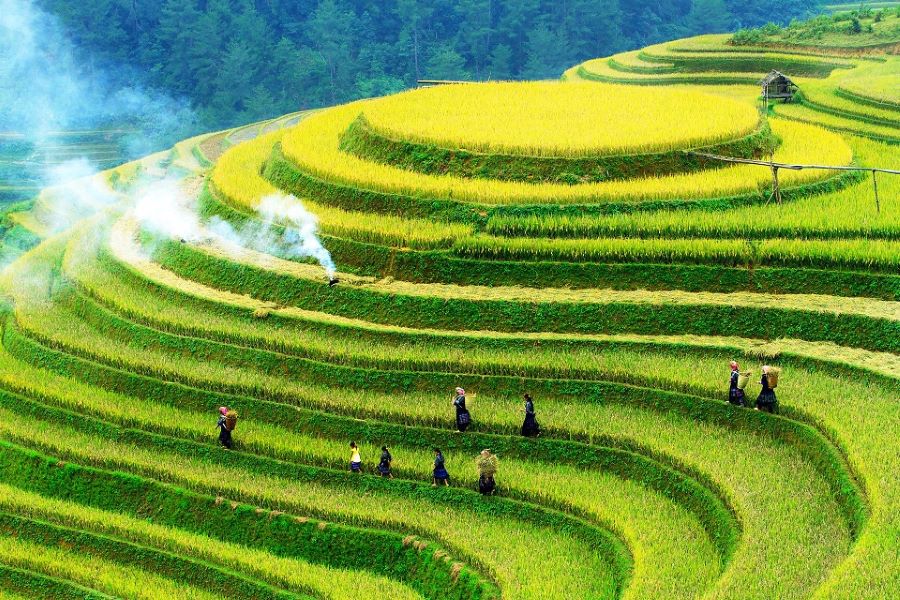
Mist rises gently over Mu Cang Chai’s terraced rice fields at dawn.
7. Choose Your Level of Cave Adventure in Phong Nha
- Where: Phong Nha cave region in north-central Vietnam
- Best for: Families, nature travelers, hikers and serious adventure travelers, depending on the cave selected
- Time needed: 1 day for accessible caves; 2-5 days or longer for expedition-style experiences
- Experience highlights: Phong Nha Cave, Paradise Cave, Dark Cave, Hang En and specialist multi-day cave expeditions
- Best time: Mainstream cave access is usually easier in drier conditions; heavy rain and rising rivers can suspend individual activities
- Practical note: Match the cave to fitness, swimming ability and comfort with enclosed spaces before booking
Phong Nha works for very different types of travelers because its cave experiences range from easy boat journeys to controlled multi-day expeditions. Phong Nha Cave is approached by boat along the Son River and provides an accessible introduction to underground rivers and limestone formations. Paradise Cave requires more walking but uses developed paths and wooden stairs through a vast dry-cave chamber, making it suitable for many families and moderately active visitors.
Travelers wanting more physical activity can combine kayaking, swimming and ziplining around Dark Cave. Hang En moves into expedition territory, requiring jungle trekking and an overnight experience in an enormous cave environment. More demanding systems such as Tu Lan and specialist routes require licensed operators, suitable physical preparation and advance reservations. The point is not to choose the most difficult cave available. A traveler interested in geology and photography can get a rewarding experience from the developed caves without committing to technical adventure.
Weather is the key limitation. Rainfall can raise river levels and temporarily close cave, kayaking or swimming activities even when other parts of the destination remain open. Build some flexibility into a multi-day stay rather than scheduling one critical cave immediately before a flight or train. The Phong Nha activity guide covers the wider mix of caves, cycling, rivers and outdoor adventures.

Son River, the boat route into Phong Nha Cave within Phong Nha-Ke Bang National Park
8. Explore the Imperial Legacy of Hue
- Where: Hue, along the Perfume River in Central Vietnam
- Best for: History travelers, architecture lovers, photographers and cultural travelers
- Time needed: 1 full day minimum; 2 days provides a better balance of the Imperial City and royal tombs
- Experience highlights: Imperial City, Nguyen Dynasty royal tombs, Thien Mu Pagoda, Perfume River and Hue cuisine
- Best time: Start the Imperial City early, then visit one or two tombs later in the day
- Practical note: Do not try to visit every major tomb in one day; their layouts are large and their architecture deserves time
Hue is Vietnam’s strongest destination for understanding the Nguyen Dynasty through surviving palaces, gates, temples, gardens and royal tombs. The city served as the political, cultural and religious center of unified Vietnam under the Nguyen emperors from 1802 to 1945. The UNESCO-listed Complex of Hue Monuments extends beyond the Citadel to pagodas and imperial tomb landscapes along and around the Perfume River.
Start with the Imperial City while temperatures are lower. Its gates, courtyards, temples and restored palaces explain the formal structure of royal space. Later, choose tombs according to their different personalities rather than ticking them off as equivalent monuments. Minh Mang’s complex uses a highly ordered landscape of water, pavilions and axes. Tu Duc’s setting is more contemplative, while Khai Dinh combines Vietnamese forms with unusually dense European-influenced decoration. One or two well-chosen tombs usually create a better visit than racing through all three.
Hue’s experience extends naturally into food and river culture. Bun bo Hue and the city’s small rice cakes can turn lunch into another expression of local history, while Thien Mu Pagoda provides a religious counterpoint to royal architecture. Travelers planning a deeper stay can use the Hue travel guide to connect the Citadel, tombs and surrounding countryside.

Hue Imperial City, the ceremonial and administrative heart of the Nguyen Dynasty
9. Experience Hoi An Beyond a Quick Photo Stop
- Where: Hoi An Ancient Town and the surrounding countryside of Central Vietnam
- Best for: Couples, families, food travelers, craft lovers and first-time visitors
- Time needed: 2-3 days for a useful mix of heritage, food, crafts and countryside
- Experience highlights: Ancient Town walking, tailoring, cooking classes, lantern making, local food and cycling
- Best time: Early morning for quieter historic streets; evening for lanterns and the riverfront atmosphere
- Practical note: Order tailored clothing early in your stay so there is time for fittings and alterations
Hoi An is more rewarding when tailoring becomes one part of the experience rather than the only activity. The UNESCO-listed trading town preserves a historic street pattern shaped by Vietnamese, Chinese, Japanese and later European influences. Early morning is a good time to walk the wooden shophouses, assembly halls and riverfront before day-trip crowds build. By evening, lanterns and pedestrian streets create a different atmosphere around the Hoai River.
Hands-on activities add context to the architecture. Hoi An remains one of Vietnam’s best-known tailoring centers, and a custom garment normally involves choosing fabric, measurements and at least one fitting. Cooking classes often begin in a market or farming village before moving into the kitchen, while lantern-making workshops turn one of the town’s most visible symbols into an actual craft process. Cycling beyond the historic center introduces rice fields, vegetable gardens and smaller settlements that are easy to miss if you stay entirely inside the Old Town.
The key is pacing. A rushed afternoon often reduces Hoi An to photographs, shopping and one evening walk. Two or three days allow time for a fitting, cooking or craft activity, beach or countryside excursion, and quieter hours in the heritage district. The Hoi An travel guide covers the Ancient Town, nearby villages and coastal options in more detail.

Hoi An glowing with colorful lanterns during a traditional lantern festival at night.
10. Experience Coffee, Gong Culture and Ethical Wildlife Tourism in the Central Highlands
- Where: Buon Ma Thuot, Yok Don National Park and surrounding Central Highlands communities
- Best for: Coffee lovers, repeat visitors, responsible wildlife travelers and travelers interested in living cultural traditions
- Time needed: 2-4 days
- Experience highlights: Coffee culture, forest walks, gong traditions, village experiences and ethical elephant observation
- Best time: Drier months generally make forest and road activities easier
- Practical note: Choose elephant programs based on observation only; avoid riding, bathing, tricks or direct visitor contact
The Central Highlands provides a different Vietnam experience built around coffee landscapes, dry forest and cultural traditions rather than the coastal cities visited on most first trips. Buon Ma Thuot is closely associated with the country’s coffee industry and works well as a base for understanding how coffee moves from highland farms into Vietnam’s everyday cafe culture. Rural routes also connect waterfalls, agricultural land and communities belonging to several ethnic groups.
Gong culture adds an important cultural layer. UNESCO recognizes the Space of Gong Culture in Vietnam’s Central Highlands as an intangible heritage tradition connected with ceremonies, beliefs, family status and seasonal community life. A gong performance is therefore more meaningful when presented within its cultural setting rather than as background entertainment. Travelers should favor community-based programs that explain who is performing and why the instruments matter.
Yok Don National Park also shows how wildlife tourism can change. Its elephant program with Animals Asia allows former working elephants to move and forage while visitors observe from a respectful distance with trained guides. There are no rides, tricks, bathing sessions or direct contact. That distinction matters because an “elephant experience” does not automatically mean responsible tourism. The park also offers trekking and cycling through its dry forest. Travelers can compare Yok Don with other protected areas in the article on Vietnam’s national parks.

The Central Highlands combine coffee-growing landscapes, forest ecosystems and living cultural traditions that differ strongly from Vietnam’s coastal tourism route.
11. Spend More Than a Day in the Mekong Delta
- Where: Southern Vietnam, particularly Ben Tre, Can Tho and the surrounding river communities
- Best for: Slow travelers, families, photographers and visitors interested in food and river-based local life
- Time needed: 2 days and 1 night minimum if you want to experience the river early in the morning
- Experience highlights: Sampan rides, canals, cycling, orchards, homestays, family cooking and Cai Rang Floating Market
- Best time: Early morning is essential for Cai Rang; other Delta activities can be spread across the day
- Practical note: Floating-market activity differs by location, so do not expect every market mentioned in older guidebooks to have the same scale
The Mekong Delta becomes much more interesting when you stay overnight instead of treating the region as a single bus-and-boat day trip from Ho Chi Minh City. Ben Tre provides narrow waterways, coconut groves, cycling routes and small workshops, while Can Tho gives access to one of the Delta’s most recognizable early-morning river experiences. Homestays and low-key lodges make it possible to see the waterways outside the busiest excursion hours.
Cai Rang Floating Market begins early. Boats loaded with fruit and vegetables gather on the river while smaller vessels move between them selling coffee, noodles and breakfast. Being on the water around dawn reveals the market as a working wholesale environment rather than a staged attraction. Later, cycling or small-boat trips can pass orchards, canals and local workshops. A family homestay can also add cooking, market shopping or fishing to the experience, depending on the property.
A day trip can still provide a useful introduction, especially around Ben Tre, but it compresses the region into several quick stops. Staying overnight allows evening river life and the next morning’s market to become part of the itinerary. Travelers who prefer a slower journey between communities can also compare multi-day Mekong cruises with land-based homestay routes.

Water activities and experiences in the Mekong Delta.
12. See Ho Chi Minh City From the Back of a Motorbike
- Where: Central and residential neighborhoods of Ho Chi Minh City
- Best for: First-time visitors, food travelers and travelers who want to understand the city’s street-level rhythm
- Time needed: About 3-4 hours for an evening tour
- Experience highlights: Street food, residential districts, Saigon River views, cafes, markets and nighttime street life
- Best time: Evening, when temperatures fall and sidewalk dining becomes more active
- Practical note: Travelers without local riding experience should join as passengers with experienced drivers rather than self-driving in city traffic
A guided motorbike tour is useful because it turns Ho Chi Minh City’s traffic from an obstacle into part of the urban experience. Sitting behind an experienced local driver allows visitors to move between neighborhoods that would take much longer to connect on foot. Vietnam Tourism specifically highlights evening motorbike experiences, when food stalls open, residents gather in parks and the city becomes cooler and more social.
A strong route should move beyond the most obvious central landmarks. One stop might involve banh xeo or com tam at a busy local restaurant, followed by a residential market, riverside viewpoint or neighborhood cafe. The value comes from seeing how the city changes from commercial avenues to smaller local streets. At night, grills, metal tables and passing motorbikes create the atmosphere that static sightseeing buses cannot reproduce.
This is not a recommendation for an inexperienced visitor to rent a scooter and enter dense traffic without preparation. Guided passenger tours remove the need to navigate unfamiliar road behavior and allow you to focus on the surroundings. Helmet quality, operator reputation and driver experience matter more than finding the cheapest tour. The Ho Chi Minh City travel guide can help combine an evening ride with daytime historical and cultural sites.
13. Go Underground at the Cu Chi Tunnels
- Where: Cu Chi area, about 70 km northwest of central Ho Chi Minh City
- Best for: Travelers interested in modern Vietnamese history and wartime engineering
- Time needed: Half a day minimum including transfers from central Ho Chi Minh City
- Experience highlights: Tunnel entrances, underground passages, ventilation systems, meeting areas, shelters and historical interpretation
- Best time: An early departure reduces heat and road traffic
- Practical note: Crawling through tunnels is optional; visitors uncomfortable with confined spaces can understand the site through above-ground exhibits
The Cu Chi Tunnels are most valuable as a historical site explaining how an extensive underground system supported shelter, movement and daily life during decades of conflict. The network developed from smaller shelters and tunnels into a much larger interconnected system containing passageways, meeting spaces, storage areas, wells, ventilation shafts and defensive structures. The two best-preserved visitor areas are Ben Dinh and Ben Duoc, which together retain roughly four kilometres of protected tunnel sections.
The visitor experience should focus on engineering and historical context rather than treating the tunnels as an amusement challenge. Guides explain how lateritic soil helped tunnels remain stable, how ventilation holes were concealed and how spaces supported cooking, medical care and meetings. Some reconstructed or adapted passages allow visitors to crawl underground, but the narrow spaces can be physically uncomfortable. You can skip them and still understand the system through entrances, trenches, displays and above-ground interpretation.
Ben Dinh is commonly chosen for shorter itineraries because it is convenient for visitors coming from the city. Ben Duoc provides a broader memorial and historical setting and can work better for travelers willing to spend longer at Cu Chi. The tunnel complex is a Special National Historical Site and is currently included on Vietnam’s UNESCO World Heritage Tentative List, but it should not be described as an inscribed UNESCO World Heritage Site.
14. Ride the Heritage Train Across Hai Van Pass
- Where: The railway between Hue and Da Nang in Central Vietnam
- Best for: Railway enthusiasts, families, photographers and travelers who prefer slow scenic transport
- Time needed: About 3 hours, depending on the service and timetable
- Experience highlights: Hai Van Pass, Lang Co Bay, mountain slopes, beaches, lagoons and coastal railway views
- Best time: Choose a daylight departure so the Hai Van Pass section is fully visible
- Practical note: Train schedules can change, so check the current Vietnam Railways timetable rather than relying on an old departure time
The Hue-Da Nang Heritage Train turns a transport day into one of Central Vietnam’s most scenic experiences. The tourism-oriented service follows the historic railway between the former imperial capital and the coast, climbing through Hai Van Pass where the Truong Son mountains meet the sea. Around Lang Co, the windows open onto lagoon, fishing and beach landscapes before the train curves higher along the mountain.
The journey is short enough to fit naturally into a Central Vietnam itinerary but slow enough to appreciate the scenery. Rather than keeping luggage or a camera packed away, stay alert as the train approaches the Hai Van section. Views alternate quickly between rock faces, forest and open coastline. The service has also incorporated regional cultural elements into the journey, making it more experience-focused than an ordinary transfer between the two cities.
Do not hard-code an old departure time into your travel plan. Rail schedules can be revised, and the best train is normally the daylight service that fits your hotel check-in and onward route. The train also works particularly well if you are traveling in one direction through Hue, Da Nang and Hoi An instead of returning to the same city. Travelers interested in other railway experiences can compare it with the country’s longer routes in the guide to scenic trains in Vietnam.

Rail travel offers a slower view of Vietnam’s landscape, with the Hue-Da Nang route crossing the mountains and coastline around Hai Van Pass.
15. Island-Hop and Snorkel Around Phu Quoc
- Where: Phu Quoc Island and the An Thoi Archipelago in southern Vietnam
- Best for: Couples, families, beach travelers and first-time snorkelers
- Time needed: Half a day to 1 full day for island hopping; several days if Phu Quoc is your main beach destination
- Experience highlights: An Thoi islands, snorkeling, swimming, white-sand beaches, seafood and west-coast sunsets
- Best time: Drier months generally offer calmer seas and more reliable snorkeling and boat conditions
- Practical note: Underwater visibility changes with wind and weather; never touch, stand on or remove coral
Phu Quoc is the easiest addition to this list for travelers who want a genuine island-and-sea activity after Vietnam’s cities, mountains and heritage sites. Vietnam’s largest island is surrounded by smaller islets, with the An Thoi Archipelago in the south providing the main island-hopping and snorkeling zone. Boat trips commonly combine several stops so travelers can swim, snorkel and spend time on a small beach rather than staying on the main island all day.
Fingernail Island, May Rut and other southern islets provide different combinations of sand, reef and sheltered water depending on the chosen route. Snorkeling equipment and life jackets are normally supplied on organized tours. The experience is strongest when the day is paced around the sea rather than overloaded with check-in stops. After returning to the main island, Phu Quoc’s western coast provides one of Vietnam’s clearest ocean-sunset experiences because it faces directly toward the Gulf of Thailand.
Coral quality and visibility are not guaranteed every day. Wind, rainfall, currents and the exact snorkeling site all affect what you can see, so choose operators that adjust locations to conditions and prevent visitors from standing on reefs. Travelers planning several days on the island can combine the boat trip with Bai Sao, local seafood, fishing communities and the night market. A practical Phu Quoc itinerary helps separate the southern islands from attractions in the center and north.
How to Choose Activities for Your Vietnam Trip
Do not try to fit all 15 experiences into a short holiday. A first trip of roughly two weeks works better when each region contributes a different kind of experience. Hanoi, Ninh Binh and Ha Long create an easy northern combination. Ha Giang or Mu Cang Chai should be added when mountain landscapes are a priority, but each requires enough travel time to justify the road journey.
Central Vietnam can combine Phong Nha, Hue and Hoi An with the scenic train across Hai Van Pass. In the south, Ho Chi Minh City works naturally with Cu Chi and a short Mekong Delta stay. Phu Quoc is more useful as a genuine beach extension of several days than as a rushed overnight stop.
Also consider physical demands. A Trang An boat ride, Hue heritage day and Ha Long cruise require relatively little adventure experience. Ha Giang, multi-day Phong Nha expeditions and independent mountain travel require more planning. Choosing fewer activities and giving each enough time generally produces a better trip than collecting destinations as quickly as possible.
Plan Your Vietnam Trip with Paradise Travel
Paradise Travel is a licensed international tour operator and destination management company headquartered in Hanoi. The company has operated tours across Vietnam, Laos, Cambodia, Myanmar and Thailand since the early 2000s. It proudly holds the TripAdvisor Travelers’ Choice Award for 2018, 2019 and 2024.
A well-planned Vietnam tour should balance major sights with enough time for food, local culture, nature and slower experiences. Our local team can coordinate hotels, private transportation, domestic flights, cruises and activity bookings around the experiences that matter most to you. Get in touch with our team to build the itinerary around your travel dates, pace and interests.

Address: 81 Alley 12 Dao Tan Street, Giang Vo Ward, Hanoi, Vietnam
Hotline: 0989391076
Email: sales@vietnamparadisetravel.com
Frequently Asked Questions
You can keep simple activities such as walking tours, markets and self-guided city exploration flexible, but limited-capacity experiences are better booked in advance. Overnight cruises, specialist cave expeditions and popular tours during peak travel periods can sell out. Some cave operators limit groups for safety and conservation, so reserve early if a specific experience or date is important to your trip.
Yes. Many cycling, trekking, food, boat and island-hopping tours in Vietnam accept individual bookings, making it relatively easy for solo travelers to join a group. Homestays, cooking classes and guided day tours can also provide opportunities to meet other travelers without committing to a full organized tour of Vietnam.
Travel insurance is strongly recommended if your itinerary includes trekking, motorcycling, cave exploration, diving or activities in remote areas. Check that your policy covers the specific activities you plan to do, as well as emergency treatment, rescue and medical evacuation. Remote mountain and cave destinations can be difficult for emergency services to reach quickly.
It is useful to carry some Vietnamese dong, especially for street food, markets, small local businesses and activities in rural areas. Hotels, established tour operators and many restaurants generally accept international debit or credit cards. Before traveling to remote destinations, withdraw enough cash for small purchases and local services that may not accept cards.

Start planning your tailor-made Southeast Asia tour by contacting one of our specialists…


