

18 Beautiful Beaches in Northern and North-Central Vietnam for Different Travel Styles
Northern Vietnam’s coastline offers more variety than a simple list of resort beaches suggests. Travelers can swim beneath limestone cliffs on Cat Ba, choose between calm and wave-facing beaches on Co To and Quan Lan, combine a Ha Long Bay cruise with Ti Top Island, or continue south to the longer mainland beaches of Thanh Hoa, Nghe An and Ha Tinh.
This guide deliberately covers both Northern Vietnam and the North-Central coast. Quang Ninh, Hai Phong and Hung Yen belong to northern Vietnam, while Thanh Hoa, Nghe An and Ha Tinh are officially classified within the North Central and Central Coastal region. Keeping both areas in one beach guide preserves useful destinations from the original list while describing their geography accurately.
Beach conditions vary strongly by season. Northern islands are generally most comfortable from late spring into early summer and again in early autumn, while tropical storms can interrupt cruises and ferries during the hotter monsoon months. Travelers planning a wider coastal journey can compare the seasonal pattern with the best time to visit Northern Vietnam.
Administrative names have also changed. Quang Ninh officially became a centrally governed city on September 1, 2026. This article therefore uses Quang Ninh City for current addresses, even though older maps and travel guides may still say Quang Ninh Province.
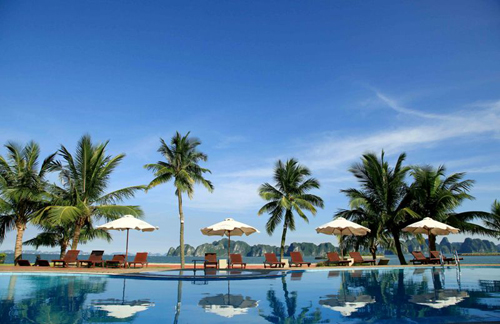
Northern beaches range from developed Ha Long gateways to quieter island shores reached only by ferry or speedboat.
Which Northern Vietnam Beach Should You Choose?
The best beach depends on whether you value clear island water, easy road access, family facilities, quiet scenery or a combination with cultural attractions. Travelers with only one or two days should favor Tuan Chau, Cat Ba or Do Son. Co To, Quan Lan and Cai Chien work better with an overnight stay because sea transfers are part of the journey.
| Beach | Best For | Beach Character | Recommended Time |
|---|---|---|---|
| Cat Co Beaches | First-time Cat Ba visitors and families | Small limestone coves close to town | Half day to 2 nights on Cat Ba |
| Tung Thu Beach | Travelers wanting more space on Cat Ba | Wide bayfront beach | Several hours |
| Ti Top Beach | Ha Long cruise travelers | Small island beach plus viewpoint | About 1-2 hours as a cruise stop |
| Tuan Chau Beach | Convenience and cruise connections | Developed mainland-connected beach | Several hours to 1 night |
| Van Chay Beach | Waves and active beach time | More exposed Co To beach | 2-3 nights on Co To |
| Hong Van Beach | Couples and calmer swimming | More sheltered Co To beach | 2-3 nights on Co To |
| Minh Chau Beach | Families and relaxed island stays | Fine sand and calmer water | 2 nights |
| Son Hao Beach | Travelers who prefer stronger waves | Longer, wave-facing island beach | 2 nights |
| Dau Rong Beach | Quiet island escape | Long beach beside casuarina forest | 1-2 nights |
| Tra Co Beach | Long walks and border-coast culture | 17+ km mainland shore | 1-2 nights |
| Con Vanh Beach | Wetland ecology and photography | Red River estuary coast | Half day |
| Do Son Beach | Easy access and cultural events | Developed urban resort coast | Day trip or 1 night |
| Sam Son Beach | Families wanting extensive services | Busy resort beach | 1-2 nights |
| Hai Tien Beach | A quieter Thanh Hoa resort stay | Long sandy coast | 1-2 nights |
| Bai Dong | Couples and quieter scenery | Smaller beach with rock and mountain backdrop | Half day to 1 night |
| Cua Lo Beach | Family beach holidays | Long, gently sloping shore | 1-2 nights |
| Thien Cam Beach | Relaxed mainland beach and seafood | Compact crescent beach | 1-2 nights |
| Xuan Thanh Beach | Beach plus cultural heritage | Gently sloping mainland coast | 1-2 nights |
Season note: Sea conditions are more important than the calendar alone. Tropical storms, strong wind and rough seas can suspend ferries to Co To, Quan Lan and Cai Chien even during popular summer months.
1. Cat Co Beaches, Cat Ba
- Location: Cat Ba, Hai Phong
- Best for: Families, couples and first-time Cat Ba visitors
- Beach choices: Cat Co 1, Cat Co 2 and Cat Co 3
- Best time: Late spring to early autumn, with heavy domestic crowds in peak summer
- Access: Close to central Cat Ba
- Practical note: Cat Co 1 is generally busiest; Cat Co 2 is quieter
The Cat Co beaches are the easiest swimming choice for travelers staying in central Cat Ba. Three small beaches sit between limestone slopes near town, allowing visitors to reach the sea without booking another boat trip. Cat Co 1 has the widest beach and the most developed visitor facilities, making it the easiest option for families.
Cat Co 2 is smaller and generally quieter, so couples and travelers who dislike dense beach crowds may prefer it. Cat Co 3 sits beside more modern resort development and provides another alternative when the first two beaches are busy. A coastal path links parts of the beach area and creates good sea views between the coves.
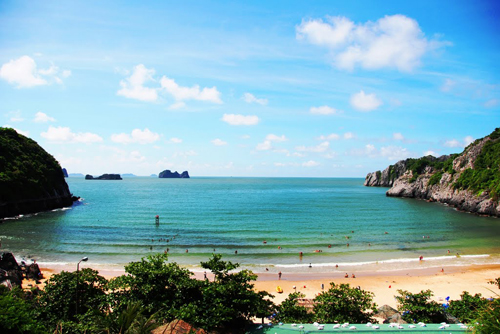
Cat Ba combines accessible beaches with limestone mountains, Lan Ha Bay and forest landscapes.
Cat Ba works better as a multi-experience island than as a pure beach resort. Travelers can combine the beaches with Lan Ha Bay kayaking, Cat Ba National Park and fishing villages. The wider Cat Ba Island landscape is the main reason to stay for two nights rather than making a rushed beach stop.
Access has improved through the Dong Bai-Cai Vieng ferry and the Cat Ba cable car. The cable car currently costs approximately VND 70,000 one way. Ferry and cable-car schedules can change with demand and weather, so island transfers should retain some flexibility.
2. Tung Thu Beach, Cat Ba
- Location: Less than 2 km from central Cat Ba
- Best for: Open space, groups and travelers avoiding the busiest Cat Co coves
- Beach character: Broad bayfront beach
- Time needed: Several hours
- Combine with: Cat Co Beaches and central Cat Ba
Tung Thu is the practical Cat Ba alternative for travelers who find the Cat Co beaches too compact or crowded. Its broader open space works well for swimming, beach games, group activities and relaxed walks along the bayfront.
The beach lies less than 2 km from the central town area, so visitors do not need a dedicated island excursion to reach it. Local tourism authorities also use Tung Thu for outdoor events and larger activities because it has more usable shore space than the small Cat Co coves.
The trade-off is scenery. Cat Co places swimmers directly between dramatic limestone slopes, while Tung Thu feels more open and urban. Travelers staying two nights on Cat Ba can easily experience both instead of treating them as competing destinations.
3. Ti Top Beach, Ha Long Bay
- Location: Ti Top Island, Ha Long Bay, Quang Ninh City
- Best for: Cruise travelers who want swimming plus a panoramic viewpoint
- Beach area: About 500 m²
- Summit access: Approximately 170 m of walking path uphill
- Access: Cruise or sightseeing boat only
- Stay: No overnight beach accommodation on the island
Ti Top is the strongest beach choice for travelers who are already exploring Ha Long Bay by boat. The beach occupies a small crescent at the base of Ti Top Island, while a steep path leads to a viewpoint over the surrounding limestone towers.
The island is about 12 km southeast of Tuan Chau International Marina. President Ho Chi Minh visited the island with Soviet cosmonaut Gherman Titov in 1962, after which the island was renamed Ti Top. The combination of a historical name, a small swimming beach and a high viewpoint makes the island more than a simple swimming stop.
Ti Top is not a beach resort. Visitors arrive as part of a cruise or sightseeing route, swim for a limited period and then continue through Ha Long Bay. The small beach can become busy when several boats arrive close together, so travelers prioritizing long, quiet beach time should choose an island such as Co To or Quan Lan instead.
A beach stop makes more sense when it is part of a wider Ha Long Bay itinerary that also includes caves, kayaking or overnight cruising.
4. Tuan Chau Beach, Ha Long
- Location: Tuan Chau, Quang Ninh City
- Best for: Convenience, short stays and travelers boarding Ha Long cruises
- Beach character: Developed resort beach
- Access: Road-connected to the mainland
- Main transport entity: Tuan Chau International Passenger Port
- Recommended stay: Several hours or 1 night
Tuan Chau is valuable for convenience rather than for being Northern Vietnam’s most natural beach. The island is connected to the mainland by road and sits beside one of Ha Long Bay’s major passenger ports, making it easy to combine a beach stop with a cruise departure or arrival.
The coast is highly developed, with hotels, restaurants and tourism infrastructure nearby. That works well for travelers who want predictable facilities, families with children or visitors arriving in Ha Long without enough time for a ferry journey to a more remote island.
Tuan Chau is less suitable for travelers seeking an undeveloped beach landscape. Co To, Minh Chau and Cai Chien provide a stronger island atmosphere, although reaching them takes considerably more time. Tuan Chau’s main competitive advantage is that travelers can reach the shore directly by road and then board a Ha Long sightseeing vessel from the same tourism zone.
Travelers coming from Hanoi can use the current transport options described in the Hanoi to Ha Long Bay guide rather than treating Tuan Chau as a separate long-distance destination.
5. Van Chay Beach, Co To
- Location: Co To Special Zone, Quang Ninh City
- Best for: Travelers who enjoy stronger waves and an active beach atmosphere
- Wave character: More exposed than Hong Van, with waves that can reach 2-3 m in suitable conditions
- Good travel periods: April-May and September-October
- Recommended stay: 2-3 nights on Co To
- Safety: Check swimming flags and local sea conditions
Van Chay is the better Co To beach for travelers who prefer visible wave action over sheltered swimming. Its more exposed position produces larger waves than Hong Van, creating a livelier coastline and a stronger sense of open sea.
The beach is particularly attractive when skies are clear and winds remain moderate. Vietnam Tourism identifies April-May and September-October as useful travel periods for Co To. June and July remain popular summer months, but they also carry a greater chance of tropical storms that can disrupt boat services.
The presence of waves should not be interpreted as a guarantee that swimming is safe. Follow lifeguard instructions and avoid entering rough water during strong wind, storm warnings or red-flag conditions. Families with young children may find Hong Van more comfortable when sea conditions are calm.
6. Hong Van Beach, Co To
- Location: Co To Special Zone, Quang Ninh City
- Best for: Couples, relaxed beach time and families
- Beach character: More sheltered and generally calmer than Van Chay
- Good travel periods: April-May and September-October
- Related activity: SUP, beach walking and island exploration
- Recommended stay: 2-3 nights on Co To
Hong Van is the calmer alternative to Van Chay and is therefore easier to recommend for relaxed swimming. The shore is more protected from open-sea wave action, which gives it a different traveler fit despite being on the same island.
A Co To trip should not be reduced to one beach. Van Chay provides more energetic sea conditions, Hong Van offers calmer water, and the rocky Mong Rong area gives the island another completely different coastal landscape. Travelers who stay two or three nights can choose their beach according to weather rather than committing to a single location.
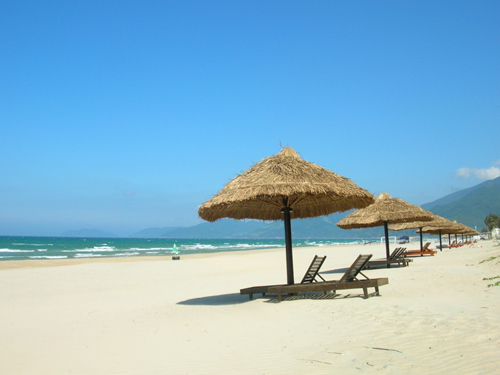
Co To has also adopted measures to reduce single-use plastic waste. Travelers should carry reusable bottles and bags where possible and follow local waste-management rules rather than bringing disposable beach supplies onto the island.
7. Minh Chau Beach, Van Don
- Location: Van Don Special Zone, Quang Ninh City
- Best for: Families, couples and calm island holidays
- Beach character: Fine pale sand with generally calmer water
- Access hub: Ao Tien Passenger Port
- Recommended stay: About 2 nights
- Alternative: Son Hao for stronger waves
Minh Chau is the better Quan Lan-area beach for travelers who prioritize calmer water and an easy-going island stay. Local tourism sources distinguish Minh Chau from Son Hao by its flatter sea conditions, making it a stronger fit for families and travelers who mainly want to swim and relax.
High-speed boats leave Ao Tien Passenger Port for island destinations around Van Don, including Minh Chau and Quan Lan. Summer weekends can become busy, so accommodation should be reserved in advance when traveling during domestic holiday periods.
Minh Chau also benefits from its relationship with the wider Quan Lan island landscape. Visitors can travel between beach areas, fishing settlements and cultural sites by local electric vehicle or other island transport. Quan Lan Communal House and the historical Van Don maritime-trading landscape provide an additional reason to spend two nights rather than treating Minh Chau as a simple beach transfer.
The island chain lies within the wider Bai Tu Long Bay region, which generally receives less international attention than central Ha Long Bay.
8. Son Hao Beach, Quan Lan
- Location: Quan Lan Island, Van Don Special Zone, Quang Ninh City
- Best for: Travelers who enjoy stronger waves and longer beach walks
- Beach character: More wave-facing than Minh Chau
- Access: Boat to the Quan Lan-Min Chau island corridor
- Recommended stay: 2 nights
- Combine with: Minh Chau and Quan Lan cultural sites
Son Hao is the more energetic alternative to Minh Chau on the Quan Lan island corridor. Local tourism descriptions consistently distinguish Son Hao for its larger waves, while Minh Chau is known for calmer water.
This difference matters more than the fact that both have pale sand. Active travelers may prefer Son Hao’s more exposed coastline, while families with small children often find Minh Chau easier when sea conditions are suitable.
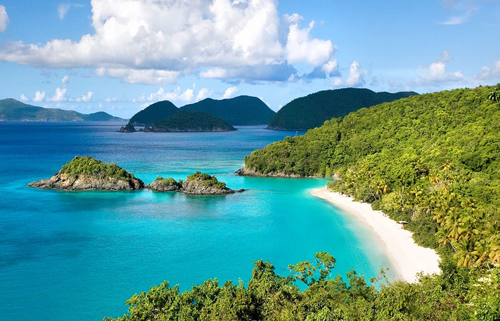
The island is inhabited and tourism services are established, so descriptions such as “untouched paradise” exaggerate the current visitor experience. The stronger reason to stay here is the combination of beaches, fishing communities and historical sites linked to the old Van Don trading-port landscape.
9. Dau Rong Beach, Cai Chien Island
- Location: Cai Chien Island, Quang Ninh City
- Beach length: About 2.7 km
- Best for: Quiet island stays and travelers avoiding the busiest northern islands
- Landscape: Sand, casuarina forest and low-key island countryside
- Recommended stay: 1-2 nights
- Development level: Lower than Cat Ba, Co To and major Quan Lan resorts
Dau Rong is one of the strongest lesser-known choices for travelers who want a quieter island beach. The beach stretches for about 2.7 km beside a belt of casuarina trees on Cai Chien Island.
Cai Chien has less intensive tourism development than Cat Ba or Co To. That creates more space and a stronger rural-island feel, but travelers should also expect fewer restaurants, nightlife options and high-end services.
The island works best for people who deliberately value simplicity. Cycling, walking along the shore, eating local seafood and spending time around the island villages form a more realistic experience than expecting a full resort entertainment program.
10. Tra Co Beach, Mong Cai
- Location: Mong Cai 1 Ward, Quang Ninh City
- Beach length: More than 17 km
- Best for: Long beach walks, border-region culture and road trips in northeastern Vietnam
- Nearby places: Sa Vi, Tra Co Communal House and Binh Ngoc coast
- Recommended stay: 1-2 nights
- Best season: Summer for warm beach conditions and local cultural events
Tra Co stands out for scale and geography rather than resort density. The sandy coastline extends for more than 17 km along Vietnam’s far northeastern edge, creating far more walking space than compact island beaches such as Ti Top or Cat Co.
The strongest itinerary combines the beach with nearby cultural and geographic landmarks. Sa Vi marks the country’s northeastern coastal edge, while Tra Co Communal House reflects the settlement history and religious traditions of the local fishing community.
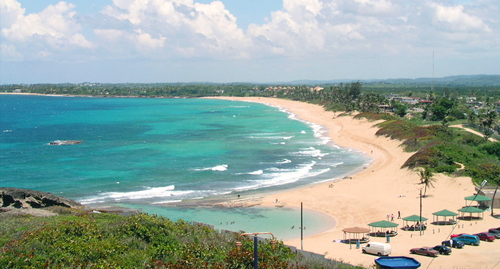
Tra Co is far from Hanoi and central Ha Long, so it is a poor choice for a hurried beach day. It works much better for travelers already exploring Mong Cai, the China border region or a longer northeastern road route.
Older marketing descriptions sometimes call Tra Co Vietnam’s “most lyrical” or longest beach. Those phrases are subjective or difficult to compare consistently, so the more useful fact is the verified coastline length of over 17 km.
11. Con Vanh Beach, Hung Yen
- Location: Hung Phu Commune, Hung Yen Province, formerly the Thai Binh coastal area
- Beach length: About 6 km
- Coastal area: Approximately 1,600-1,700 ha
- Best for: Estuary ecology, photography and quiet coastal landscapes
- Typical opening reference: 07:00-18:00
- Suggested visit: About 2 hours
Con Vanh belongs in this list because it represents a Red River estuary ecosystem rather than a classic blue-water resort beach. The sandbar covers roughly 1,600-1,700 ha and includes about 6 km of coast together with mangroves, clam flats, aquaculture ponds and casuarina windbreaks.
The landscape was formed by sediment deposited near the Ba Lat mouth of the Red River. That means water color and shoreline appearance differ from the clearer island beaches of Quang Ninh. Travelers should visit for ecology, open coastal space and bird-rich wetland scenery rather than expecting tropical-island conditions.
Con Vanh lies within the wider ecological influence of the Red River Delta Biosphere Reserve. It is particularly suitable for photographers, nature-oriented travelers and people who want a quieter coastal stop outside the major resort centers.
The official tourism portal currently lists admission information as being updated, so travelers should confirm any current entrance or service fees locally rather than relying on old prices.
12. Do Son Beach, Hai Phong
- Location: Hai Phong
- Best for: Easy road access, local resort culture and festivals
- Main zones: Traditional beach areas around Do Son
- Related places: Hon Dau, K15 historical wharf and temples
- Major festival: Do Son Buffalo Fighting Festival
- Recommended stay: Day trip or 1 night
Do Son is worth choosing for accessibility and cultural context, not because it has the clearest seawater on this list. The peninsula has served as a seaside retreat for generations and remains one of Hai Phong’s established coastal tourism areas.
The wider destination includes Hon Dau, religious sites and the K15 historical wharf. These attractions make Do Son more useful for travelers who want sightseeing around a beach day instead of spending an entire trip on the sand.
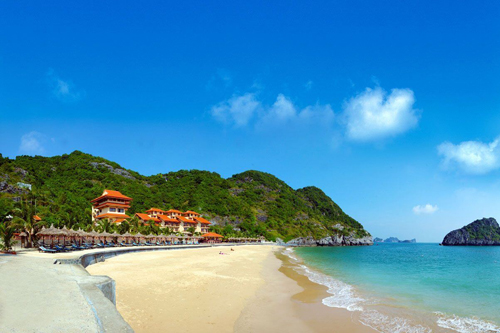
The Do Son Buffalo Fighting Festival adds a distinctive cultural relationship. Its traditional qualifying round falls on the 8th day of the 6th lunar month, while the final takes place on the 9th day of the 8th lunar month. Festival periods bring major crowds, so visitors who only want a quiet coastal break should choose a different date.
13. Sam Son Beach, Thanh Hoa
- Region: North-Central Vietnam
- Location: Thanh Hoa Province
- Best for: Families, groups and travelers wanting extensive resort services
- Main beach zones: A, B, C and D
- Nearby places: Truong Le Mountain, Doc Cuoc Temple and Hon Trong Mai
- Main limitation: Very busy during summer weekends and national holidays
Sam Son is the right choice for travelers who want a lively resort town rather than a secluded beach. Its long-developed tourism infrastructure includes hotels, restaurants, public spaces, entertainment facilities and multiple bathing zones.
Summer is the busiest period. Current visitor patterns show zones A, B, C and D continuing to receive dense crowds during major holidays. Families who value restaurants and easy services may see that energy as an advantage, while couples looking for quiet sand should consider Hai Tien or Bai Dong instead.
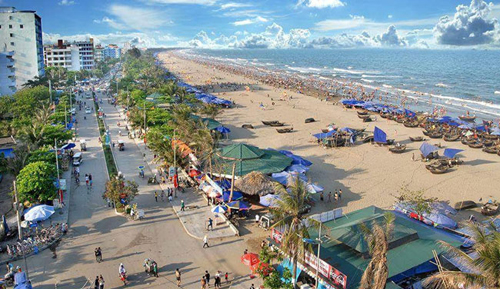
Sam Son also offers more than swimming. Truong Le Mountain, Doc Cuoc Temple and Hon Trong Mai introduce religious and cultural context close to the coast. This makes Sam Son useful for mixed-age families whose members do not want to spend every hour at the beach.
14. Hai Tien Beach, Thanh Hoa
- Location: Thanh Hoa Province
- Coastline: More than 12 km
- Best for: Families and couples seeking more space than Sam Son
- Geography: Between Lach Truong and Lach Trao river mouths
- Nearby landscape: Linh Truong Mountain and the Cung River
- Tourism development: Resort tourism developed substantially from 2012 onward
Hai Tien is the strongest Thanh Hoa alternative for travelers who want a long sandy coast with less urban intensity than Sam Son. The tourism coast extends for more than 12 km between the Lach Truong and Lach Trao river mouths.
The setting combines sea, river mouths and nearby Linh Truong Mountain. That geography creates a more open coastal atmosphere than the denser central resort blocks of Sam Son. Accommodation and restaurants are available, but development is spread over a longer shoreline.
Hai Tien is therefore particularly useful for couples and families who still want established tourism services but do not need Sam Son’s nightlife or high-energy public-beach scene. Travelers with private transport can also use the surrounding fishing and estuary areas to add a stronger local-coast experience.
15. Bai Dong, Nghi Son
- Location: Nghi Son Ward, Thanh Hoa Province
- Best for: Couples, photography and quieter beach time
- Landscape: Sand, rocky headlands and mountain backdrop
- Development level: Smaller-scale than Sam Son and Hai Tien
- Nearby heritage: Nghi Son and Bien Son historical landscape
- Limitation: Public tourism infrastructure remains less complete
Bai Dong is the better Thanh Hoa choice for travelers who value scenery and a smaller beach setting over extensive entertainment. The shore lies among rocky and mountainous coastal terrain around Nghi Son, giving it a more enclosed visual character than the long open beaches at Sam Son or Hai Tien.
The relative lack of large-scale entertainment is part of its appeal, but it also creates practical trade-offs. Recent local tourism assessments note that parking, public toilets, access roads and waste-management infrastructure remain less developed in parts of the Nghi Son coastal area.
Bai Dong therefore works particularly well for a relaxed half-day or a quiet overnight stay. Travelers expecting a dense restaurant strip, evening entertainment or extensive family facilities will find Sam Son more suitable.
16. Cua Lo Beach, Nghe An
- Region: North-Central Vietnam
- Location: Nghe An Province
- Coastline: More than 10 km
- Beach profile: Fine sand and gradual slope
- Best for: Families and conventional seaside holidays
- Recognition: ASEAN Clean Tourist City award at the ASEAN Tourism Forum in 2026
Cua Lo is one of the easiest North-Central beaches to use as a complete family holiday base. Its coastline extends for more than 10 km, with fine sand and a gradual seabed that support conventional swimming and resort use.
Cua Lo has deeper tourism infrastructure than smaller beaches such as Bai Dong. Restaurants, hotels and local seafood services are widely available, while nearby Vinh provides rail, road and air connections for travelers continuing through North-Central Vietnam.
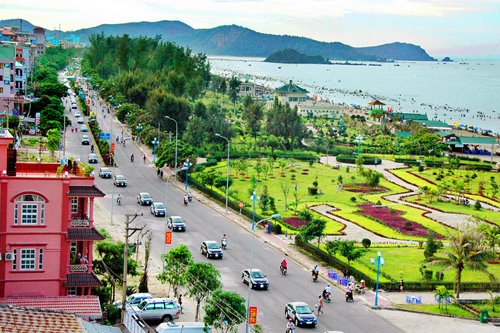
The beach also connects naturally with Lan Chau and offshore Hon Ngu. Travelers interested in local food should look for fresh squid and seafood rather than expecting one fixed signature dish at every restaurant.
Cua Lo received ASEAN Clean Tourist City recognition at the ASEAN Tourism Forum in 2026. The award is a useful quality signal, but visitors should still expect peak-season crowds during major summer holidays.
17. Thien Cam Beach, Ha Tinh
- Location: Thien Cam Commune, Ha Tinh Province
- Main beach length: About 3 km
- Best for: Couples, families and seafood-focused stays
- Nearby places: Cam Son, Cam Son Pagoda, Hon En and Hon Boc
- Local experience: Con Go fish market and coastal seafood
- Current infrastructure note: Coastal embankment works are planned across 2026-2027
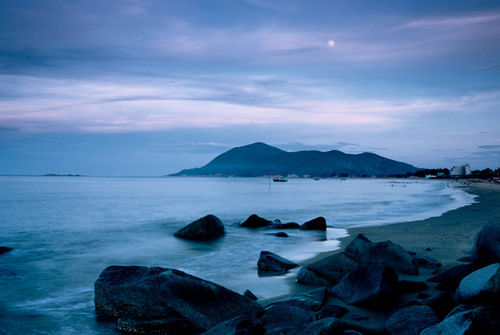
Thien Cam is a compact beach destination that works well for travelers who want sea, seafood and a slower small-town atmosphere. The principal crescent-shaped beach is about 3 km long and sits beneath Cam Son, with offshore islands visible from sections of the coast.
The destination also has stronger local-food context than a resort-only beach. Visitors can experience the coastal fish market and eat squid, fish and shellfish sourced from nearby waters. Cam Son and local pagodas provide short cultural excursions away from the sand.
A temporary infrastructure issue is important for current trip planning. Ha Tinh has approved an approximately 2.2 km upgrade of the Cam Nhuong coastal embankment, with work planned across 2026-2027. This does not mean the entire beach is closed, but individual waterfront sections may experience construction activity. Confirm local conditions before choosing accommodation based solely on sea views.
18. Xuan Thanh Beach, Ha Tinh
- Location: Tien Dien Commune, Ha Tinh Province
- Local coastline: More than 5.2 km across Tien Dien
- Best for: Travelers combining beach time with cultural heritage
- Accommodation capacity: More than 1,000 rooms across the tourism area
- Nearby heritage: Nguyen Du’s homeland in Tien Dien
- Beach profile: Gently sloping mainland shore
Xuan Thanh offers the strongest literary and cultural relationship among the North-Central beaches in this list. The wider Tien Dien area has more than 5.2 km of coastline, while the beach tourism zone now contains over 1,000 accommodation rooms.
The shoreline has a relatively gentle slope and an established restaurant and hotel network. It therefore works as a conventional beach base, but the reason to choose Xuan Thanh over another Ha Tinh beach is the surrounding cultural landscape.
Tien Dien is the homeland of poet Nguyen Du, author of The Tale of Kieu. The area also preserves cultural traditions associated with vi and giam folk singing. A traveler can therefore combine a morning heritage visit with an afternoon at the beach instead of building the entire stay around swimming.
Tourism infrastructure continues to develop around Xuan Thanh, so travelers should judge hotels and facilities by what is currently operating rather than by future resort master plans or announced projects.
Practical Tips for Northern Vietnam Beach Trips
- Keep island transfers flexible: Ferries and high-speed boats can stop during storm warnings or rough seas, especially on routes to Co To, Quan Lan and Cai Chien.
- Do not judge sea quality by promotional photos alone: Water color changes with wind, tide, rainfall and sediment, especially around mainland and estuary beaches.
- Avoid assuming July and August are automatically best: These months are hot but also bring greater tropical-storm risk in the north.
- Book peak summer weekends early: Cat Ba, Co To, Van Don, Sam Son and Cua Lo receive heavy domestic tourism during school holidays and national holidays.
- Follow swimming flags: Van Chay and Son Hao can have stronger waves than nearby alternatives. Do not enter the sea during red-flag conditions.
- Carry sun protection: Many northern beaches have less natural shade than photographs suggest, particularly during midday.
- Plan island trips for at least two nights when possible: The transport time to Co To, Minh Chau, Son Hao and Cai Chien reduces the value of a rushed same-day visit.
- Pack reusable items: Island destinations are increasingly restricting or discouraging disposable plastic, particularly Co To.
Travelers building a longer coastline-focused itinerary can compare these northern choices with other beaches in Vietnam, where Central and Southern Vietnam have different climate patterns and generally longer warm-water seasons.
Plan a Beach Journey in Vietnam with Paradise Travel
Paradise Travel is a licensed international tour operator based in Hanoi and established in 2005. We design private journeys for international travelers who want to combine Vietnam’s cities, heritage sites, islands and coastal stays in one realistic route.
Northern beach planning is more complex than choosing a hotel by the sea. Ferry schedules, tropical storms, domestic holiday crowds and the distance between coastal clusters can change how much time each beach deserves. A private route can combine Ha Long, Cat Ba or a Northeast island with inland destinations without turning the trip into a sequence of long transfers.
Travelers who want dedicated coastal time can include these destinations within a Vietnam beach vacation designed around preferred travel pace, hotel style and season.

Address: 81 Alley 12 Dao Tan Street, Giang Vo Ward, Hanoi, Vietnam
Hotline: 0989391076
Email: sales@vietnamparadisetravel.com
Frequently Asked Questions

Start planning your tailor-made Southeast Asia tour by contacting one of our specialists…


This is really helpful and is really good for finding were you want to go to. It made travelling a lot easier! 🙂