

15 Best Things to Do in Hoi An Mid-Autumn Festival 2026
Hoi An Mid-Autumn Festival 2026 takes place from September 23 to 26, with the main full-moon night falling on Friday, September 25. The celebration brings together Thiên Cẩu dances, lion dances, lantern processions, traditional Mid-Autumn feast displays and community performances across Hoi An, Hoi An Dong and Hoi An Tay wards. The festival has deeper roots than its colorful evening atmosphere suggests. Hoi An’s Mid-Autumn traditions were recognized as National Intangible Cultural Heritage in 2023 for their combination of traditional festival practices, social customs and beliefs. Travelers can also experience the monthly Old Town Night on September 24, when the 14th lunar night brings lantern-lit streets and the familiar custom of releasing flower lanterns on the Hoai River.

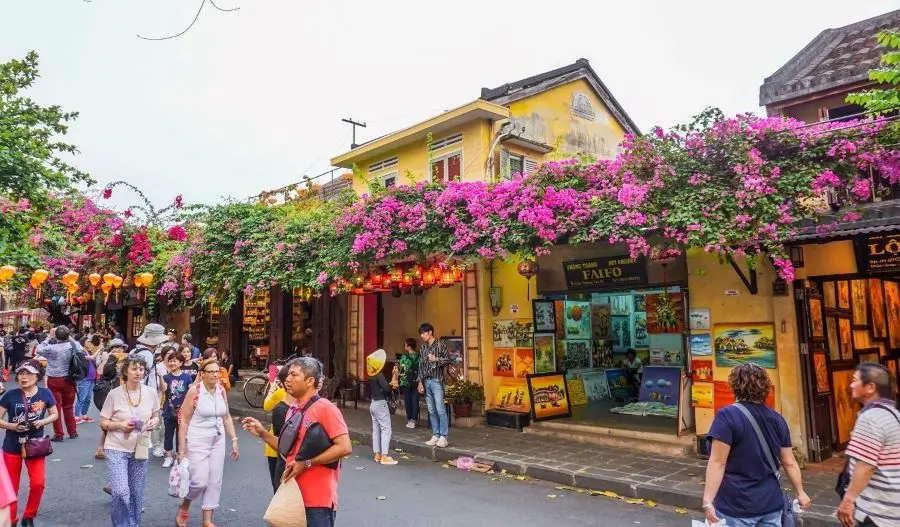
Hoi An Mid-Autumn Festival, a nationally recognized celebration with lanterns and lion dances
Hoi An Mid-Autumn Festival 2026 at a Glance
The official Hoi An Mid-Autumn Festival 2026 runs for four days from September 23 to 26. The program covers the main Mid-Autumn full moon as well as the preceding 14th lunar night, giving travelers more than one evening to experience the celebrations.
| Information | Hoi An Mid-Autumn Festival 2026 |
|---|---|
| Festival dates | September 23–26, 2026 |
| 14th lunar night | Thursday, September 24, 2026 |
| Main Mid-Autumn night | Friday, September 25, 2026 – 15th day of the 8th lunar month |
| Festival areas | Hoi An, Hoi An Dong and Hoi An Tay wards, Da Nang City |
| Confirmed activities | Thiên Cẩu dance competition, lion dances, art performances, traditional feast displays, lantern procession and community programs |
| Heritage status | National Intangible Cultural Heritage since 2023 |
When Is the Hoi An Mid-Autumn Festival 2026?
Hoi An’s official Mid-Autumn program runs from Wednesday, September 23 through Saturday, September 26, 2026. The full moon of the eighth lunar month falls on Friday, September 25, which is the principal Mid-Autumn night.
Thursday, September 24 corresponds to the 14th day of the eighth lunar month. This matters in Hoi An because the town’s recurring Old Town Night is traditionally organized on the 14th lunar night each month. Travelers staying on both September 24 and 25 can therefore experience two different layers of the celebration: the monthly old-town full-moon atmosphere and the main Mid-Autumn night.
Why Is Hoi An’s Mid-Autumn Festival Special?
Hoi An’s Mid-Autumn Festival is a nationally recognized cultural heritage rather than only a seasonal tourist event. Vietnam’s Ministry of Culture, Sports and Tourism added the “Traditional Festival, Social Practices and Beliefs of Mid-Autumn Festival in Hoi An” to the National Intangible Cultural Heritage list under Decision No. 228/QĐ-BVHTTDL dated February 14, 2023.
Heritage research in Hoi An traces the celebration to local cultural traditions shaped by centuries of contact with Chinese and Japanese communities at the former international trading port. Lantern making, moon worship, household offerings, community feasts and folk performances developed alongside this cultural exchange.
The strongest local identifier is múa Thiên Cẩu, or the Heavenly Dog dance. Heritage researchers distinguish it from the lion and dragon dances now common elsewhere in Vietnam. Thiên Cẩu once carried ritual meanings connected with protection, favorable weather, good harvests and family prosperity.
Hoi An’s administrative geography also changed after Vietnam’s 2025 restructuring. The heritage center is now in Hoi An Ward, Da Nang City, rather than the former Hoi An City of Quang Nam Province. The current Hoi An Ward combines the former Minh An, Cam Pho, Son Phong, Cam Nam and Cam Kim areas.
Official Events at Hoi An Mid-Autumn Festival 2026
The confirmed 2026 program centers on Thiên Cẩu, lion dances, lantern processions, feast displays and community performances. These activities are listed in Da Nang’s official festival calendar, while individual performance times remain subject to the detailed local schedule.
1. Watch Hoi An’s Thiên Cẩu Dance
Thiên Cẩu is the most distinctive traditional performance associated with Mid-Autumn Festival in Hoi An. The 2026 program specifically includes a Thiên Cẩu dance competition, making it one of the activities travelers should prioritize.
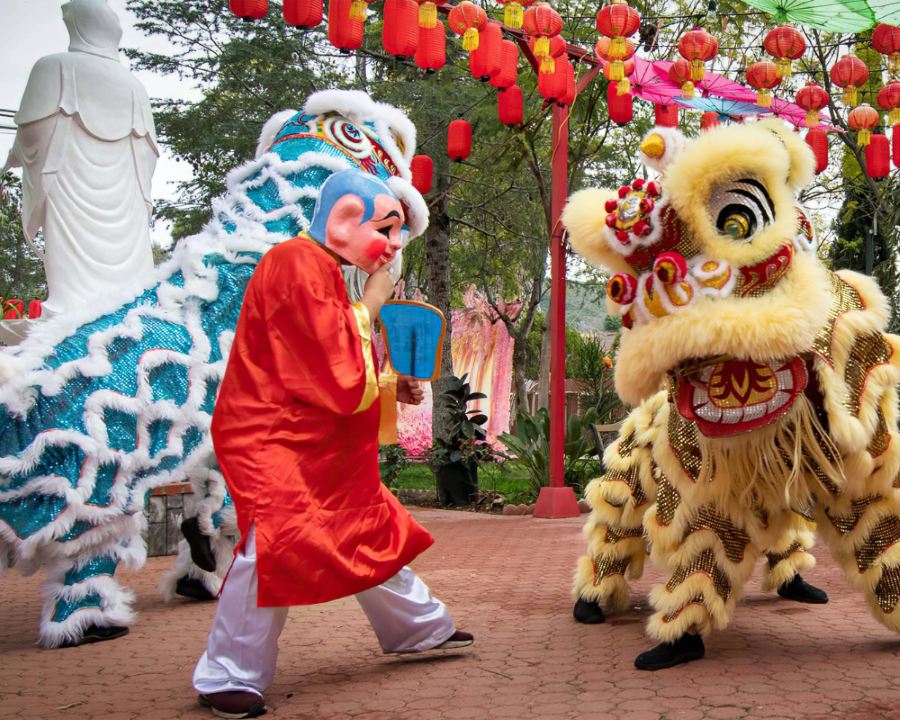
Thiên Cẩu literally means “Heavenly Dog.” The traditional head has a high curved horn, prominent eyes and a large mouth. Its decoration uses five basic colors associated with the Five Elements: white, black, green, red and yellow. Heritage accounts describe a long red or yellow cloth body, while Ông Địa accompanies the animal with a fan and expressive comic movements.
The choreography is also different from a conventional lion dance. Traditional sequences can represent the animal walking, sleeping, waking, eating leaves, drinking water, receiving a reward, bowing for blessings and interacting with Ông Địa. More elaborate routines include the “ascending to heaven” fire sequence and a contest with the figure Hồng Hài Nhi.
These movements once carried ritual meanings. Local records connect Thiên Cẩu with driving away harmful forces, protecting households, praying for rain, seeking prosperity and wishing for a successful harvest. Oral traditions also link the Heavenly Dog with stories about the moon being swallowed and released again, giving the performance a direct connection with the Mid-Autumn full moon.
2. Join the Mid-Autumn Lantern Procession
A public lantern procession is one of the activities officially confirmed for Hoi An Mid-Autumn Festival 2026. Children and community groups carrying lanterns through local streets continue a practice documented in Hoi An across generations.
Traditional lantern processions were closely connected with Thiên Cẩu groups. Children from neighborhoods formed teams, followed the percussion and animal dancers and carried handmade lanterns through the streets during the eighth lunar month. Heritage records show that lantern processions remained part of children’s Mid-Autumn celebrations even during periods when other festival practices changed.
The procession should not be confused with releasing flower lanterns onto the Hoai River. A lantern procession moves through the streets with handheld lanterns. A flower-lantern release places small candle-lit paper lanterns on the river. The first is confirmed in the official 2026 Mid-Autumn program; the second is a recurring Hoi An full-moon tradition discussed separately below.
3. See Traditional Mid-Autumn Feast Displays
Traditional Mid-Autumn feast displays, or mâm cỗ Trung Thu, are confirmed as part of the 2026 festival. These displays connect the public celebration with the household offerings and family customs practiced around the eighth lunar month’s full moon.
Hoi An heritage research records baked mooncakes and soft sticky-rice mooncakes as characteristic offerings for the August full moon. Traditional trays can also contain fruit, cakes and other seasonal foods. After the ceremonial or moon-viewing part of the evening, families traditionally share the food in the custom known as phá cỗ.
Mooncakes therefore have a more specific role here than ordinary festival snacks. Hoi An’s street-food traditions extend far beyond Mid-Autumn dishes, but mooncakes are the food most directly connected with the festival’s ritual calendar.
4. Watch Lion Dances and Cultural Performances
Lion dances and artistic performances are also confirmed for the 2026 celebration. They add a more familiar Mid-Autumn spectacle alongside the locally distinctive Thiên Cẩu tradition.
Lion dancing grew more prominent in Hoi An during the 20th century. Local heritage research notes that Thiên Cẩu predates the dominance of modern lion and lion-dance styles in the town. The two are now often performed during the same Mid-Autumn period, but their heads, body construction, percussion and movement patterns remain different.
Hoi An’s recurring cultural programs also preserve Bài Chòi, folk singing, traditional instruments, Tuồng theatre, calligraphy and folk games. Some of these forms have appeared during previous Mid-Autumn or Old Town Night programs. However, the current 2026 Mid-Autumn announcement has not assigned each of them to a specific festival date, so travelers should wait for the final performance timetable.
Lantern and Full-Moon Experiences in Hoi An
Lanterns shape the Mid-Autumn atmosphere in Hoi An in three different ways: street decoration, the lantern procession and flower lanterns on the Hoai River. Understanding the distinction helps travelers avoid confusing the annual Mid-Autumn festival with Hoi An’s monthly lunar-night program.
5. Experience Hoi An Ancient Town on the 14th Lunar Night
September 24, 2026 is especially significant because it is the 14th lunar night and falls inside the four-day Mid-Autumn festival. Hoi An organizes its recurring “Night of the Ancient Town” on the 14th day of each lunar month.
The program was first tested on September 8, 1998. Hoi An formalized the monthly Old Town Night on February 23, 1999. Its purpose is to recreate elements of local urban life from the early 20th century while keeping community-based arts active in the heritage district.
Current Old Town Night activities can include Bài Chòi, folk singing, traditional instrumental music, Tuồng, Chinese chess, traditional poetry and martial-arts performances. The exact mix changes by program. Local community clubs, rather than only professional tourism operators, continue to participate in many performances.
The existing Paradise Travel article about the monthly Hoi An Lantern Festival covers this recurring lunar-night tradition. Mid-Autumn 2026 is unusual because the September 24 monthly program falls directly inside the September 23–26 festival period.
6. Release a Flower Lantern on the Hoai River
Travelers can associate flower-lantern releases with Hoi An’s 14th-lunar-night experience, but it should not be described as a separately confirmed “Mid-Autumn Lantern Release Festival” for 2026.

Hoi An Lantern Festival, held monthly on the 14th day of the lunar month in the Ancient Town
Official Hoi An cultural records have long listed a flower-lantern activity on the Hoai River as part of Old Town Night. Local heritage sources describe visitors releasing small illuminated lanterns while making wishes for peace, happiness and good fortune.
In 2026, this recurring tradition is particularly relevant on Thursday, September 24. The date is the 14th day of the eighth lunar month and occurs during the official Mid-Autumn program. The final local operating arrangements for boats and river activities should still be checked on the day, especially if rain affects water levels.
There is no need to promise a specific number of lanterns or a fixed lantern price. Both depend on visitor numbers, vendors and local arrangements. Travelers should also use designated lantern products and follow local waste-management instructions rather than placing other materials into the river.
7. Discover Hoi An’s Traditional Lantern-Making Culture
Hoi An’s lantern tradition predates modern tourism by centuries. Eighteenth-century records document lantern use among the communities of Hoi An, Minh Huong and Cam Pho during important ceremonies and festivals.
A Minh Huong community expense record from 1787 includes payment to make lanterns for Trừng Hán Palace, a religious site associated with Quan Công worship. Later family and community traditions used lanterns at homes, clan houses, temples and Chinese assembly halls.
Traditional forms were not identical across communities. Vietnamese artisans used bamboo frames and paper to make star, carp and bánh-ú-shaped lanterns. Minh Huong and Chinese households also used wooden frames, revolving lanterns, Chinese characters and auspicious decorative motifs. Later European contact introduced additional metal, glass and porcelain forms.
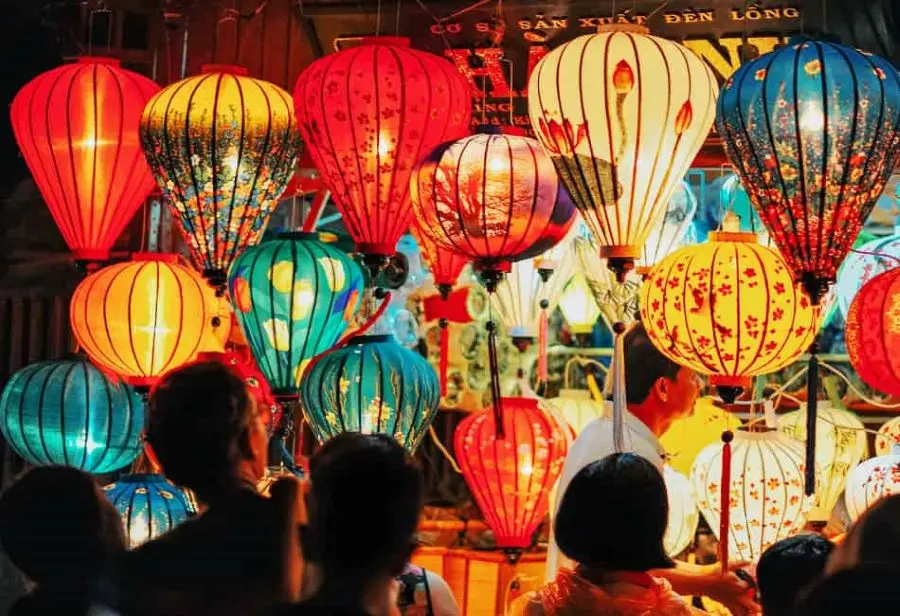
Many modern Hoi An lanterns use bamboo frames covered with colored fabric or silk. The craft now produces round, diamond, octagonal, garlic, papaya, star and carp shapes, among many others. The evolution of these materials shows why lanterns are more than a decorative tourism symbol: they record the same cultural exchange that shaped Hoi An as a trading port.
Traditional Beliefs Behind Mid-Autumn Festival in Hoi An
Hoi An’s Mid-Autumn Festival combines public celebration with household worship, seasonal beliefs and community rites. The religious layer explains why the heritage designation covers not only a festival but also “social practices and beliefs.”
8. Ancestor Worship and Family Offerings
Household worship remains an important traditional practice around the eighth lunar month’s full moon. Hoi An heritage surveys record the local custom of preparing altars and making offerings to ancestors, household deities and other spiritual beings.
Many families traditionally perform full-moon offerings on the 14th lunar day rather than waiting until the 15th. Offerings recorded in local research include fruit, sweet sticky-rice dishes, rice, salt, betel and areca. Larger full moons receive more elaborate preparations.
The eighth lunar month is distinguished by the addition of baked and sticky-rice mooncakes. The purpose of these observances has traditionally included prayers for household peace, favorable business, protection and suitable weather.
These are primarily private family and community practices. Travelers may notice altars, incense or food offerings around homes and religious buildings, but they should not treat private worship as an attraction or enter domestic spaces without invitation.
9. Moon Viewing, Family Reunion and Breaking the Feast
Moon viewing connects Hoi An’s household rituals with the more familiar family side of Mid-Autumn Festival. Families prepare a feast tray, watch the full moon and later share the cakes and fruit.
The traditional expression phá cỗ refers to sharing the feast after the ceremonial or moon-viewing period. Children gradually became central to Mid-Autumn celebrations, with lanterns, animal dances, gifts and neighborhood activities developing around the older seasonal observance.
Local historical explanations also connect the August moon with agricultural expectations. Farmers observed the moon and seasonal weather when thinking about rainfall and future harvests. This agricultural layer helps explain why wishes for favorable weather and abundance appear repeatedly in Hoi An’s Mid-Autumn rituals.
10. Harvest Beliefs and the Meaning of Thiên Cẩu
Thiên Cẩu historically represented protection and agricultural hopes as well as entertainment. Folk accounts connect the Heavenly Dog with wishes for rain, a full moon, successful crops and peace in the community.
Older practices gave individual movements ritual meanings. A Thiên Cẩu might bow at a gate to bring blessings, perform an “eating leaves” sequence, or move around a household space as part of a protective performance. Some oral traditions associated the animal with expelling harmful influences and preventing fire.
The dance later absorbed elements of Vietnamese martial arts. Heritage documentation identifies stances and footwork developed by traditional martial-arts practitioners, while local masters and craftsmen helped reconstruct older choreography and head-making techniques in the late 20th and early 21st centuries.
11. Autumn Rites and Minh Huong Traditions
Hoi An’s traditional ritual calendar places other autumn ceremonies immediately around Mid-Autumn. These rites demonstrate how the eighth lunar month historically connected family worship with communal and migrant-community institutions.
| Lunar date | Tradition | Traditional location | Meaning |
|---|---|---|---|
| 12/8 | Tế Thu | Son Phong Communal House | Thanks predecessors and deities and asks for their protection |
| 15/8 | Mid-Autumn Festival | Homes and community cultural spaces | Full-moon worship, family and children’s celebrations |
| 16/8 | Tế Thu | Tụy Tiên Đường Minh Hương | Minh Huong community rite honoring predecessors and deities |
The traditional calendar means the final day of the official 2026 festival, September 26, also corresponds to the 16th day of the eighth lunar month. However, the heritage calendar records these rites as local traditions; it does not automatically mean every ceremony is staged as a public tourist event. Visitors interested in attending a religious site should confirm access and timing locally.
Historical research also records moon-viewing gatherings within Hoi An’s Minh Huong and Chinese communities. Tea, mooncakes and Tang-style poetry recitation formed part of some older communal practices. Together with Vietnamese traditions and broader Japanese influence on the trading port, these exchanges contributed to the cultural setting from which Hoi An’s Mid-Autumn heritage developed.
Best Places to Experience Mid-Autumn Festival in Hoi An
Hoi An Ancient Town and the Hoai River provide the easiest festival experience, but the official 2026 program extends beyond the heritage core. Hoi An Dong and Hoi An Tay are also named as festival areas.
12. Hoi An Ancient Town
Hoi An Ancient Town is the best base for first-time visitors who want lanterns, heritage architecture and evening cultural activities within walking distance. The protected historic streets concentrate traditional houses, assembly halls, temples and riverside spaces in a compact area.
The Japanese Covered Bridge stands at the western side of the old commercial quarter and reflects the Japanese, Chinese and Vietnamese connections that shaped Hoi An’s trading-port history. The nearby streets around Tran Phu, Nguyen Thai Hoc and Bach Dang are easy to explore on foot before evening celebrations begin.

Japanese Covered Bridge, also known as Chua Cau, restored and reopened in August 2024
Pedestrian restrictions in the heritage center reduce motor traffic during much of the day and evening. Festival nights can nevertheless become crowded, so visiting the monuments earlier and returning to the streets after sunset is more practical than trying to combine both at peak evening hours.
13. Hoai River and Bach Dang Waterfront
The Hoai River is the principal setting for the flower-lantern experience and one of the busiest evening areas during lunar-night celebrations. Bach Dang Street follows the river along the Ancient Town side, while boats operate from several designated riverfront points.
The river is most relevant on September 24 because it is the 14th lunar night. Arrive before the busiest evening period if you want time to walk along the waterfront or arrange a short boat ride. Weather and water conditions can affect boat operations, so follow local instructions rather than assuming every service operates normally.
14. An Hoi
An Hoi, directly across the Hoai River from the Ancient Town, adds night-market activity and community entertainment to the festival area. The riverside can be reached on foot from the heritage center.
Historical Old Town Night programs have placed Bài Chòi around An Hoi, while the surrounding evening streets are also known for food stalls and lantern displays. Travelers who want to eat between performances can use Hoi An’s local street-food specialties as a starting point rather than treating generic night-market food as part of the Mid-Autumn ritual itself.
15. Hoi An Dong and Hoi An Tay
Hoi An Dong and Hoi An Tay are both included in the official 2026 Mid-Autumn Festival area. This means travelers should not assume that every community activity will take place inside the Ancient Town.
Hoi An Dong was created during the 2025 administrative reorganization from areas including Cam Chau, Cua Dai and Cam Thanh. Hoi An Tay covers communities on the other side of the current Hoi An Ward. The official festival calendar has not yet assigned individual 2026 activities to specific venues within these two wards.
Visitors staying several days can therefore keep the central festival evenings for the heritage area and use daytime hours for the wider destination. A 48-hour Hoi An itinerary provides enough time to combine the festival with the Ancient Town and one surrounding cultural or countryside experience.
How to Plan Your Visit for Hoi An Mid-Autumn Festival 2026
Staying for both September 24 and 25 gives travelers the most complete Mid-Autumn experience. The first night coincides with Hoi An’s recurring 14th-lunar-night program, while the second is the actual eighth-month full moon.
Which Night Should You Visit?
If you can choose only one night, September 25 is the main Mid-Autumn date; if possible, stay for September 24 as well.
| Date | Lunar date | Why it matters | Best for |
|---|---|---|---|
| September 23 | 13/8 | Opening day of the official festival period | Early festival programs once timetable is confirmed |
| September 24 | 14/8 | Recurring Old Town Night falls inside Mid-Autumn Festival | Lantern-lit Ancient Town, Hoai River and flower lanterns |
| September 25 | 15/8 | Main Mid-Autumn full-moon night | Festival atmosphere, community traditions and family celebrations |
| September 26 | 16/8 | Final day of the official 2026 festival period | Remaining programs once detailed schedule is released |
Getting to Hoi An from Da Nang
Da Nang is the main gateway because Hoi An has no commercial airport or railway station. Da Nang International Airport is roughly 30 km from the Ancient Town, and a road transfer commonly takes about 45–60 minutes depending on traffic.
| Starting point | Transport | Typical travel time | Notes |
|---|---|---|---|
| Da Nang International Airport | Private car / taxi | About 45–60 minutes | Most convenient with luggage |
| Central Da Nang | Private car / taxi / ride-hailing | About 45–60 minutes | Traffic may increase on festival evenings |
| Hoi An accommodation | Walking / bicycle / local taxi | Depends on neighborhood | Walking works best for hotels close to the Ancient Town |
Avoid arranging a tight airport transfer immediately after an evening festival program. Road congestion, pedestrian restrictions and crowds around the Ancient Town can lengthen the trip back toward Da Nang.
Hoi An Ancient Town Tickets in 2026
Hoi An’s conservation center currently lists Ancient Town ticket structures at 80,000 VND and 120,000 VND, with the 120,000 VND structure traditionally applied to foreign visitors. A ticket can remain valid for access during a stay of up to three days.
The 120,000 VND structure includes the general heritage landscape, either the Japanese Covered Bridge or Quan Cong Temple, one museum and three additional monuments. Children under 16 are exempt under the conservation center’s current 2026 visitor rules.
Ticket holders can also access regular cultural programming in the heritage area. The Traditional Art Performance House at 66 Bach Dang Street currently schedules daily performances at 10:15 AM, 3:15 PM and 4:15 PM. These regular performances are separate from the special Mid-Autumn timetable.
Prepare for Late-September Weather
Late September marks the transition into Central Vietnam’s wetter season, so festival plans should remain flexible. Showers may be short, but prolonged rain or tropical weather systems can affect outdoor performances and river activities.
Carry lightweight rain protection and check the local forecast each day. Paradise Travel’s overview of the rainy season in Central Vietnam places its general onset in September, with heavier rainfall becoming more likely later in the season.
Do not treat flooded streets as a guaranteed sightseeing experience. If authorities restrict pedestrian routes, riverboats or heritage sites because of rising water, follow the closure rather than entering the affected area for photographs.
Respect Local Festival and Religious Customs
The easiest way to enjoy Mid-Autumn respectfully is to distinguish public performances from private rituals. Most lantern processions and community performances welcome spectators, while household altars and some religious ceremonies remain community practices.
- Give performers room: do not stand inside a Thiên Cẩu, lion-dance or lantern-procession route for photographs.
- Ask before photographing worship: close-up photography of household altars, offerings or private ceremonies may be inappropriate without permission.
- Do not move offerings: mooncakes, fruit, incense and ritual objects are not photo props.
- Follow temple etiquette: dress respectfully and avoid loud behavior inside assembly halls, temples and communal houses.
- Use designated flower lanterns: follow local instructions when placing lanterns on the river and dispose of other waste on land.
- Expect crowds: allow extra walking and transport time around the Ancient Town on September 24 and 25.
Plan Your Hoi An Festival Trip with Paradise Travel
Paradise Travel is a licensed international tour operator headquartered in Hanoi, Vietnam. Established in 2005, Paradise Travel and Media Joint Stock Company operates under International Tour Operator License No. 01-2161/2023/TCDL-GP LHQT. Our local travel consultants can coordinate accommodation, transfers, private guides and itinerary timing around the Mid-Autumn Festival dates.
Travelers who want to concentrate on the heritage city can combine the festival with Paradise Travel’s Hoi An tours, including the Ancient Town, surrounding villages and cultural experiences. A longer Central Vietnam itinerary can connect Hoi An with Da Nang and Hue without requiring additional domestic flights.
For Mid-Autumn 2026, staying in or close to Hoi An on September 24 and 25 is the most practical approach. Our team can arrange the wider route while keeping those evenings free for the Old Town Night and main Mid-Autumn celebrations.
Contact our local travel consultants for a personalized itinerary, or create a trip around your preferred dates and travel style.

Address: 81 Alley 12 Dao Tan Street, Giang Vo Ward, Hanoi, Vietnam
Hotline: 0989391076
Email: sales@vietnamparadisetravel.com
Helpful Information for Visitors

Start planning your tailor-made Southeast Asia tour by contacting one of our specialists…


