

Hai Phong Travel Guide

Hai Phong Overview
Hai Phong is a port-city, island, river and heritage destination in northern Vietnam, positioned between the Red River Delta and the Gulf of Tonkin. The historic urban core developed around the Cam and Tam Bac rivers, while the wider destination extends to Do Son on the coast, the Cat Ba Archipelago offshore and major cultural landscapes farther west.
Vietnam’s 2025 administrative reorganization changed the scale of Hai Phong substantially. On July 1, 2025, the former Hai Phong municipality and former Hai Duong Province merged to form the present-day Hai Phong City. The enlarged municipality covers 3,194.72 km², has a population of 4,664,124 and contains 67 communes, 45 wards and two special zones.
This larger administrative area also changes how Hai Phong should be understood as a travel destination. The city now contains components of two UNESCO World Heritage properties. The natural Ha Long Bay-Cat Ba Archipelago property connects Hai Phong with neighboring Quang Ninh, while Con Son-Kiep Bac forms part of the cultural Yen Tu-Vinh Nghiem-Con Son, Kiep Bac Complex of Monuments and Landscapes inscribed in 2025.
Cat Ba remains Hai Phong’s most important nature destination. Its limestone islands, forests, bays and marine ecosystems contrast strongly with the historic port-city architecture in central Hai Phong. Do Son adds a long-established seaside resort, maritime heritage and religious traditions, while Bach Dang and Trang Kenh preserve landscapes associated with some of the most important naval victories in Vietnamese history.
The western part of present-day Hai Phong adds another cultural layer through Con Son-Kiep Bac, Mao Dien Temple of Literature and the Nguyen Binh Khiem heritage complex. Travelers therefore no longer need to think of Hai Phong only as an industrial port or a transit city on the way to Cat Ba.
One day works for a city food and heritage trip, while three to four days gives a much better introduction to central Hai Phong and Cat Ba. Add another day if Do Son, Bach Dang or Con Son-Kiep Bac is a major priority.
Hai Phong Weather and Best Time for Cat Ba, Beaches and Festivals
March-April and October-November provide the easiest overall conditions for sightseeing and active travel in Hai Phong. May-August is better for beaches and island trips, but summer also brings heavier rain, heat and a greater risk of tropical storms disrupting ferries and boat activities.
Hai Phong has a northern coastal monsoon climate. The wetter period generally runs from May to October, while November-April is cooler and drier. Storms are most common from June to September, so sea conditions should be checked separately from the general city forecast.
| Travel Period | Best For | What to Expect | Important Considerations |
|---|---|---|---|
| January-February | Urban heritage, temples and spring pilgrimage | Cooler weather, cloudy periods and occasional drizzle | Bring a light jacket, especially for early mornings and boat transfers |
| March-April | Cat Ba hiking, city exploration and festivals | Milder temperatures before peak summer heat | One of the strongest periods for combining outdoor and cultural travel |
| May | Red Flamboyant Festival, beaches and Cat Ba | Warmer conditions and increasing rainfall | City accommodation can become busier around festival events |
| June-September | Cat Ba beaches, Lan Ha Bay and Do Son | Hot, humid and rainy with the highest storm risk | Ferries, cruises and sea recreation can be suspended when severe weather approaches |
| October-November | Cat Ba trekking, city heritage and food travel | More comfortable temperatures and generally easier outdoor conditions | Particularly suitable for forest trails |
| December | Urban travel, food and short heritage trips | Cooler and relatively dry | Swimming is less attractive, but sightseeing remains practical |
For hiking, October-April is the strongest period for Cat Ba National Park. Limestone and forest trails become more difficult after prolonged rain, particularly on longer routes toward Ao Ech and Viet Hai. Cat Ba is one of several distinctive hiking destinations in Vietnam, alongside mountain routes in Sapa, Ha Giang and Pu Luong.
Festival timing adds another seasonal layer. The Le Chan Festival follows the second lunar month, the Red Flamboyant Festival is centered on May, and the Do Son Buffalo Fighting Festival follows lunar dates in summer and early autumn rather than fixed Gregorian dates.
A summer trip should always retain some flexibility. In July 2026, Hai Phong temporarily suspended tourist vessels and recreational activities at sea when a tropical storm approached, illustrating why island itineraries need a backup plan even when accommodation has already been booked.
How to Travel from Hanoi and Other Cities to Hai Phong
Hai Phong is one of northern Vietnam’s easiest cities to reach from Hanoi because travelers can choose between an expressway and a direct railway into the city center. Cat Bi International Airport also connects Hai Phong with destinations farther away in Vietnam, although individual flight routes should be checked close to the travel date.
| Travel Option | Typical Journey | 2026 Reference Cost | Best For |
|---|---|---|---|
| Hoa Phuong Do train from Hanoi | About 2-2.5 hours depending on service | About 120,000-198,000 VND for regular full-route fares; VIP fares are higher | City food tours, solo travelers and car-free trips |
| Limousine or coach from Hanoi | About 1.5-2.5 hours depending on pickup and traffic | Varies by operator | Hotel-to-hotel convenience |
| Private car from Hanoi | About 1.5-2 hours in favorable traffic | Varies by vehicle and itinerary | Families, Do Son, Bach Dang and onward Cat Ba travel |
| Flight to Cat Bi International Airport | Depends on origin | Airline-dependent | Travelers arriving from central or southern Vietnam |
The Hoa Phuong Do train has become a useful travel experience in its own right. The upgraded Hanoi-Hai Phong service launched in May 2025 and now operates alongside the regular railway timetable. In 2026, the route normally has four train pairs per day, with additional capacity possible during high-demand periods.
Weekend services and VIP carriages can sell out early. Travelers planning a same-day Hai Phong food trip should reserve the return train rather than assuming seats will remain available in the evening.
Hai Phong Railway Station is particularly convenient because it places visitors close to the historic city center, Opera House, Tam Bac area and many food streets. This makes the train a stronger option for a short urban visit than it is for travelers carrying large amounts of luggage directly to Cat Ba.
The Hanoi-Hai Phong Expressway provides the fastest road approach. Travelers starting in the capital can combine the route with the Hanoi travel guide without needing a domestic flight.
Cat Bi International Airport lies about 5 km from the historic city center. Its existing passenger terminal remains in service while a new T2 terminal is under construction. As of the latest 2026 update, T2 has not opened. The project is designed for five million passengers per year and is currently targeted for completion in 2027.
Flight schedules are more perishable than road and rail information, so check the current airline timetable rather than relying on older route lists.
Getting Around Hai Phong, Do Son and Cat Ba
Central Hai Phong is relatively compact, but the full destination is geographically large. Do Son, Bach Dang, Cat Ba and western Hai Phong require separate road or water transfers, so one hotel base does not work efficiently for every attraction.
- Walking: useful around the Opera House, Central Flower Garden, Tam Bac and parts of the Le Chan heritage area.
- Taxi or ride-hailing: practical for central attractions, Cat Bi Airport and shorter urban journeys.
- Private car: the easiest option for Do Son, Bach Dang-Trang Kenh and western heritage routes.
- Train: useful for arriving directly in central Hai Phong from Hanoi.
- Ferry, cable car or speedboat: required for different Cat Ba access arrangements depending on the route and vehicle.
- Boat or cruise vessel: necessary for Lan Ha Bay and many marine experiences around Cat Ba.
Dong Bai-Cai Vieng Ferry to Cat Ba
The Dong Bai-Cai Vieng ferry carries passengers and vehicles between the mainland side of Cat Hai and Cat Ba Island.
| Passenger or Vehicle | One-Way Reference Fare |
|---|---|
| Foot passenger | 10,000 VND |
| Bicycle | 12,000 VND |
| Motorbike | 45,000 VND |
| Car under 9 seats | 190,000 VND |
The current published 2026 schedule starts from 05:30 at Dong Bai and 05:00 at Cai Vieng. The final listed departures are 18:30 from Dong Bai and 18:00 from Cai Vieng.
Peak-season traffic restrictions matter more than the timetable itself. During 2026, authorities temporarily stop accepting passenger cars and cargo vehicles traveling toward Cat Ba from 09:00-13:00 during specified holiday periods and on weekends from May 9 through September 30.
Travelers can still use alternative passenger transport such as cable car, speedboat and bus connections during restricted periods. Rules are seasonal, so drivers should check the current traffic notice before taking a private vehicle to Cat Ba.
Cat Ba also uses additional summer traffic controls around its busiest beaches. From April 30 to September 5, 2026, most motorcycles, cars and tourist electric vehicles are restricted on the Cat Tien road toward Cat Co 1 and Cat Co 2 from 05:30-18:30, with limited exemptions for authorized local and resort vehicles.
These controls make a car-free Cat Ba trip considerably easier during peak summer weekends.
Cat Ba Island, Lan Ha Bay and Ha Long Bay-Cat Ba World Heritage
Cat Ba is Hai Phong’s defining nature destination and part of the UNESCO-listed Ha Long Bay-Cat Ba Archipelago. The World Heritage property covers 65,650 hectares and contains 1,133 islands and islets across Hai Phong and neighboring Quang Ninh.

Cat Ba combines an island town with limestone mountains, forest and marine World Heritage scenery.
Ha Long Bay was originally inscribed by UNESCO in 1994. In 2023, Cat Ba Archipelago was added through a significant boundary modification, creating the current Ha Long Bay-Cat Ba Archipelago World Heritage property.
The designation is separate from the Cat Ba UNESCO Biosphere Reserve, which was recognized in 2004. The Biosphere Reserve covers 26,419 hectares, including 16,417 hectares of terrestrial area and 10,002 hectares of marine area. UNESCO records 366 limestone islands within the biosphere landscape, together with humid tropical forest, wetlands, mangroves and coral reefs.
This distinction matters because Cat Ba has several overlapping conservation entities:
| Entity | What It Covers | Recognition |
|---|---|---|
| Ha Long Bay-Cat Ba Archipelago | Marine karst landscape spanning Hai Phong and Quang Ninh | UNESCO World Heritage |
| Cat Ba Biosphere Reserve | Island, forest, wetland and marine ecosystems | UNESCO Biosphere Reserve since 2004 |
| Cat Ba National Park | Protected terrestrial and marine habitats within Cat Ba | Vietnamese national park |
| Lan Ha Bay | Marine tourism area south and east of Cat Ba Island | Part of the wider Cat Ba marine landscape |
Cat Ba therefore works best as a multi-experience destination rather than only a beach stop. A two-day stay can combine a bay cruise with the national park, while three days gives enough time to add Viet Hai, kayaking or a longer forest route.
The detailed Cat Ba travel guide covers island-specific changes and planning in more depth.
Cat Ba National Park, Forest Trails and Wildlife
Cat Ba National Park protects the forested interior of the island and parts of its surrounding marine environment. It was established in 1986 and manages approximately 15,200 hectares.

Cat Ba National Park offers both short limestone-ridge walks and longer forest treks toward Viet Hai.
The main visitor routes vary substantially in difficulty.
Kim Giao-Ngu Lam is the most useful introduction for a first visit. The route climbs through limestone forest toward an elevated viewpoint and normally requires about one to two hours depending on pace.
Trung Trang Cave lies near the park headquarters and can be combined with the shorter forest route. This is a practical option for travelers who want a mixed forest-and-cave experience without committing to a full-day trek.
Ao Ech-Viet Hai is a much longer forest crossing. The route is around 12 km and can require roughly four to seven hours. It suits active travelers comfortable with uneven limestone terrain and longer periods in humid forest.
The park also contains one of Cat Ba’s most important conservation entities, the Cat Ba langur. UNESCO identifies this as a Critically Endangered endemic primate and a flagship species of the archipelago.
Travelers should not plan a normal park visit around seeing a langur. The population is very small, and responsible tourism means avoiding wildlife pursuit, noise and attempts to approach animals for photographs.
The site’s Cat Ba hiking routes compare the short Ngu Lam walk with the longer forest crossing, while the broader Vietnam national parks guide places Cat Ba in the context of the country’s protected-area network.
| Park or Route | Adult Fee | Best For |
|---|---|---|
| Cat Ba National Park general admission | 160,000 VND | General park visits |
| Park Center-Kim Giao-Ngu Lam-Trung Trang | 120,000 VND | First-time hikers |
| Ninh Tiep meadow-Tien Duc Cave | 80,000 VND | Alternative nature route |
| Phu Long-mangrove-Thien Long Cave | 80,000 VND | Mangrove and cave experience |
Hospital Cave, or Hang Quan Y, adds a wartime historical layer to Cat Ba’s karst geography. The cave was adapted as a protected hospital and shelter during the war period and lies on the cross-island road between Cat Ba town and the national park. It pairs naturally with Trung Trang and forest sightseeing rather than requiring a separate day.
Lan Ha Bay, Viet Hai and Marine Experiences
Lan Ha Bay is the marine side of a Cat Ba trip, with kayaking, swimming, limestone islands and sheltered waterways. It is particularly useful for travelers who want active water experiences combined with an island stay.

Lan Ha Bay combines sheltered karst waterways with kayaking, boat trips and access to Cat Ba Island.
Most itineraries include a mixture of cruising, kayaking and short stops rather than one fixed attraction. Exact routes vary according to operator, weather, tides and permitted sightseeing itineraries.
Viet Hai Village provides one of the most useful connections between the terrestrial and marine sides of Cat Ba. Active travelers can reach the village after a long national-park trek, while others arrive by boat and continue inland by bicycle or local electric vehicle.
Cat Ba’s beaches offer another alternative to full-day cruising. The Cat Co and Tung Thu areas are convenient from the main tourism center, although summer access and traffic management can change during peak periods.
The 2026 adult sightseeing fee for the bay routes around Cat Ba is 120,000 VND per visit. Cruise, boat, kayak and guide charges are separate unless explicitly included by the operator.
For overnight sightseeing on the bays, 2026 fees are higher and depend on the number of nights. Travelers should therefore compare the complete package price rather than only the boat rate.
Since April 2026, licensed routes have also been approved to connect Lan Ha Bay with Ha Long Bay. This makes it possible for some cruises to cross between the two marine tourism areas, although sightseeing charges and permitted stops differ.
For travelers choosing between the main northern bays, the site’s comparison of Vietnam’s major bays explains how Lan Ha differs from Ha Long and Bai Tu Long.
Safety rules have tightened. In 2026, Cat Hai authorities instructed tourist-boat operators to require 100% of passengers to wear properly fitted life jackets from boarding and throughout the journey. Follow the crew’s instructions even when the water appears calm.
Do Son Beaches, Hon Dau and Hai Phong’s Coastal Heritage
Do Son is best understood as a historic seaside destination with beaches, maritime heritage, temples and wartime sites. Its value is broader than beach quality alone, making it suitable for travelers interested in coastal history as well as a short seaside break.
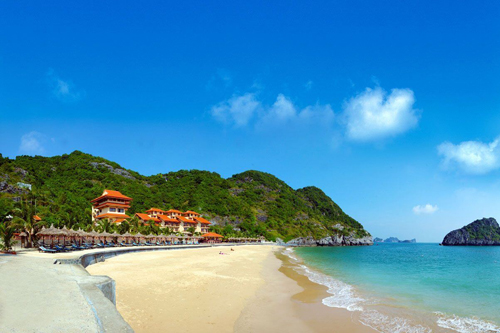
Do Son combines beaches with a long history as a seaside resort and a strong maritime cultural identity.
The main beach zones are convenient during the hot summer months, but Do Son also contains several entities worth visiting outside swimming season.
Hon Dau Island lies just offshore and combines coastal vegetation, a temple dedicated to Nam Hai Than Vuong and one of northern Vietnam’s historic lighthouses. The lighthouse became operational in the late nineteenth century and remains closely connected with the maritime history of Hai Phong Port.
The island also contains old trees and shaded walking areas that provide a different atmosphere from the developed Do Son shoreline.
- Hon Dau admission: 20,000 VND per adult
- Best for: Maritime history, spiritual culture and short island walking
Ben K15, also known as the No-Number Wharf, is one of Do Son’s most important twentieth-century historical sites. It is associated with the maritime supply network known as the Ho Chi Minh Sea Route and is often described as its “Kilometer Zero.”
The K15 historical complex underwent extensive restoration and redevelopment between 2024 and 2026. The renovated site was officially inaugurated on May 14, 2026, adding a memorial square, pier, exhibition elements and spaces dedicated to those involved in the wartime maritime route.
Bao Dai Villa adds a different period of history. The French-designed villa dates from 1928 and later became associated with Bao Dai, Vietnam’s last emperor. The approximately 3,700 m² grounds occupy an elevated position with coastal views. It is an easy cultural stop for families and older travelers who prefer limited walking.
Tuong Long Tower, Hang Pagoda and Ba De Temple extend Do Son’s cultural landscape beyond its colonial and wartime heritage. These religious sites are best combined by road rather than treated as separate day trips.
Do Son works well for a half-day from central Hai Phong if travelers choose two or three priorities. A full day is better for combining the coast, Hon Dau and K15 without rushing.
Bach Dang River, Trang Kenh and Hai Phong’s Naval History
The Bach Dang-Trang Kenh landscape is one of Hai Phong’s most important historical areas, associated with three major Vietnamese victories against invading forces. It lies roughly 18 km northeast of the historic city center and is especially relevant to travelers interested in military, medieval and river history.
The wider Bach Dang River is associated with victories led by Ngo Quyen in 938, Le Hoan in 981 and Tran Hung Dao in 1288. The tidal river, channels and strategic use of underwater wooden stakes became central to the military history of the region.
Bach Dang Giang Historical Site interprets this history through a large riverside religious and memorial complex.
The site contains temples dedicated to Ngo Quyen, Le Dai Hanh and Tran Hung Dao, together with Truc Lam Pagoda, a victory square, exhibition areas and a reconstruction illustrating the Bach Dang stake-field strategy.
One distinctive practical attribute is its longstanding “three no’s” model:
- no entrance fee;
- no commercial shops or market stalls within the site;
- no littering, with an emphasis on a clean heritage environment.
The site is therefore better approached as a memorial and spiritual landscape than as a commercial tourist attraction.
Allow about two to three hours for the main complex. Travelers interested in the wider archaeological context can also investigate the Cao Quy stake-field area and other Bach Dang heritage entities, although access and interpretation differ from the main Bach Dang Giang complex.
Bach Dang’s historical narrative also connects directly with Hang Kenh Communal House in central Hai Phong, which worships Ngo Quyen and now uses multimedia interpretation to recount the 938 victory.
Central Hai Phong: Port-City Architecture, Le Chan Heritage and Tam Bac
Central Hai Phong is worth at least half a day for its port-city architecture, riverfront, religious heritage and food culture. The strongest urban attractions are close enough to combine into one route rather than being visited as isolated monuments.
Modern Hai Phong developed rapidly as a port city in the late nineteenth century. The city was formally established in 1888, while commercial infrastructure, riverfront streets and French-period civic buildings transformed the urban core.
Hai Phong Opera House is the most recognizable architectural landmark. The neoclassical and European-influenced building stands at the center of the city’s main public square and was listed as a National Architectural and Artistic Relic in 2015.
The surrounding Central Flower Garden and Quan Hoa preserve part of the old civic landscape. The small flower kiosks remain one of the city’s most recognizable street-level architectural elements.
Tam Bac adds the riverfront dimension. Streets around the river historically formed part of the city’s commercial quarter, and the area remains convenient for walking, photography, cafes and evening activity.
Nghe Temple is one of the most important spiritual sites in central Hai Phong. It worships female general Le Chan, who is traditionally associated with the establishment of ancient An Bien, regarded locally as a predecessor of the modern city.
The Le Chan heritage network also includes An Bien Communal House and the Le Chan statue and square. These entities are particularly meaningful during the annual festival in the second lunar month.
Hang Kenh Communal House provides another major historical relationship. The more than 300-year-old national architectural-artistic relic worships Ngo Quyen and is notable for its dense wood carving and traditional communal-house architecture.
Since June 2025, Hang Kenh has also hosted Dau Thieng Hang Kenh, Hai Phong’s first heritage night tour using digital technology. The program combines 3D mapping about the Battle of Bach Dang in 938 with traditional performance elements. Current show dates and ticket prices should be confirmed before planning a visit.
Hai Phong Museum is useful for travelers who want historical context before visiting Do Son, Bach Dang or the port heritage sites. It presents material relating to the city’s development, archaeology, culture and revolutionary history.
Con Son-Kiep Bac and Western Hai Phong’s Cultural Heritage
Con Son-Kiep Bac is the most important cultural-heritage destination added to Hai Phong’s tourism map after the 2025 merger. It forms part of the UNESCO-listed Yen Tu-Vinh Nghiem-Con Son, Kiep Bac Complex of Monuments and Landscapes.
UNESCO inscribed the serial property in 2025 under criteria (iii) and (vi). It contains 12 component sites across forested mountains, lowlands and river valleys and covers 525.748 hectares with a much larger buffer zone.
The property is closely associated with the Tran Dynasty and the development of Truc Lam Buddhism, a Vietnamese Zen tradition that became influential in Dai Viet during the thirteenth and fourteenth centuries.
Within present-day Hai Phong, tourism authorities promote a five-site heritage circuit consisting of:
- Con Son Pagoda;
- Kiep Bac Temple;
- Thanh Mai Pagoda;
- Kinh Chu Cave;
- Nham Duong Pagoda.
Con Son combines Buddhist heritage with a forested mountain landscape and associations with prominent historical figures including Nguyen Trai and Huyen Quang.
Kiep Bac is closely associated with Tran Hung Dao and the Tran military tradition. Its location in a river-valley landscape reinforces the relationship between religion, pilgrimage and military history in the wider UNESCO property.
| Site | Adult Admission |
|---|---|
| Con Son scenic and relic complex | 20,000 VND |
| Kiep Bac Temple | 20,000 VND |
| Kinh Chu historical cave and landscape | 10,000 VND |
Con Son and Kiep Bac can be combined in one heritage-focused day. A longer western Hai Phong itinerary can continue to Thanh Mai, Kinh Chu or Nham Duong.
Other cultural entities are worth considering when traveler interests match them:
| Western Hai Phong Heritage | Why It Matters |
|---|---|
| Nguyen Binh Khiem Memorial Complex | Special National Relic associated with the sixteenth-century scholar and cultural figure Trang Trinh Nguyen Binh Khiem |
| Mao Dien Temple of Literature | Special National Relic connected with Confucian education, scholarship and the historical examination tradition of the former eastern region |
| Kinh Chu Cave | Limestone cave combining natural landscape, inscriptions and religious heritage; part of Hai Phong’s UNESCO component group |
Mao Dien lies close to National Highway 5 and is particularly easy to consider when traveling between Hanoi and Hai Phong by road.
Travelers with only two or three days in Hai Phong should prioritize Cat Ba and the historic port-city area. Con Son-Kiep Bac becomes much more worthwhile with a fourth or fifth day or when Buddhist and Vietnamese historical heritage are primary interests.
Red Flamboyant, Le Chan and Do Son’s Living Festivals
Hai Phong’s festival calendar ranges from a modern citywide celebration to ancient local religious traditions. Travelers should use lunar dates for traditional festivals because the Gregorian dates change each year.
Red Flamboyant Festival is Hai Phong’s main modern city festival. It began in 2012 and takes place around May, when the city’s flamboyant trees are associated with the approach of summer and Hai Phong Liberation Day on May 13.
The 2026 edition included more than 60 cultural, tourism and sporting activities. Its main opening program took place on May 8 at the city’s new Political-Administrative Center. Festival activities extended through much of the spring period, with particularly concentrated programming in early to mid-May.
Le Chan Festival commemorates the female general associated with the ancient An Bien settlement. The festival is listed as National Intangible Cultural Heritage and normally takes place from the 7th to 9th days of the second lunar month.
In 2026, the festival ran from March 25-27 around Nghe Temple, An Bien Communal House and the Le Chan statue area. Ritual worship is combined with performances and community cultural activities.
Do Son Buffalo Fighting Festival is another National Intangible Cultural Heritage tradition. In 2026, authorities restored its traditional two-round format after several years in which only the final round was held.
The evergreen dates are:
- Preliminary round: 8th day of the 6th lunar month.
- Final round: 9th day of the 8th lunar month.
In 2026 these corresponded to July 21 and September 19.
The event is embedded in Do Son’s wider coastal religious culture rather than being only a sporting spectacle. Ceremonies include incense offerings at local communal houses and at the Nam Hai Than Vuong Temple on Hon Dau.
Con Son-Kiep Bac spring pilgrimage adds a further festival season in western Hai Phong. The 2026 spring festival included ceremonies associated with Huyen Quang, Nguyen Trai, Tran Hung Dao and Truc Lam heritage.
Festival weekends can produce considerably heavier traffic and accommodation demand. Travelers interested primarily in the ritual or heritage context should arrive before the busiest public program rather than only attending the main stage event.
Night Markets, Heritage Tours and Evening Experiences in Hai Phong
Hai Phong now has a more developed evening tourism scene than older travel guides suggest. The city center combines weekend walking streets and food with a heritage night tour, while Cat Ba has its own concentration of evening dining and entertainment.
On August 28, 2026, Hai Phong launched a new walking-street and night-economy program around the Central Flower Garden and City Opera House.
The current program is organized on Friday and Saturday evenings and includes approximately 25-30 stalls together with food, OCOP products, street performance, professional entertainment and community activities.
This area works naturally as the final stop after a central-city sightseeing route because it sits beside the Opera House and the historic civic center.
Food is an important part of the experience. The opening program itself included demonstrations of local dishes such as banh da cua and nem cua be.
For a more cultural evening, Dau Thieng Hang Kenh uses 3D mapping and traditional arts to interpret Ngo Quyen and the Bach Dang victory within the historic communal house. Because its performance calendar is event-dependent, check the current schedule before building the evening around it.
Cat Ba’s evening life is more tourism-oriented and concentrated around the central waterfront, restaurants, market areas and newer entertainment developments. Summer generally has the greatest choice, while activity becomes quieter outside the main island season.
Modern leisure development is also expanding around Vu Yen, which received city-level tourism-area recognition in 2026. It is more relevant for contemporary entertainment, family leisure and resort-style travel than for Hai Phong’s traditional heritage.
Where to Stay in Hai Phong: City Center, Do Son or Cat Ba?
Choose accommodation according to the experience you want rather than treating all of Hai Phong as one hotel zone. Central Hai Phong, Do Son, Cat Ba and western heritage areas serve very different itineraries.
| Area | Best For | Main Advantage | Suggested Stay |
|---|---|---|---|
| Central Hai Phong | Food, railway access, urban history and nightlife | Walkable concentration of food and heritage | 1-2 nights |
| Cat Ba town / central tourism area | Lan Ha Bay, beaches and first-time island visits | Best range of boat departures, restaurants and services | 2-3 nights |
| Viet Hai | Nature, cycling and slow travel | Village setting inside the Cat Ba landscape | 1 night as part of a longer island trip |
| Do Son | Beach, families and coastal heritage | Easy access to Hon Dau, K15 and temples | 1 night or day trip |
| Con Son-Kiep Bac area | UNESCO heritage and pilgrimage | Better access to western cultural sites | 1 night if exploring several sites |
A first-time visitor with three days can spend one day and night in central Hai Phong followed by two days on Cat Ba.
With four days, add Do Son or Bach Dang depending on whether coastal leisure or history is more important.
With five days, western Hai Phong and Con Son-Kiep Bac become practical without sacrificing Cat Ba.
Trying to sleep in central Hai Phong and commute repeatedly to Cat Ba wastes substantial time because every island day requires road and sea-access logistics.
What to Eat in Hai Phong
Food is one of the strongest reasons to spend time in central Hai Phong rather than traveling directly from Hanoi to Cat Ba. The city has developed a recognizable food-tour culture built around crab noodles, seafood, small savory snacks and desserts.
The broader Vietnamese food guide provides context for northern Vietnamese cooking, but several Hai Phong specialties have a distinctly local identity.
| Dish | What It Is | Where It Fits Best |
|---|---|---|
| Banh da cua | Brown or red rice noodles served in a crab-based broth with greens and assorted toppings | Signature city meal for lunch or dinner |
| Nem cua be | Square fried spring roll filled with crab and other savory ingredients | Commonly paired with noodles or eaten as a separate dish |
| Banh mi cay | Small narrow baguette filled with pate and usually eaten with a spicy local chili sauce | Quick snack and food-tour staple |
| Bun ca cay | Fish noodle soup with a stronger spicy profile | Useful alternative to banh da cua |
| Gia be | Small local shellfish used in stir-fried and soupy preparations | For travelers wanting a more distinctive Hai Phong seafood specialty |
| Banh beo Hai Phong | Local savory rice cake with a different form and serving style from central Vietnamese banh beo | Snack or light meal |
| Banh duc tau | Warm savory street snack served with assorted toppings and sauce | Cooler weather and casual food tours |
| Dua dam | Coconut-based dessert with milk and mixed textures | Popular sweet finish after savory street food |
| Seafood | Fish, squid, crab, shrimp and shellfish | Cat Ba and Do Son |
Banh da cua is the dish most closely associated with Hai Phong. The bowl is built around chewy local rice noodles and crab flavor rather than the clear beef or chicken broths more familiar from pho.
Nem cua be is distinguished by its square shape and crab-based filling. It is often combined with noodles, herbs and dipping sauce, making it a more substantial dish than a small conventional spring roll.
Banh mi cay is intentionally simple. The narrow baguette, pate and chili sauce make it especially suitable for a multi-stop food tour because the serving is much smaller than a full Vietnamese banh mi.
Cat Bi Market for a Concentrated Food Tour
Cat Bi Market is one of the easiest places to sample several Hai Phong specialties in one stop. Its food area contains dozens of small vendors rather than one destination restaurant.
The food section becomes particularly active from around 14:00-19:00. Common choices include banh da cua, gia be, banh beo, nem cua be, sticky rice and other inexpensive snacks.
The market works best as part of a wider food route rather than as the only place to eat. A practical sequence is to try one or two dishes at Cat Bi and then continue to specialized vendors elsewhere in the city for banh mi cay, bun ca or dessert.
Busy stalls with fast ingredient turnover are generally a better choice than quiet prepared-food counters. Ask the price before ordering when no menu is displayed, particularly for seafood sold by weight.
Practical Hai Phong Travel Tips for International Visitors
- Check the administrative context: older articles still treat Hai Duong and Hai Phong as separate provinces. Since July 2025, they form one Hai Phong municipality.
- Do not confuse Cat Ba’s UNESCO designations: Cat Ba is part of the Ha Long Bay-Cat Ba World Heritage property and separately belongs to a UNESCO Biosphere Reserve.
- Book Hanoi-Hai Phong trains early for weekends: Hoa Phuong Do services, especially higher-class carriages, can sell out.
- Check Cat Ba ferry restrictions before driving: private-car access is limited at specific times during peak summer weekends.
- Do not rely only on the ferry timetable: weather, congestion and seasonal traffic management can alter practical travel times.
- Expect Cat Ba beach traffic controls in summer: having a motorbike or car on the island does not guarantee direct vehicle access to every beach.
- Wear your life jacket on Cat Ba boat trips: current regulations require passengers to wear properly fitted life jackets throughout tourist-vessel journeys.
- Keep a weather backup plan: severe storms can suspend ferries, tourist boats, swimming and other sea activities.
- Do not expect to see a Cat Ba langur: this Critically Endangered primate is extremely rare and wildlife sightings cannot be guaranteed.
- Check Cannon Fort access before going: access conditions have changed over time, so do not build an itinerary around older guidebook information without confirming reopening status.
- Use different bases: stay on Cat Ba for island activities rather than commuting repeatedly from central Hai Phong.
- Carry some cash: markets, small food stalls, ferry services and local vendors may be easier to use with Vietnamese dong.
- Dress respectfully at religious sites: Con Son-Kiep Bac, Nghe Temple, Bach Dang Giang and Do Son temples remain active places of worship.
- Avoid blocking ceremonies for photographs: Le Chan and Do Son festival rituals are living community traditions rather than staged performances.
- Use Hai Phong Go for local orientation: the city tourism app currently includes digital information, maps, images and VR360 content for 40 attractions including Cat Ba, Do Son, Bach Dang Giang, Hang Kenh and central Hai Phong.
Hai Phong Travel FAQ
How many days do I need in Hai Phong?
Three days is a good first trip: one day for central Hai Phong and food, followed by two days on Cat Ba. Four or five days allows Do Son, Bach Dang or Con Son-Kiep Bac to be added without rushing.
Can I visit Hai Phong as a day trip from Hanoi?
Yes. The direct railway and expressway make a central Hai Phong food-and-heritage day trip realistic. Cat Ba is less suitable for a same-day return because island transfers and bay activities require additional time.
Is Cat Ba part of Hai Phong?
Yes. Cat Ba belongs to Cat Hai Special Zone within Hai Phong City. It is Hai Phong’s main island and nature destination.
Is Cat Ba part of Ha Long Bay UNESCO World Heritage?
Yes. UNESCO expanded the Ha Long Bay World Heritage property in 2023 to include Cat Ba Archipelago. The official property is now named Ha Long Bay-Cat Ba Archipelago and spans both Quang Ninh and Hai Phong.
Should I stay in Hai Phong city or Cat Ba?
Stay in central Hai Phong for food, train access, urban heritage and nightlife. Stay on Cat Ba for Lan Ha Bay, beaches, hiking and island activities. For a first visit, using both bases is more efficient.
Can I take a private car to Cat Ba?
Yes, but peak-season restrictions apply. In 2026, cars traveling toward Cat Ba are temporarily restricted at Dong Bai Ferry during specified holiday periods and weekend hours from May through September. Car-free travel is often easier in summer.
Is Do Son worth visiting if I am already going to Cat Ba?
Yes if you are interested in coastal history, Hon Dau, Ben K15, Bao Dai Villa or the Buffalo Fighting Festival. For travelers interested only in island scenery and kayaking, Cat Ba and Lan Ha Bay should take priority.
Is Con Son-Kiep Bac now part of Hai Phong?
Yes. Following the 2025 merger with former Hai Duong Province, Con Son-Kiep Bac is administratively within present-day Hai Phong. It is also part of the UNESCO World Heritage property inscribed in 2025.
What is the best food to try in Hai Phong?
Start with banh da cua, nem cua be and banh mi cay. Add bun ca cay, gia be and dua dam if you are building a longer food tour. Cat Bi Market is useful for trying several smaller dishes in one place.
Is Hai Phong suitable for families?
Yes. Central Hai Phong food experiences, short Lan Ha Bay cruises, Cat Ba beaches, Do Son and Bao Dai Villa suit many families. Choose shorter Cat Ba National Park routes rather than the full Ao Ech-Viet Hai trek with young children.